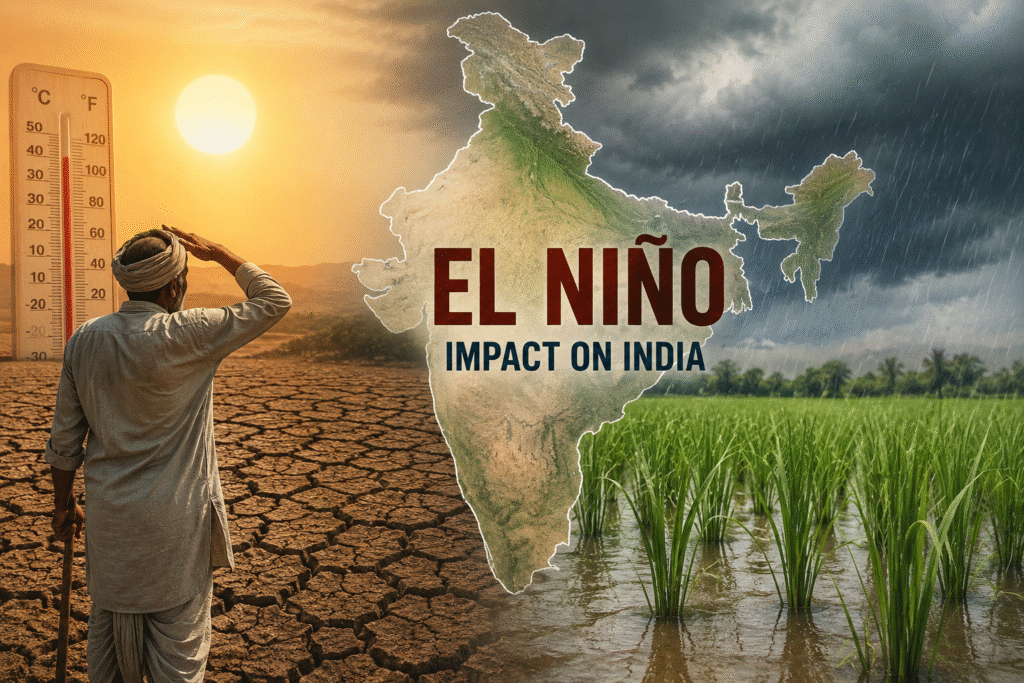
El Nino preparedness has become the Centre’s top priority. The Prime Minister’s Office has locked in contingency plans for 262 vulnerable districts. Officials met on Tuesday, July 7, 2026, to review monsoon progress and possible fallout for the economy.
Principal Secretary to the Prime Minister P K Mishra chaired the session at Seva Theerth. Secretaries from more than 15 ministries attended, including Agriculture, Power, Health, and Economic Affairs. The meeting reviewed how the kharif season is progressing under shifting weather conditions.
Rainfall Deficit Narrows, But Risks Remain
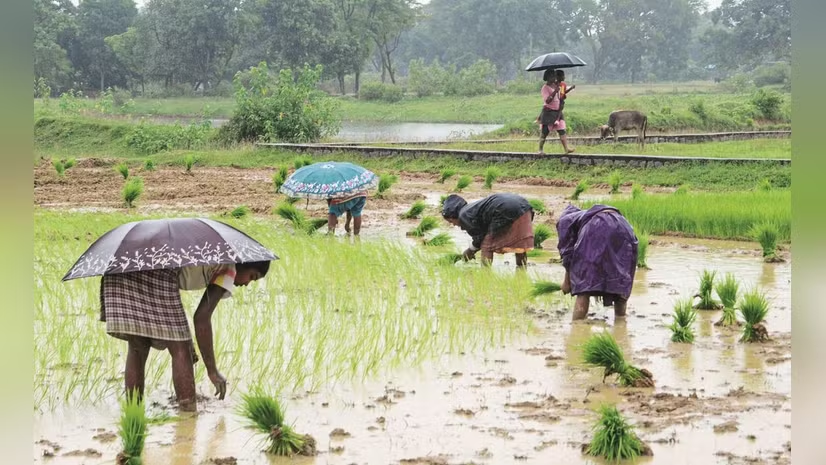
IMD officials briefed the meeting on rainfall data up to July 7. Monsoon onset arrived roughly 10 days late in Gujarat, Madhya Pradesh, Chhattisgarh, and Maharashtra. Despite this, India’s overall rainfall deficit has narrowed sharply to -12%.
The first week of July recorded above-normal monsoon activity nationwide. Officials expect a weak-to-moderate El Nino through July and August. July alone typically delivers over 30% of the season’s total rainfall, making this month critical.
Importantly, officials clarified that an El Nino year does not automatically mean deficient rainfall. Foodgrain output has stayed resilient in past deficient-rainfall years, thanks to climate-adapted crop varieties. Still, the government isn’t leaving outcomes to chance.
262 Districts Get Targeted El Nino Preparedness Plans
The Agriculture Secretary presented a detailed roadmap for high-risk regions. District Agriculture Contingency Plans now cover 262 vulnerable districts across India. These plans guide states on managing crop stress if rainfall patterns worsen.
Meanwhile, the Indian Council of Agricultural Research has issued fresh guidelines too. Its Standard Operating Procedures target Krishi Vigyan Kendras working directly with farmers. Weekly Crop Weather Watch meetings will track rainfall, reservoir levels, and pest outbreaks across states.
Coverage campaigns for crop insurance and farm credit are also expanding. Officials pushed the Pradhan Mantri Fasal Bima Yojana and Kisan Credit Card schemes in at-risk states. Moreover, Agriculture, Financial Services, and Cooperation departments must ensure fast, wide coverage.
El Nino Preparedness: Water, Fodder, and Public Health
Mishra directed officials to make drinking water a non-negotiable priority. Therefore, vulnerable districts will see close monitoring of reservoir levels and water use. Departments were told to promote judicious water consumption through the season.
Fodder security also featured prominently in the discussion. The Animal Husbandry Department must assess cattle feed availability at both state and local levels. Officials called for dedicated fodder development plans alongside regular state coordination.
Similarly, health authorities flagged separate seasonal concerns during the review. Heatwave advisories are already active, alongside monitoring for humidity spikes and dengue outbreaks. Officials stressed that alerts must reach citizens at the field level, not just state capitals.
Meanwhile, the Consumer Affairs Department reviewed retail prices and buffer stocks. Officials confirmed adequate reserves of rice, wheat, and pulses nationwide. In addition, the Fertilizer Department also reported a healthy opening stock ahead of the Rabi season.
What Comes Next
Overall, the PMO’s message stayed clear: coordination between ministries and states must remain tight. Weekly monitoring will continue through August, when El Nino effects typically peak. The 262-district El Nino preparedness plan will face its real test as the season advances.
Farmers in the flagged districts should watch for state-level advisories on water and credit access. The Centre’s next review will show whether this preparedness plan holds up through the monsoon’s second half.
Source: PMO
Follow The World Times For Such Updates