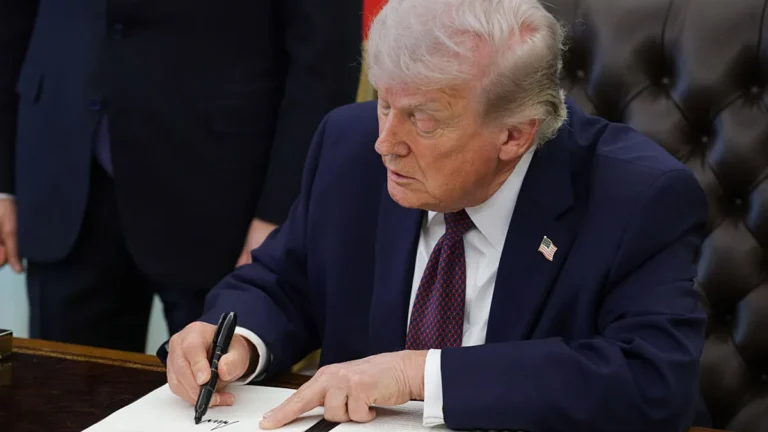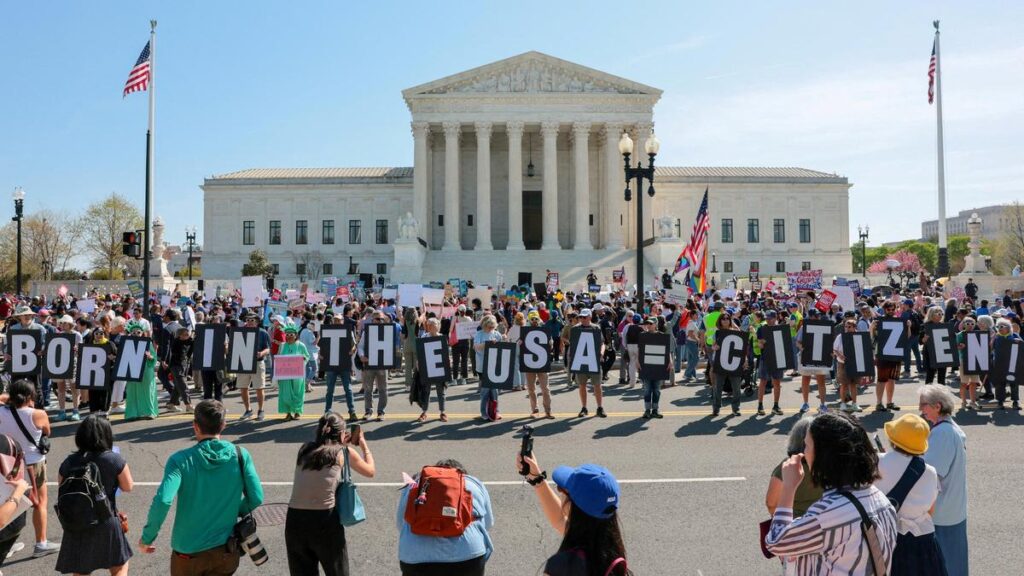
The U.S. Supreme Court issued a major birthright citizenship ruling and struck down President Donald Trump’s executive order. The order sought to restrict automatic citizenship for some children born in the United States. The ruling upholds the long-entrenched interpretation of the 14th Amendment. Under it, any child born in the United States is a citizen regardless of their parents’ immigration status.
President Donald Trump issued the executive order shortly after he became president again. It denied citizenship to children whose parents entered the United States without documentation or had temporary visas. The executive order aimed to reinforce immigration laws and curb illegal immigration. However, states, immigrant advocacy groups, and civil rights activists immediately challenged the order. They argued that it contradicted the Constitution.
In its 6-3 ruling, the Supreme Court supported the opponents of the executive order. It ruled that the order contradicted the Constitution. Reuters reports that the Constitution guarantees birthright citizenship under the 14th Amendment. It also ruled that the president cannot change it through an executive order. The judgment stands among the most significant immigration decisions in recent years. It reinforces constitutional protections that have stood for more than a century.
Birthright Citizenship Protected Under the Constitution

Chief Justice John Roberts, writing the decision of the majority, said that the Constitution guarantees birthright citizenship, and a basic constitutional guarantee cannot be changed using an executive order. This means that any effort to change this concept requires Congress’ action in accordance with the Constitution or passing a constitutional amendment.
The decision by the court was based on the precedent created in 1898 in the famous case United States vs. Wong Kim Ark. In this case, the Supreme Court held that almost everybody who was born in the United States is a citizen in accordance with the Citizenship Clause in the 14th Amendment of the Constitution, no matter the nationality and immigration status of his or her parents. This case became a cornerstone for citizenship law of America for more than 125 years.
Legal experts called the decision a strong confirmation of constitutional and judicial stability. They pointed out that allowing executive orders to redefine constitutional guarantees will bring many uncertainties in future administrations.
The immigrant rights groups hailed this decision as a significant victory regarding the rights of immigrants and legal certainty in the United States. In their statement, some of the advocacy groups highlighted that the ruling was reassuring for the immigrant community because of the possible repercussions of the proposed policy.
Impact of the Decision in Law and Politics
The decision was a heavy blow to the immigration policies of the Trump administration, which has emphasised strict border control and strict citizenship laws. Though the government argued that it was a part of a comprehensive immigration policy of the administration, the decision has severely hampered the ability of the president to reform citizenship policy by executive action.
After the decision, Trump expressed disappointment with it. He hinted, however, that his administration would pursue immigration reform by other legislative means. Nevertheless, the decision has made it clear that birthright citizenship reform will need changes other than executive actions.
The decision is likely to affect many families in the United States. Consequently, they will maintain automatic citizenship for children born in the country. This includes children of undocumented or temporary immigrants. Furthermore, it is thought that the decision provides legal clarification that will last for a long time. Indeed, it reinforces one of the main aspects of the 14th Amendment.
In addition to the implications in the law, the decision is likely to affect future discussions on issues related to immigration, executive action and interpretation of the constitution.
Follow The World Times for more such updates!