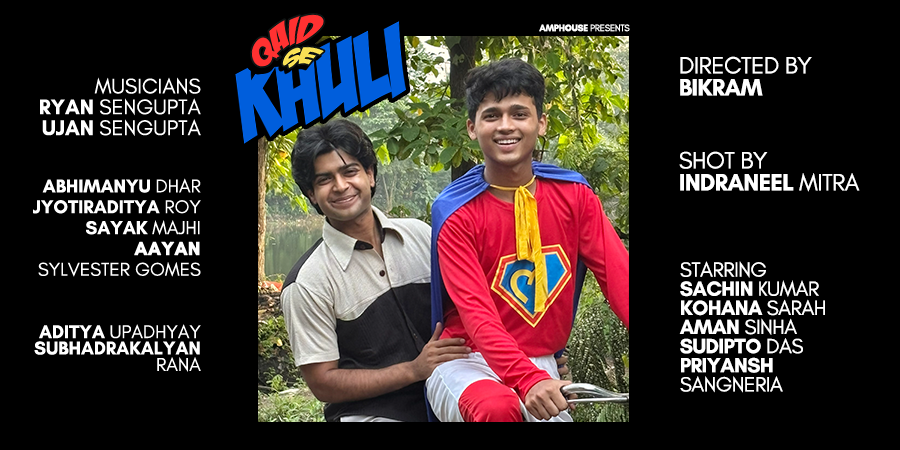
A bunch of young, talented artists, a music video, and a dream — Qaid Se Khuli is a love letter to musicals and cinema. Produced by Kolkata-based AmpHouse Productions, the music video stars fresh faces from the city. It is a tale of hope, perseverance, friendship, and overcoming odds to keep alive the spirit of art. However, a full-scale music video within a limited budget comes with its own set of problems. Notwithstanding that, a steady creative vigor drives the team to succeed in their maiden attempt at a heartfelt musical note. In an exclusive interview with producer Aman Sinha, The World Times unpacks what went on behind the scenes.
Q. Qaid Se Khuli is a maiden venture into making music. What inspired you to create music and not short films like many other creators?
A. The idea of a musical and at the same time being able to put up our piece as a song, I think that motivated us to go for a music video which feels like Cinema. It involved a group of young musicians making music out of my lyrics for 5 straight days, and that brought out the main essence of our song, and we knew that Qaid Se Khuli would definitely work as a music video.
Q. The music and the video are a mixture of Bengali roots and culture. Do you think that this particular aspect has been missing from new music produced today?
A. I won’t say that this kind of music is missing in the current scenario; people don’t resonate with things that feel personal and heavy a lot of times, and they want something easy-going from the new musicians and artists. However, I feel that art is a form of expression, and it shouldn’t be guided by forces of demand and supply. It’s tough for such music to reach the audience, but it’s more important for musicians to put their word out to people and express their art. Such music exists, but the audience fails to receive it from time to time.
Q. Almost 8 musicians are playing various instruments in Qaid Se Khuli. Is it an ode to the rich musical heritage of India, and especially Bengal?
A. A few of the instruments used, and a good number of musicians from my team belong to Calcutta. The idea was to blend the music of Bengal that you hear in the culture’s contemporary music and cinema. We tried to record the music in a way that feels raw and relatable, something along the lines of the music we hear in Shantiniketan. It is an ode to the rich heritage of Indian Cinema and the filmmakers of Malegaon. Additionally, the rich musical heritage of Bengal, with instruments like Choutara, Dubki, Khamak, Tabla, and so on are major inspiration.
Q. As a young artist from Kolkata, what are the challenges that you face when venturing into such creative fields?
A. To begin with, Kolkata is one of the few cities in the world that culturally encourages people to pursue art. I am sure that while growing up, we all have been forced by our parents to master at least one art form, be it painting, any dance form, or just sit with a harmonium and sing. So, it is quite evident that the city has an abundance of creativity. What it lacks is opportunity. The pay for creative work is also very low compared to other parts of the country.
The city has failed to empower its artists for a long time now, leading to exceptional talents moving to the West. It is extremely difficult and risky for an independent artist to have a distinct voice in this city, but I am hopeful that things will start changing for the better soon.
Q. Qaid Se Khuli is a throwback to the old Bollywood style. What were your primary inspirations?
A. It is not necessarily a throwback. I would like to call it more of a love letter not just to Bollywood but to World Cinema at large. It is what we grew up watching: the slow-motion hero shots, the dramatic visuals, the magic realism. If you are a film geek, you will notice nods to filmmakers like Wong Kar-Wai (director of In The Mood For Love and Chungking Express), Alejandro Inarritu (director of Birdman), Buster Keaton, Charlie Chaplin, and Satyajit Ray. The framing and visuals of certain scenes were inspired by Joyland, a Pakistani film directed by Saim Sadiq. That is the beauty of art; it transcends political borders and social constructs.
Q. Supermen of Malegaon and Superboys of Malegaon are your primary sources of inspiration. Do you think that the Indian audience still does not pay much attention to small-scale independent filmmaking ventures?
A. Like the film Superboys of Malegaon says, “Writer baap hota hai”; if your story has good substance, if its heart is in the right place, if the intent is relatable, then people will connect to it. Of course, with limited budget for marketing and promotions, it is very difficult to reach out to the masses, but I think the reception of indie content has boomed in this country ever since OTTs have taken over.
People are more exposed and aware of good content and have developed firm opinions about which stories they want to support and which they do not. Two prime examples of Indie films storming the box office this year are Obsession and Main Vaapas Aaunga. I think it is very hopeful to witness this. With time, I hope the audience stumbles upon our music video as well and loves it, relates to it, and embraces it as their own.
Q. Kolkata and its suburbs are an entire character in Qaid Se Khuli. It evokes a longing for the past. What inspired you to include this factor?
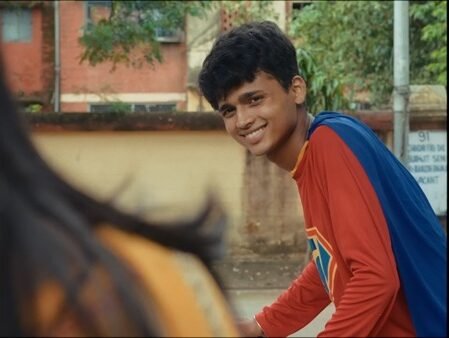
A. The music video was extensively shot in Liluah, an industrial suburb in the Howrah district. In fact, the working title of the project was called ‘Superman Of Liluah’. That is also the reason why you see a ‘ल’ on the superhero costume in the video. If you have watched the original documentary (Supermen Of Malegaon) or the feature film (Superboys Of Malegaon), you realize the city of Malegaon was a character in itself.
We wanted something similar for Qaid Se Khuli, a place which is under-explored yet relatable. I have spent all my childhood in Liluah. The visual aesthetic of the place, its people, the way they talk, the lifestyle they have — I wanted to document all of it through my work. It is my way of representing home.
Q. What do you think is the toughest part of making a music video? The video itself, the music that comes before it, or the final editing?
A. To be honest, all parts of making a music video come with their own set of challenges. Especially if it is a low-budget, independent project like ours, you are constantly picking your battles. So, it is tough to label one particular aspect as the toughest. Filmmaking is a collaborative art form, so everything is tough without the right people and the right resources.
For Qaid Se Khuli, we composed the song first, keeping in mind we wanted the video to be a tribute to Supermen Of Malegaon. Once the song was ready, we started writing the script and the screenplay; it was at this point that we were casting actors in their respective roles too. After we had all of this in place, we moved ahead with the recce (scouting ideal locations for the shoot). The shoot in itself took the longest time because of multiple setbacks due to rain and the availability of the people involved, but our sheer determination to tell the story we wanted to tell kept us going.
Once the shoot got over, we took some time off to gain more perspective on how we wanted to go ahead with the post-production. It took us two months to complete the edit, colour grading, sound designing, mixing, and packaging.
Q. What, according to you, is the future of music in India, given the rise of monotonous beats all over?
A. The future of music in India is very exciting to derive with the rise of so many new genres; however, it is definitely going to be varied and all over the place, with a lot of artists with loyal fan bases because of their creativity. It would have fusion, experimental, new age, and many more subgenres that would create an ecosystem with different sounds and lyrics.
Q. Finally, “Qaid se Khuli” is a tale of perseverance and friendship. How did you pull your team through challenging moments during and after the shoot?
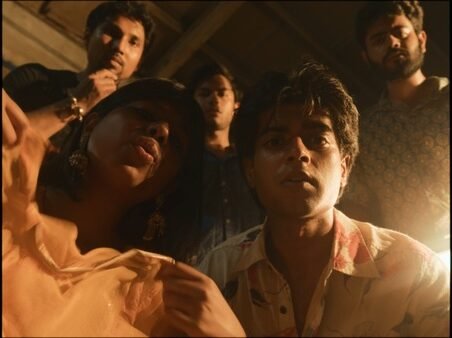
A. Like I mentioned earlier, with a project like ours, which had very few resources, every day on set was challenging. But this is the thrill of creating something with your friends; you are always on your toes, you never give up. Even if all feels lost, there is someone or something that pulls you back up.
For instance, we were shooting the climax sequence of the music video in August, 2025. We wanted a specific golden hour light for the sequence. Of course, we did not have a budget to have a controlled lighting setup, so we were depending on natural light. It seemed like nature was not really on our side. We attempted to shoot that sequence on three different days but in vain. The monsoon rain just would not stop. After a point, we had given up hope; I had started thinking of alternate endings just to get done with the shoot.
The crew started discussing their availability for another shoot date. It was at this point that we witnessed the rain stop; within a few minutes, the clouds cleared out, making way for the beautiful golden sunlight to appear.
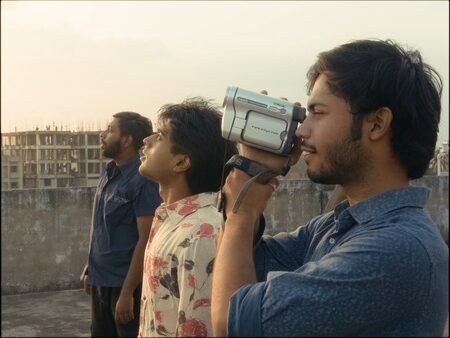
It was a sight to behold, but we had a lot to cover within that thirty-minute window before the sun set. We rushed to the terrace, set up our equipment, and started shooting. Thankfully, we had rehearsed the scene numerous times while waiting for the rain to stop; hence, the actors and the crew knew exactly what needed to be done. It felt like the universe aligned for us to shoot, and that is exactly what you see in the final moments of the music video.
Follow The World Times for more such exclusive interviews.