Nothing You Eat Is Truly Seasonal Anymore
The Disappearance of Seasonal Food
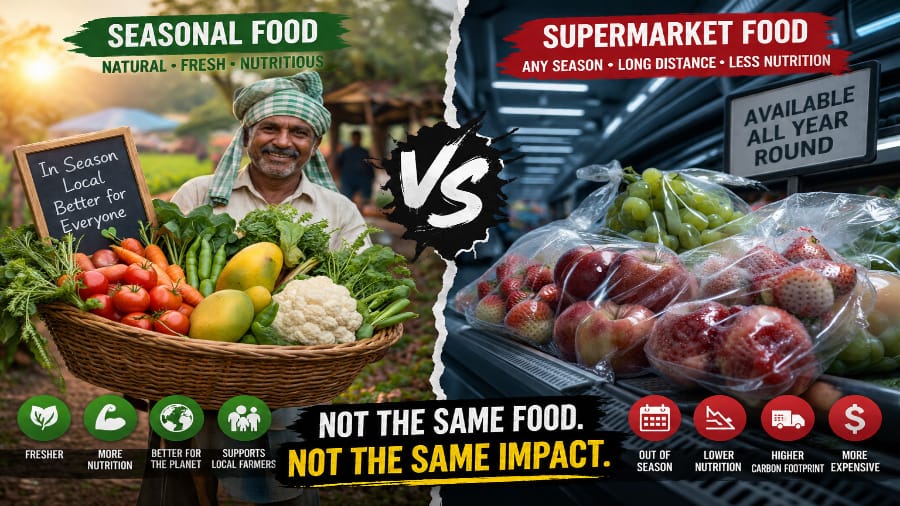
Seasonal food is disappearing from our daily lives, even though many people don’t notice it. Not long ago, food followed a natural rhythm. Mangoes arrived in summer, sarson ka saag defined winter, and monsoon meant fresh roasted corn. People didn’t expect every fruit all year round because they understood one simple idea—food comes with time.
Seasonal food refers to fruits and vegetables that grow naturally during specific times of the year. These foods develop without artificial interference and follow climate patterns. Because of this, they taste better, contain more nutrients, and cost less. In India, eating this way wasn’t a trend—it was simply how people lived. Diets changed with the weather, helping the body adapt naturally.
Why Eating Patterns Are Changing
Modern lifestyles have shifted the way people eat. Today, convenience matters more than natural cycles. Supermarkets and online platforms promise everything at any time. As a result, people rarely wait for fruits or vegetables to come into season.
Cold storage, imports, and advanced farming methods allow year-round availability. While this seems beneficial, it slowly disconnects us from natural eating habits. Social media adds to this change. Viral recipes create instant demand, pushing suppliers to provide ingredients even when they are not naturally available. Because of this shift, natural eating patterns are fading, and fewer people recognize what truly belongs to each season.
How Supermarkets Trick Freshness
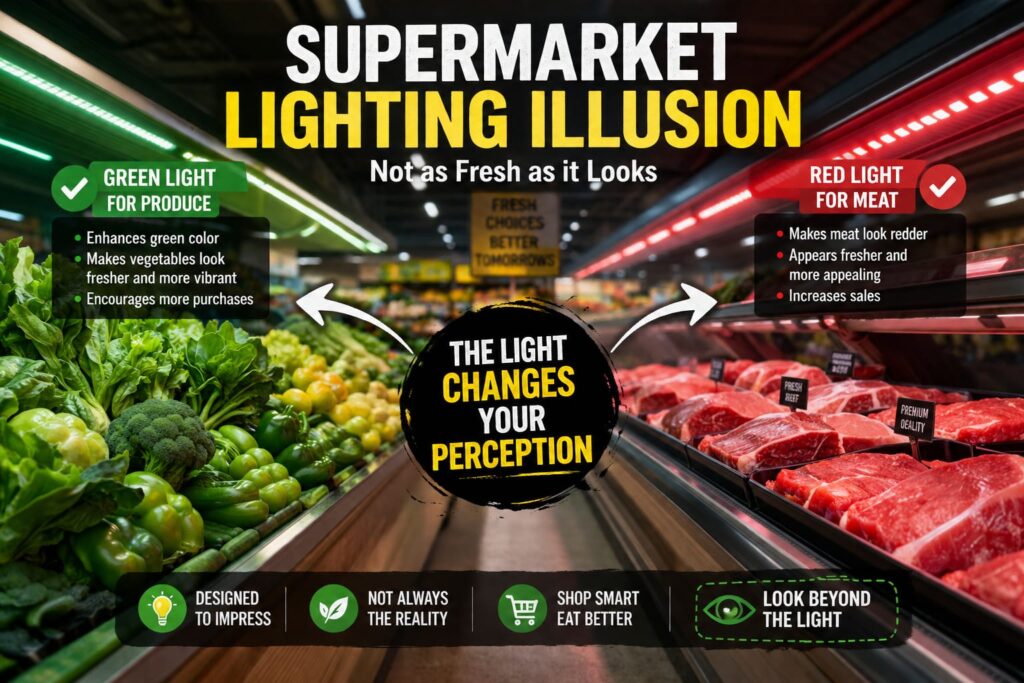
Supermarkets design their spaces to influence how customers see food. Everything looks fresh, colorful, and perfect, but this appearance often comes from careful manipulation.
Lighting plays a key role. Stores use specific tones to enhance colors. Meat appears redder, while fruits and vegetables look brighter and more vibrant. Many fruits also go through cosmetic treatments. Producers remove natural wax during cleaning and replace it with a thin coating to improve shine and shelf life. This makes produce look fresh even after long storage.
Ripening is often controlled. Bananas and tomatoes are picked raw and later exposed to ethylene gas to trigger color change. Although this makes them look ready to eat, the flavor does not fully develop. Furthermore, misting systems add another illusion. Water droplets on vegetables create a just-harvested look. However, this moisture can sometimes speed up spoilage rather than prevent it.
The Truth About Seasonal Food
Food that looks fresh is not always fresh. In many cases, it has traveled long distances or stayed in storage for extended periods. For example, broccoli eaten during its natural peak contains more Vitamin C. When stored and transported for long durations, nutrient levels drop. The same applies to many vegetables.
Apples provide an even clearer example. Many are stored for months in low-oxygen chambers to slow down ripening. This keeps them visually appealing, but taste and nutritional quality decline over time. Therefore, fresh, locally harvested produce reaches consumers faster. This helps preserve both nutrients and flavor.
Why Seasonal Food Is Healthier
Seasonal food supports the body in ways that modern systems cannot fully replicate. Foods grow in response to environmental conditions, and that alignment benefits human health.
In summer, fruits like watermelon and cucumber contain high water content and essential minerals. These help the body stay cool and hydrated. During winter, produce becomes richer and more energy-dense, providing warmth and strength.
Plants grown in their natural cycle also develop more antioxidants and protective compounds. These support immunity and overall health. Local honey offers another advantage. It contains traces of regional pollen, which may help the body adjust to seasonal allergies.
Environmental Cost of Modern Food Systems
Year-round availability comes at an environmental cost. Producing food outside its natural cycle requires more energy, water, and technology. Greenhouses, refrigeration, and transportation increase carbon emissions. Imported produce often travels thousands of kilometres before reaching stores.
In contrast, locally grown produce uses fewer resources. It supports farmers and reduces environmental impact. Choosing food that grows naturally during each season helps create a more sustainable system.
The Cultural Loss We Ignore
Food is more than nutrition. It carries tradition and memory. Seasonal dishes connect people to festivals and shared experiences. Think about gajar ka halwa in winter or aam panna in summer. These foods represent specific moments in time. They create anticipation and emotional connection.
When everything becomes available all year round, that sense of timing disappears. Food loses part of its meaning, and traditions slowly fade.
How to Eat More Seasonal Food
Bringing back seasonal eating does not require drastic changes. Small steps can make a big difference.
Start by choosing locally grown produce whenever possible. Visit traditional markets instead of relying only on supermarkets. Pay attention to what naturally grows during each season.
You can also explore helpful guides like
Seasonal Food Guide
For balanced nutrition tips, check
Harvard Healthy Eating Plate
Eating With Time Again
Seasonal food is disappearing as modern systems focus on convenience instead of natural cycles. However, this shift affects health, the environment, and cultural traditions.
The solution begins with awareness. Instead of choosing food based only on availability, consider what grows naturally at that time of year. Eating this way improves nutrition, supports sustainability, and restores a deeper connection with food. Sometimes, the simplest change such as eating with time can make the biggest difference.
Follow The World Times for more such updates.