The Bangladesh Election 2026 held in Dhaka on 12 February, was one of the most important votes in the country’s recent history. This was the first national vote since the mass uprising in 2024 and a long period of political unrest. The election is seen as a major test of the country’s democratic recovery.
The parliamentary election aimed to fill 300 directly elected seats in the Jatiya Sangsad (National Parliament). Over 127 million registered voters participated, making it one of the largest democratic exercises in the region.
BNP Victory in Bangladesh Election 2026
Early predictions show that the Bangladesh Nationalist Party (BNP) and its allies won a clear victory, leading with approximately 212 seats. Since 151 seats are required to form a government in the country, the results indicate a strong and stable mandate for the party.
This victory marks the BNP’s return to power after almost 20 years, ending a long period during which the party was politically sidelined. An 11-party coalition led by Jamaat-e-Islami is expected to become the main opposition bloc in parliament.
Compared to previous elections in Bangladesh, the 2026 vote saw broader participation from various political alliances and few claims of widespread manipulation. Voter turnout was high across the nation, with active involvement from young and first-time voters who became politically engaged after the 2024 movement.
Another significant factor was the absence of the Awami League, which was prevented from competing due to legal and political issues following the uprising. This changed the electoral landscape and allowed the BNP to emerge as the leading political force.
Rise of Tarique Rahman
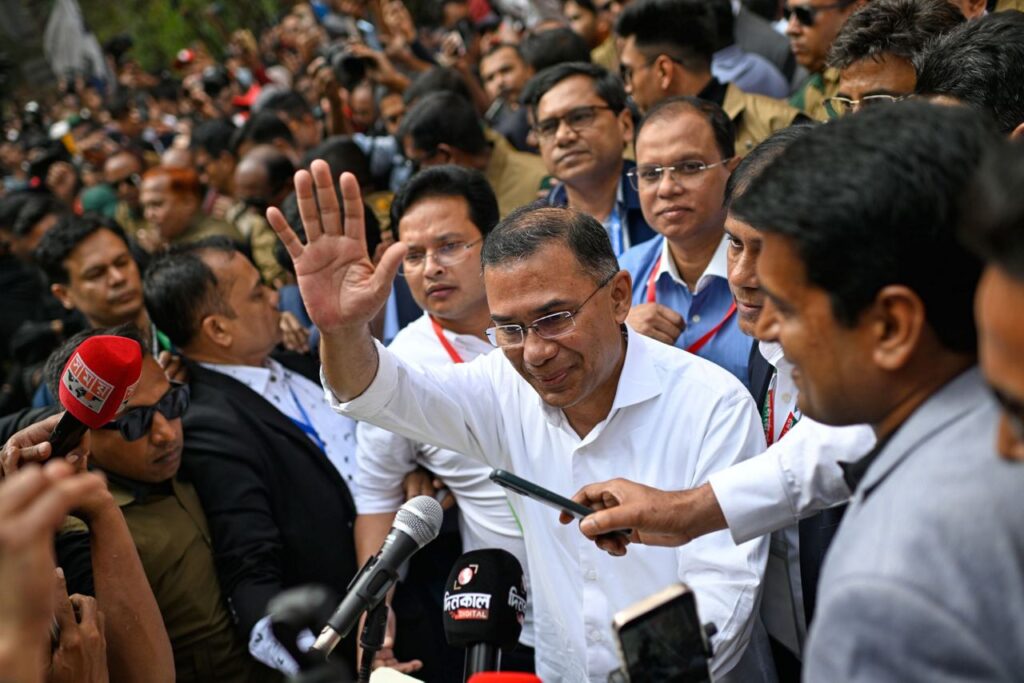
The election marks a major moment for BNP leader Tarique Rahman. He is the son of former Prime Minister Khaleda Zia and BNP founder Ziaur Rahman. After living in self-imposed exile in London for nearly 17 years due to legal and corruption-related cases, Rahman returned to Bangladesh on 25 December 2025.
Following his mother’s death in January 2026, he formally became the Chairman of the BNP. This election was the first time in almost two decades that he was actively involved in open politics within Bangladesh, and his leadership played a key role in the party’s campaign.
He is widely expected to become the next Prime Minister after the government is formed.
Domestic Implications
Many observers see the election as a turning point for Bangladesh’s democracy. It marks the return of competitive electoral politics after years of tension.
At present, the country is dealing with inflation, youth unemployment, and concerns about investor confidence. A stable majority government could aid long-term economic planning, build investor trust, and restore international confidence in Bangladesh’s political system.
Impact of Bangladesh Election 2026 on India
The political change in Dhaka is likely to have significant implications for India, which shares a 4,096 km border with Bangladesh and has strong trade, cultural, and security ties.
Under former Prime Minister Sheikh Hasina, India and Bangladesh worked closely together, especially in counter-insurgency efforts, transit access to India’s Northeast, and regional security cooperation.
Historically, the BNP has taken a more nationalist stance and has sometimes criticized India’s role in regional matters. This raises concerns in India about potential changes in border security cooperation and the handling of insurgent groups.
There are also strategic concerns regarding Islamist political influence, as the BNP has previously collaborated with parties like Jamaat-e-Islami. However, analysts believe the new leadership may prioritize a more balanced approach to maintain global partnerships and economic stability.
Geopolitical Considerations
Another key factor is Bangladesh’s location in the Bay of Bengal and its role in regional politics. The country is part of China’s Belt and Road Initiative. Any move toward closer ties with China could impact India’s maritime and strategic interests in the region.
Despite these concerns, Tarique Rahman has indicated that he seeks “balanced and respectful” relations with India. This suggests a pragmatic approach to foreign policy rather than confrontation.
The Road Ahead After Bangladesh Election 2026
The 2026 election is viewed as a turning point for Bangladesh after years of political turmoil. The BNP now has a strong mandate but must ensure political stability, economic recovery, and democratic credibility.
The country’s future will depend on whether it achieves lasting progress and stability or encounters new political challenges. This will largely hinge on how the new leadership handles governance, opposition dynamics, and regional diplomacy in the coming months.
For more such informative articles, stay tuned to The World Times.