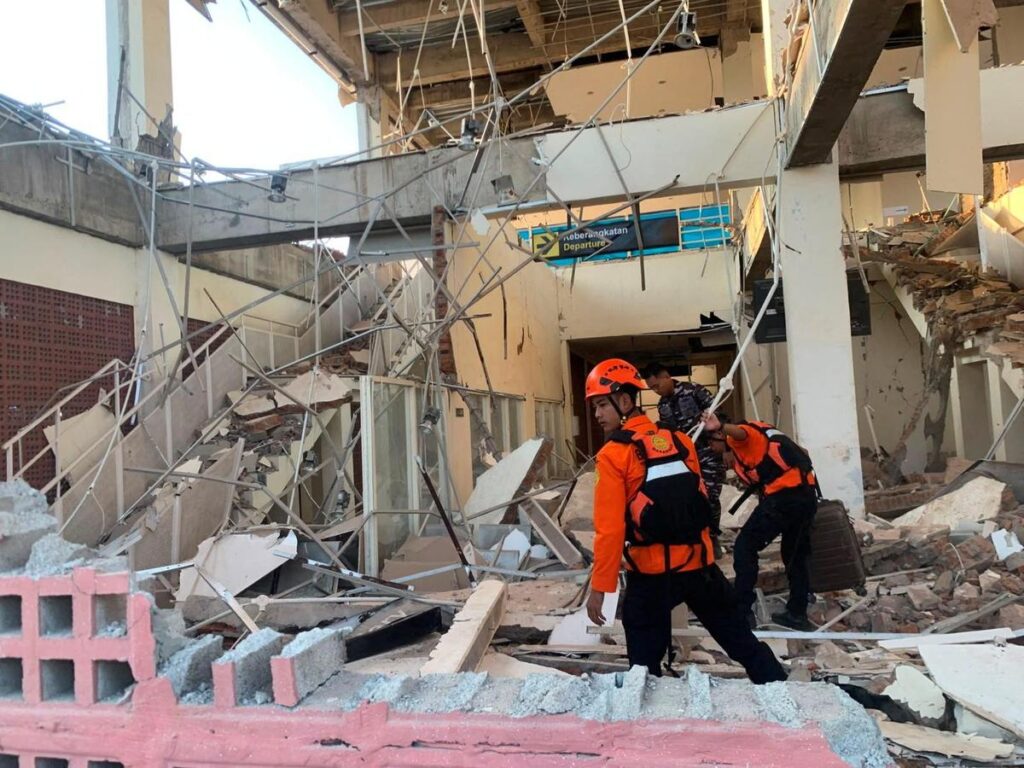
The Indonesia earthquake destroyed or damaged thousands of homes, forcing residents to evacuate and seek safer places. According to ReliefWeb, more than 3,300 people in Sikka took shelter in a sports arena and other temporary locations. Some residents stayed outdoors because they feared entering damaged buildings amid continuing aftershocks. Hospitals in affected areas also moved patients outdoors after the earthquake damaged facilities and raised concerns about further structural damage.
The earthquake struck off the coast of eastern Indonesia early Saturday, killing at least 51 people and injuring several others, according to rescue officials cited by Reuters. The magnitude 7.7 earthquake struck near Flores Island in East Nusa Tenggara, triggering a tsunami warning, damaging buildings and sending thousands of residents fleeing to safer areas. Rescue teams continued searching through rubble as landslides and disrupted communications complicated efforts to reach affected communities.
Indonesia Earthquake Triggers Tsunami Warning and Evacuations
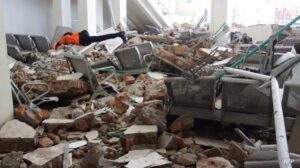
The earthquake occurred at approximately 4:58 a.m. local time according to the Meteorology, Climatology and Geophysical Agency of Indonesia. According to the agency, the earthquake was recorded at a depth of approximately 15 kilometres whereas the U.S. Geological Survey recorded the depth at about 10 kilometres. The region that experienced heavy shaking was East Nusa Tenggara, West Nusa Tenggara and parts of South Sulawesi.
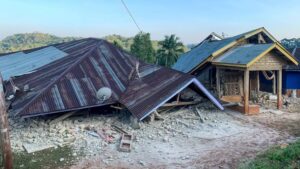
The Indonesia earthquake took place off the coast of Flores Island in East Nusa Tenggara, a province of Indonesia that experiences numerous seismic events. The tremor caused significant damage to over 1,300 houses and affected public infrastructure in a number of places. In addition, landslides made some roads impassable, preventing emergency services from reaching the communities and transporting needed goods to them.
The Indonesia earthquake destroyed or damaged thousands of homes, forcing residents to evacuate and seek safer places. According to ReliefWeb, more than 3,300 people in Sikka took shelter in a sports arena or other temporary locations, while some residents stayed outdoors because they feared entering damaged buildings amid continuing aftershocks. Hospitals in affected areas also moved patients outdoors after the earthquake damaged facilities and raised concerns about further structural damage.
Power outages also affected people in the disaster-hit regions. According to Reuters, 20 petrol stations shut down because of electricity outages, making evacuation and relief operations more difficult. The damage to roads made rescue operations harder in areas where landslides trapped communities.
Authorities issued a tsunami alert after the earthquake, but they cancelled it after monitoring showed that the immediate threat had passed. More than 340 aftershocks followed the main quake, increasing residents’ anxiety and forcing many people to stay away from damaged buildings.
Rescue Teams Search Rubble as Damage Spreads
More than 3,500 soldiers and police personnel have joined rescue and relief operations. Emergency crews have reached some of the worst-affected areas, including Maumere, despite landslides and damaged roads. Rescue teams continue to search for people who may still be trapped under the debris.
The recent numbers of deaths and injuries indicate an increase compared to those recorded right after the quake. If rescue teams reach other remote villages and inspect the damage to buildings, these figures can even increase.
The extent of the destruction has brought to light the problem of assisting the evacuees. Thousands of people are in need of shelter, food, medical aid and other supplies until the restoration of the destroyed infrastructure takes place.
The regional government is considering the declaring a state of emergency which would help accelerate the whole process. It is important to clear the roads and to provide electricity in the affected areas.
There is no doubt that Indonesia is a country that is prone to earthquakes due to its location on the Pacific Ring of Fire where several tectonic plates intersect and cause significant seismic activity. Flores Island has faced a few earthquakes before. One of them occurred in 1992, resulting in a tsunami which claimed more than 2,000 lives.
The Indonesia earthquake created an emergency in East Nusa Tenggara, leaving many people homeless after landslides and building collapses. Damaged roads and landslides have also made it difficult for rescue and relief teams to reach affected communities.