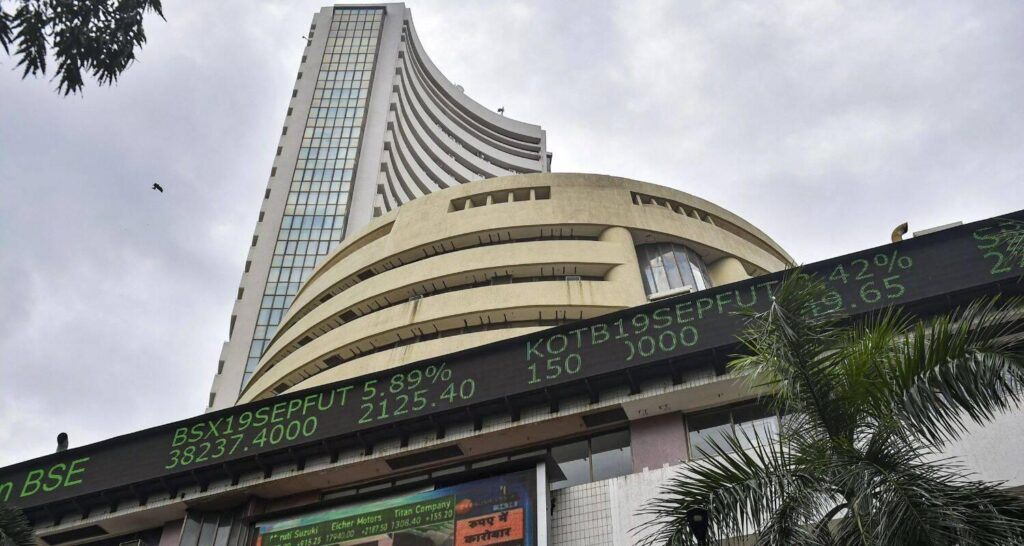
The stock market plays an important role in the economy of a country because it reflects the financial health of businesses and the confidence of investors. In India, one of the key indicators of the stock market is the Sensex. A sharp fall in the Sensex often creates uncertainty and concern among investors because it may signal economic or financial challenges. Currently, a noticeable decline in Sensex prices is taking place, which has attracted the attention of investors and financial experts. This article focuses on the reasons behind the current fall in the Sensex and what it may indicate for the future of India’s economy.
Meaning and Importance of Sensex
Meaning of Sensex
The BSE Sensex is the main stock market index of India, managed by the Bombay Stock Exchange. It includes 30 large and well-established companies from different sectors of the economy. Since these companies are leaders in their respective industries, their performance provides a clear idea of the overall condition of the Indian stock market.
Importance of Sensex
Indicator of Market Performance: The Sensex helps show the overall direction of the market. When the Sensex falls, it indicates that share prices are declining and the market is facing pressure.
- Reflects Investor Confidence: The movement of the Sensex reflects investor confidence. A falling Sensex may suggest uncertainty, fear, or negative expectations about the economy.
- Indicator of Economic Conditions: Since the Sensex includes leading companies from different sectors, its performance often reflects the overall condition of the economy. During periods of slowdown or uncertainty, the index may decline.
- Benchmark for Investors: The Sensex also acts as an important benchmark for investors, mutual funds, and financial institutions. They often compare their investment returns with the performance of the Sensex to evaluate whether their investments are performing well.
Reasons for the Recent Fall in Sensex
Several economic and global factors have contributed to the recent decline in Sensex prices.

- Geopolitical Tensions:
One important reason is the rise in geopolitical tensions in different parts of the world, especially in regions like the Middle East. Political conflicts and instability create uncertainty in the global economy. Such situations can disrupt international trade, raise concerns about energy supplies, and make investors more cautious. When uncertainty increases, stock markets across the world often face volatility and selling pressure, which can eventually lead to a fall in indices like the Sensex. - Rise in Global Crude Oil Prices:
Another major factor is the increase in global crude oil prices. India depends heavily on imported crude oil to meet its energy needs. When oil prices rise in the international market, the country’s import bill increases. Higher oil prices also raise transportation and production costs for many businesses. As companies spend more on fuel, logistics, and raw materials, their profit margins may be affected. When investors expect lower profits, they may begin selling shares, which can influence the movement of the Sensex. - Selling by Foreign Institutional Investors (FIIs):
Selling by Foreign Institutional Investors has also contributed to the recent decline. During periods of global uncertainty, such as fears of economic slowdown, inflation, or geopolitical tensions, foreign investors often reduce their investments in emerging markets. They may move their funds to safer assets like government bonds, gold, or countries offering better returns. Since FIIs hold large investments in major Indian companies, their selling can create strong downward pressure on stock prices and affect the Sensex. - Weakening of the Indian Rupee
Another factor affecting the market is the weakening of the Indian rupee against the US dollar. When the rupee weakens, imports such as crude oil, machinery, and raw materials become more expensive for Indian companies. This increases their operating costs and can reduce profitability. Currency depreciation may also create uncertainty in financial markets, which can weaken investor sentiment and contribute to the fall in the Sensex.
Conclusion
In conclusion, the recent fall in Sensex prices can be attributed to a combination of global and domestic economic factors that have created uncertainty in financial markets and affected investor confidence. However, such fluctuations are a natural part of the stock market cycle and have occurred many times in the past. Despite short-term declines, the long-term outlook for the Indian stock market remains positive. Strong economic fundamentals, growing industries, technological development, and increasing participation of domestic investors continue to support the market. Therefore, while short-term volatility may continue, the overall future of the Indian stock market is expected to remain stable and growth-oriented in the long run.
For more such updates and insights on economic and financial developments, follow The World Times.