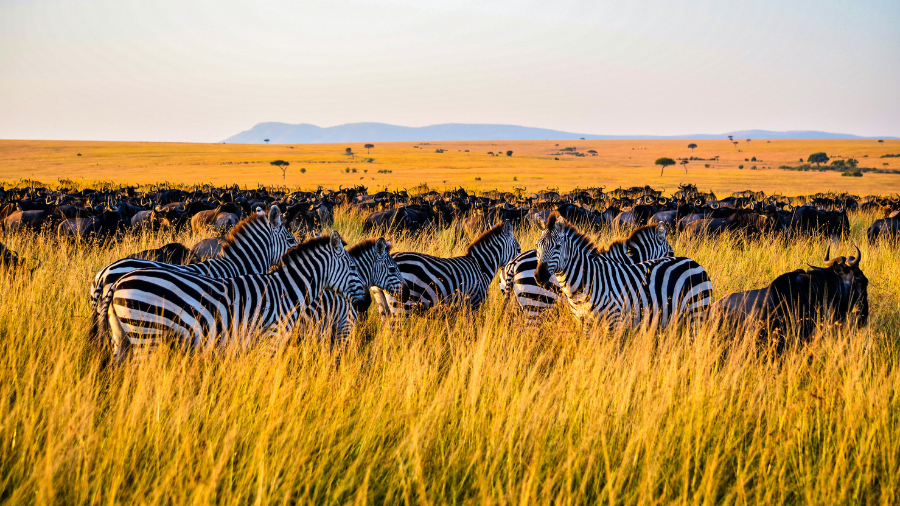
I have a friend who spent fifteen years saying he’d “do Africa one day.” He said it at dinner parties, on New Year’s Eve, in between bites of butter chicken, whenever someone mentioned wildlife or travel. Last year he finally went to the Maasai Mara. He came back quiet in the way that only happens when something very large has rearranged your internal furniture. “I stood twenty metres from a lion,” he told me. “Just standing there. In the grass. Not behind glass. Not on a screen. Just there.” He’s booked again for this August. If the Kenya safari 2026 travel guide you’ve been waiting for is the thing standing between you and that trip, this is it.
Safari bookings into East Africa have surged dramatically this year, fuelled by Kenya Airways’ new codeshare with JetBlue, growing connectivity from Indian metros, and a global shift toward conservation-led travel that values depth over tick-box game drives. Africa’s tourism industry is projected to grow from USD 27 billion in 2026 toward nearly USD 40 billion by 2034. The window before this becomes overcrowded is narrowing. Go now.
Kenya Safari 2026 Travel Guide: Why Kenya and Why Now
Why is Kenya the top safari destination in 2026?
Kenya has always been the answer. But 2026 has added new reasons to move it from dream to confirmed booking.
First, the connectivity story. Kenya Airways and JetBlue’s codeshare now creates seamless one-ticket journeys from North America to Nairobi. For Indian travellers, the routing story is equally improving — Emirates, Ethiopian Airlines, and Air India all connect major Indian metros to Nairobi Jomo Kenyatta International Airport, with journey times of 6–9 hours depending on connection. Direct flights from Mumbai to Nairobi via Ethiopian Airlines are under nine hours total.
Second, conservation-led safaris are reshaping the market. According to the ATTA 2026 Africa Travel Trends report, demand is shifting decisively toward private conservancies over national parks, operators with genuine conservation credentials, and longer stays in fewer locations. This is Kenya’s sweet spot. The private conservancies around the Maasai Mara — Olare Motorogi, Mara North, Naboisho — offer far fewer vehicles per sighting and far more meaningful wildlife encounters than the main reserve’s peak-season congestion. They cost more. They’re worth it.
Third — and this is the most Indian angle of all — the wildlife parallel hits differently when you’re from a country with tigers, elephants, leopards, and a conservation tradition of our own. The Maasai Mara isn’t alien to us; it’s familiar in the way that recognises something huge and ancient and important. The difference is scale. The plains here are so vast that your sense of your own smallness recalibrates in ways Ranthambore or Jim Corbett simply can’t match.
The Great Migration: Kenya Safari 2026’s Main Event
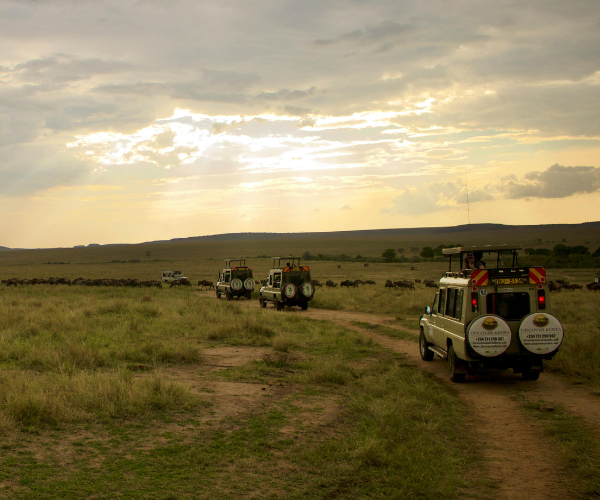
The Great Wildebeest Migration is the planet’s largest land mammal movement. Over 1.5 million wildebeest, plus hundreds of thousands of zebras and gazelles, move between Tanzania’s Serengeti and Kenya’s Maasai Mara in a continuous annual cycle. Kenya catches the most dramatic chapter: the Mara River crossings.
From late July through October, the herds arrive at the Mara River in massive columns and attempt to cross to new grazing ground on the other side. Waiting in the water, with patience and genuine menace, are the Nile crocodiles.
What happens at those crossings is the kind of thing David Attenborough has made his career narrating. Witnessing it live is something no documentary prepares you for.
Best months for the crossing: August and September. Peak action. Also peak prices and peak fellow tourists. Book camps inside or immediately adjacent to the river areas at least 6 to 12 months ahead.
Shoulder window: July and October offer strong migration activity at slightly lower prices and thinner crowds. Late October into early November brings the short rains, which transform the landscape into startling green and are brilliant for bird photography.
For those who can’t travel mid-year, Kenya rewards year-round. The Maasai Mara’s resident lion population, elephant herds in Amboseli against the backdrop of Kilimanjaro, and the unique wildlife of Samburu in the north (Grevy’s zebra, reticulated giraffe, the Somali ostrich) are not migration-dependent.
Kenya Safari 2026 Travel Guide: What It Costs From India
Let’s be honest about this upfront. A Kenya safari is not a budget trip. The 2026 Maasai Mara park fees sit at $200 per person per day in high season — that alone is roughly Rs 16,500 per day, before your camp, your guide, or your vehicle. These fees exist partly because Kenya has committed to conservation-funded tourism. You’re paying for the ecosystem, not just the view.
Here’s a realistic cost breakdown for a 7-night Kenya safari from India:
Budget level (mid-range tented camps): Flights: Rs 55,000–75,000 return (Mumbai–Nairobi via Addis or Dubai) Park fees (4 days Maasai Mara): approx. Rs 66,000 Mid-range tented camp with full board and game drives: Rs 20,000–35,000/night Nairobi nights (1–2 nights): Rs 6,000–10,000/night Total per person: Rs 2,20,000–3,20,000
Luxury conservancy experience: Private conservancy camps (Mara North, Naboisho) start at $500–$1,500 per person per night, all-inclusive. For the experience — private vehicle, expert guide, unfenced bush, cocktails at a riverbed — it remains extraordinary value compared to equivalently priced European luxury.
Budget hack: Travel in April, May, or November (wet season). Prices drop significantly, the landscape is beautiful, and you’ll often have sighting areas largely to yourself. Not all camps are accessible in heavy rain, so confirm logistics.
Visa: Indian passport holders need an Electronic Travel Authorisation (eTA) for Kenya, available online for $30. Straightforward process, typically processed within 3 days.
Conservation Safari vs. Traditional Game Drive: What’s Changing
The Kenya safari 2026 travel guide that matters is about more than the logistics. The industry itself is transforming in ways worth understanding before you book.
Traditional safari itineraries once worked like wildlife checklists: cover five parks in 10 days, photograph the Big Five, and return home. Today, however, conservation-led safari travel looks fundamentally different. Instead of rushing between destinations, travellers spend longer in fewer places, gaining access to areas that see only a fraction of the visitor numbers found in the main national park circuits. As a result, there’s more time to engage with local Maasai communities in ways that directly benefit them, while also enjoying experiences such as night game drives and walking safaris that national parks do not permit.
For example, private conservancies like Olare Motorogi were created through agreements between Maasai landowners and conservation operators. Under this model, landowners receive income per acre from the conservancy, reducing the historical pressure to convert land to agriculture. Meanwhile, wildlife continues to roam freely between the conservancy and the national reserve. Consequently, visitors benefit from lower vehicle density at wildlife sightings, while local communities receive sustainable income and ecosystems remain protected. In other words, this is what responsible tourism looks like when it works as intended.
Before you book, however, ask your operator a few key questions. Do they have genuine conservation credentials? Do they work with Maasai guides, rather than just drivers? What percentage of their fees goes back to community programs? Ultimately, the answers will quickly reveal whether you’re booking authentic wildlife tourism or simply wildlife theatre.
The India-Kenya Cultural Parallel Worth Noting
Here’s something I find endlessly fascinating. The Maasai people share remarkable visual parallels with certain Indian tribal communities — the red-and-blue plaid of the shuka (Maasai blanket) echoes the bold textile traditions of Rajasthan’s pastoral communities. Maasai cattle culture, the deep connection between identity, livelihood, and the land, maps onto something North Indian pastoral communities would recognise immediately. Kenya’s Hindu Indian diaspora community, concentrated in Nairobi, also means that Indian vegetarian food is genuinely accessible in the capital. You won’t go hungry. The samosas at Nairobi’s Indian markets are, by some accounts, better than fine.
Also read: Pilgrimage and Purpose: Gen Z’s New Path
Stay tuned with The World Times for more updates!