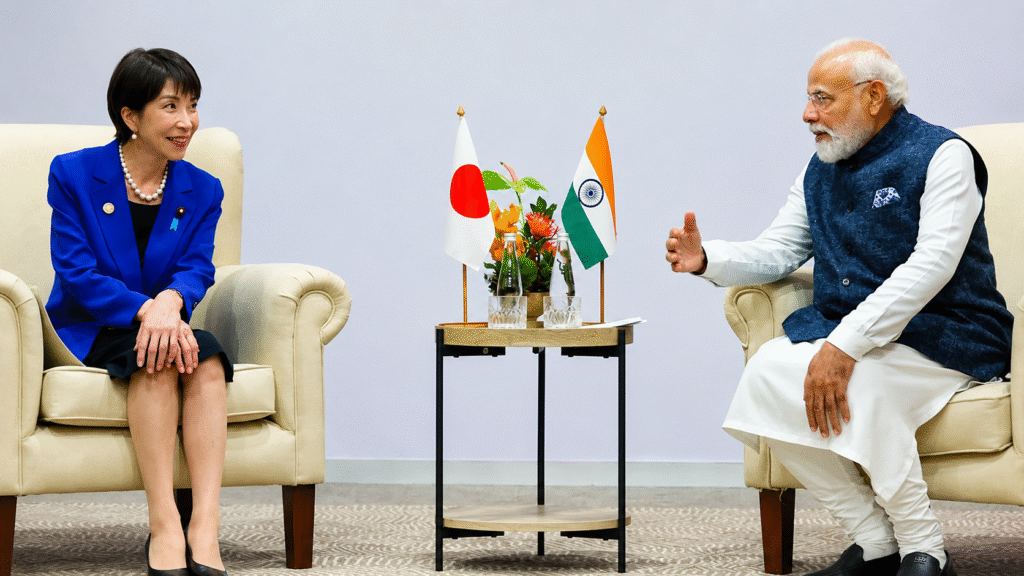
The India-Japan summit dominated headlines this week as Prime Minister Narendra Modi hosted his Japanese counterpart. Sanae Takaichi arrived in the capital for her first official visit to India. Talks covered trade, defence, artificial intelligence and regional security. Takaichi landed in Delhi on Wednesday evening, opening a three-day trip that runs through Friday. Minister of State Dr Jitendra Singh received her at the airport. The Ministry of External Affairs called her arrival an important step for bilateral ties. Soon after, Modi welcomed her on social media. He said he looked forward to wide-ranging talks the following day. Both leaders pledged to strengthen what officials call the Special Strategic and Global Partnership.
What The India-Japan Summit Covered
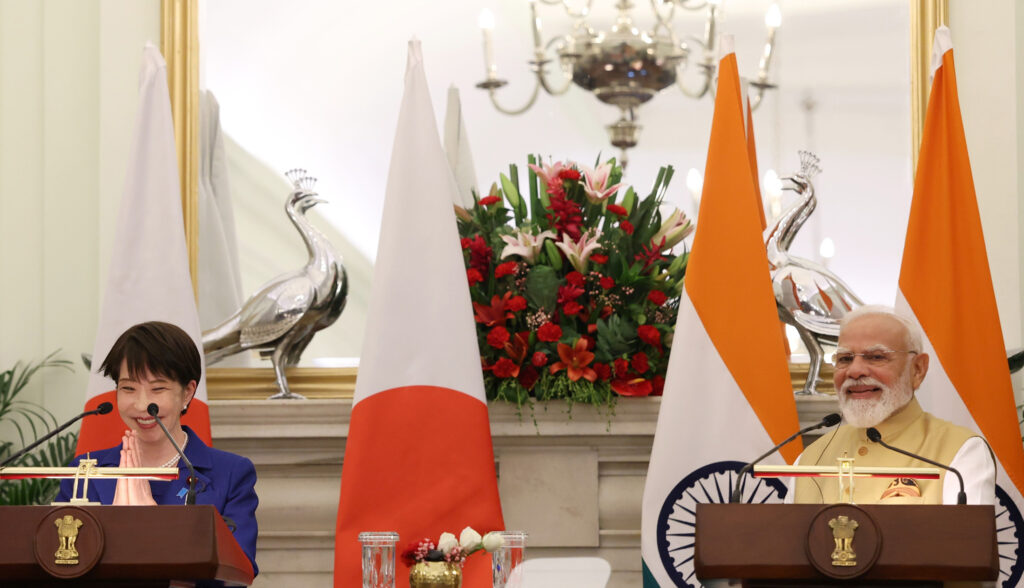
Thursday brought the summit’s core events. Takaichi received a ceremonial welcome at Rashtrapati Bhavan before heading to Hyderabad House. There, she held summit-level talks with PM Modi on the 16th edition of this annual dialogue. Officials say the two leaders reviewed cooperation across trade, technology, infrastructure and defence.
They also discussed regional issues, including maritime security in the Indo-Pacific. Further, expecting a joint declaration on economic security and a separate AI statement to follow. Business featured heavily in the agenda too. A large Japanese business delegation accompanied Takaichi to Delhi. Organisers expected over 150 Japanese firms to join business forum discussions during the visit.
Building On Last Year’s Foundations
This summit builds on groundwork laid during Modi’s Tokyo visit in August 2025. That 15th summit produced the India-Japan Economic Security Initiative and a Joint Vision for the Next Decade. Leaders also unveiled a Human Resource Exchange plan targeting 500,000 personnel moves over five years. Now, both sides plan to review progress on those earlier commitments. The plan aims to send around 50,000 skilled Indian professionals to Japan. This year’s India-Japan summit seeks to convert those frameworks into concrete projects. Modi and Takaichi had already met once this year, on the sidelines of the G7 Summit in France. That June meeting focused on trade and investment cooperation. Thursday’s talks build directly on those earlier discussions.
A Shifting Global Backdrop for India-Japan
Global tensions frame this year’s summit in new ways. Trump-era tariffs have strained India’s trade relationship with Washington, according to reports. Both India and the US are currently negotiating a broader trade deal. Meanwhile, Japan’s ties with China have grown tense too. Reports point to Beijing’s fresh export curbs on dozens of Japanese entities. This has sharpened Tokyo’s focus on diversifying its economic partnerships, including with India.
Against this backdrop, economic numbers highlight the stakes. Bilateral trade between India and Japan reached $27.5 billion in the last fiscal year. Japanese investment in India totalled $3.2 billion between April and December 2025. Nearly 1,400 Japanese companies now operate across India, with almost half in manufacturing.
What Comes Next
The India-Japan summit concludes when Takaichi departs Delhi on Friday. Watch for the formal joint statement, which should detail new commitments on AI and economic security. Investors will also track how quickly these announced initiatives turn into real projects on the ground.
Read More at ANI
Follow The World Times For Such Updates