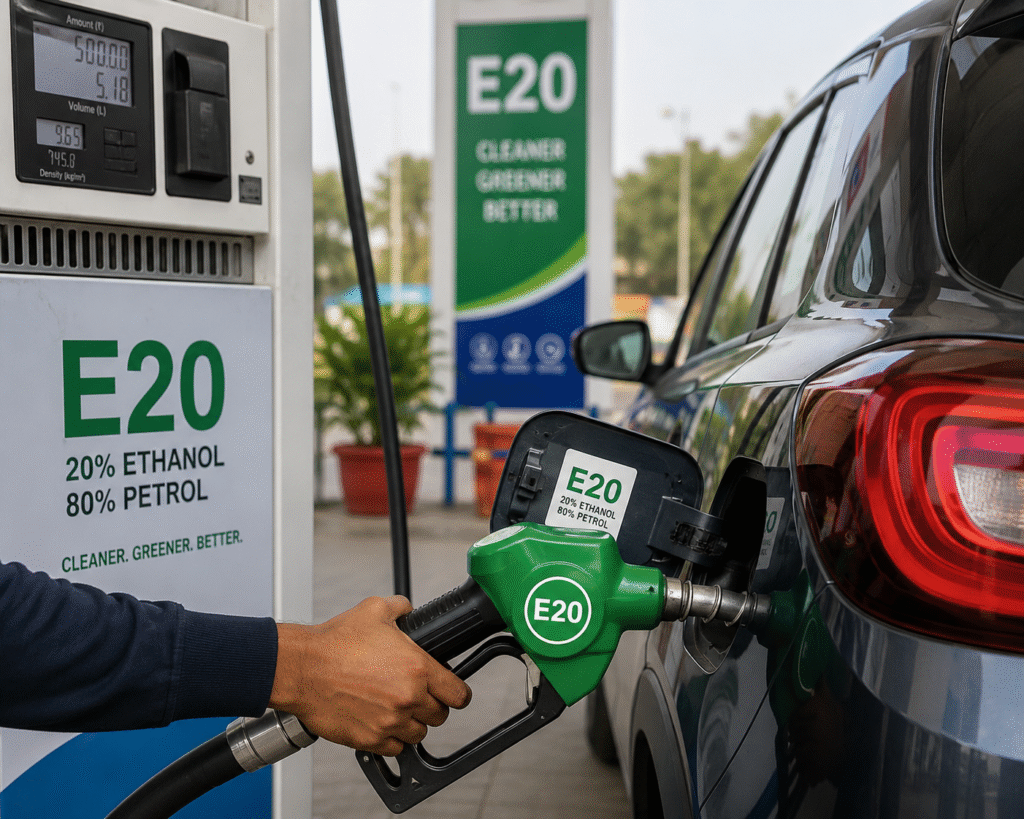
The Centre has firmly defended E20 fuel, rejecting demands for pure petrol at pumps nationwide. The petroleum ministry said offering multiple fuel grades would strain India’s vast retail network. It called E20 fuel cleaner, safer and technically superior to lower ethanol blends. The clarification came through a detailed FAQ note issued on Friday.
Why Multiple Fuel Grades Beyond E20 Fuel Are Not Feasible
India runs over one lakh fuel retail outlets across cities, towns and villages. Stocking pure petrol, E10 and E20 together would multiply logistics at every depot. The ministry warned this would raise handling costs and complicate inventory management. It would also strain refineries, pipelines and storage terminals nationwide.
Officials asked why anyone would deliberately choose an inferior fuel option. They argued E20 already delivers cleaner combustion and stronger performance. Reverting to lower blends now would undo years of infrastructure investment. Public banks have financed nearly Rs 1 lakh crore yearly in ethanol projects.
E20 Fuel Called Safer Than Pure Petrol
The ministry insists E20 fuel is not an experimental product rushed into use. Automobile manufacturers were consulted well before India adopted the E10 target in 2022. An even more rigorous process followed before the E20 rollout began. Engineers tested engine durability, corrosion resistance, drivability and emissions extensively.
Officials pointed to real-world data to back their claims. Maruti Suzuki serviced 2.84 crore vehicles in FY 2025-26, including many older models. The company reported no E20-linked corrosion or component damage during servicing. Hero MotoCorp shared similar findings from its own service network, the ministry noted.
Consumers can expect a mild mileage dip in older, non-compatible vehicles. The ministry pegged this drop at roughly three to five percent. It said gains like faster combustion and smoother acceleration offset this loss. Manufacturers continue honouring warranties across old and new vehicle models.
Ethanol Push Tied to Energy Security, Not Cheaper Fuel
Officials clarified that ethanol blending does not aim to cut petrol prices directly. Instead, the programme protects consumers from volatile global crude markets. Maize-based ethanol is currently procured at around Rs 71.86 per litre before taxes. This price stays fixed regardless of daily swings in Brent crude.
The government highlighted savings from this approach following recent West Asia tensions. Between March and June 2026, petrol prices in Delhi rose 7.76 per cent, far less than the sharper increases seen in Pakistan, Sri Lanka, Nepal and Bangladesh over the same period. Officials said the broader ethanol programme has saved more than Rs 1.97 lakh crore in foreign exchange so far.
Farmers have also gained from the shift toward domestic ethanol production. The programme has transferred over Rs 1.66 lakh crore to farmers to date. Officials described farmers as both food providers and energy contributors under the policy. This dual role strengthens the case for sustaining the ethanol push, they said.
What Comes Next for India’s Fuel Blend Policy
The government continues testing higher ethanol blends beyond the current E20 standard. Petroleum minister Hardeep Singh Puri recently flagged a future E85 fuel option, expected to cost around Rs 20 less per litre than E20. He clarified that E25 trials remain underway, with no rollout decision made yet. Any shift beyond E20 will follow fresh consultations with automakers, officials said.
Reports suggest the planned move to E25 fuel could face further delays. The government appears cautious after sustained public pushback over E20 adoption. Motorists and industry groups will watch closely for the next policy update. Any change will likely hinge on fresh testing data and stakeholder feedback.
Source: ANI
Follow The World TImes For Such Updates!