
India’s rise since 1947 has no match in modern history. No big nation has climbed so far, so fast. India started from terrible odds. Yet, seventy-nine years after independence, the world watches this once-drained nation with awe.
This is not a quiet, gradual story. Instead, it is a sharp, dramatic climb from the bottom of the global order toward its very top table. Every decade since independence has added a new chapter to India’s rise.
The numbers tell a bold story. India was the world’s 11th-largest economy in 2014. Today it ranks fourth, behind only the US, China, and Germany. NITI Aayog expects India to pass Germany within three years. Few nations have packed so much growth into so little time. By comparison, America needed 250 years to build its economic might. Conversely, India has covered similar ground in just 79.
India’s Rise From Colonial Ruins

Historically, two centuries of British rule left India in ruins. Economist Utsa Patnaik says colonial policies drained close to $45 trillion from India. The drain ran from 1765 to 1938. Scholars still debate the exact number. However, it shows the scale of what India lost.
Independence came in 1947 with literacy near 12 percent. The national treasury sat nearly empty. Famine and poverty gripped large parts of the country. Meanwhile, local industries lay in tatters after two centuries of extraction.
The world doubted India would survive as one nation. Many predicted collapse or famine. Some feared the young democracy would splinter into pieces. Nonetheless, India proved every doubter wrong.
Since then, India has climbed the global ladder at a blistering pace. It overtook the United Kingdom in 2022 to become the fifth-largest economy. It passed Japan by 2025 to claim fourth place. As a result, each step came faster than the last.
India’s economy now grows 6 to 6.5 percent each year. That makes it one of the fastest-growing big economies on Earth. This is not a story of catching up. India’s rise is writing new rules for fast growth. It has done this as a democracy of 1.4 billion people, not a small, centrally run state.
Behind these headline numbers sit five achievements. Each captures a different kind of national strength. Together, they span science, industry, business, finance, and diplomacy. They tell the real story of India’s rise, one breakthrough at a time. No other developing nation has stacked up wins across so many fields in such a short stretch.
Conquering the Moon on a Shoestring Budget
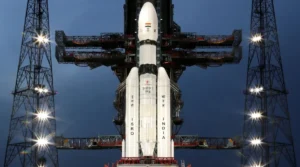
In August 2023, ISRO’s Chandrayaan-3 landed near the Moon’s south pole. No craft had ever landed there before. India joined the US, Russia, and China. Thus, it became only the fourth country to pull off a soft moon landing.
The mission cost close to 615 crore rupees. That is about 75 million dollars. Many Hollywood space films cost more than that. Indian engineers proved that big wins need sharp minds, not deep pockets.
This was not a one-off feat. Similarly, India’s Mars Orbiter Mission reached the Red Planet in 2014 for under 75 million dollars too. It remains cheaper than the film Gravity, which told a story about space. Moreover, ISRO has built a global reputation for stretching every rupee further than most space agencies manage.
The south pole landing carries real scientific weight. Scientists believe the region holds frozen water ice. That ice could support future lunar missions and even human outposts. India got there first, ahead of far richer space programmes. In turn, this achievement strengthened India’s rise in the global space sector.
India’s Rise Into the Global Chip Supply Chain

For decades, the West held the best chip-making tools. Export rules kept this tech locked away from most of the world. In May 2026, Tata Electronics signed a big deal with ASML, the Dutch tech giant. PM Modi watched the signing during his trip to the Netherlands.
The deal will bring key lithography tools for Tata’s new plant in Dholera, Gujarat. Tata will invest 11 billion dollars in this plant. It will be India’s first big commercial chip factory. Consequently, the plant will make chips for cars, phones, and AI systems.
This marks India’s entry into a field it was long shut out of. India has tried to build a domestic chip industry before and stumbled. This time, however, the backing of the world’s top lithography maker changes the odds. The Dholera project sits inside a wider push, with roughly a dozen semiconductor projects now underway across the country.
Officials expect the first chips to roll off the line by late 2026. Subsequently, full-scale output should follow within a couple of years. Every chip made on Indian soil chips away at decades of import dependence.
Private Rocket Reaches Orbit on Its First Try!

On July 18, 2026, Skyroot Aerospace launched Vikram-1 from Sriharikota. This Hyderabad-based startup built India’s first private orbital rocket. The rocket reached a 450-kilometre orbit in just 15 minutes.
India became only the third country with this power. Only the US and China had done it before through private firms. Vikram-1 uses carbon-composite parts. In fact, its engine is fully 3D-printed, a first for any orbital launch vehicle anywhere.
Skyroot began in 2018 with a small team and a bold goal. It later became the first Indian space startup to cross a billion-dollar valuation. Global investors backed the company because it kept delivering results on tight timelines. Meanwhile, India’s rise in commercial space is creating new opportunities for private companies.
Maiden orbital flights almost always fail somewhere in the world. Getting it right on the very first attempt is rare. Skyroot’s success shows that Indian innovation now reaches far beyond government labs. The company plans more test flights before it moves into steady commercial service.
India’s Rise Through the World’s Most-Used Payment System

India’s UPI system powers digital payments for over a billion people. The IMF calls UPI the world’s largest real-time payment system by volume. UPI now handles nearly 49 percent of all real-time digital payments worldwide. No other country’s payment rail comes close to this reach.
UPI already works in seven countries. These include France, Singapore, and the UAE. A tea vendor in a small town and a large company in Mumbai use the same rails. Both settle payments instantly, at zero cost, day or night.
Monthly transactions have crossed 18 billion and keep climbing. India even logged over 700 million payments in a single day in 2025. Furthermore, the government now targets one billion transactions a day within the next year.
This is not just a domestic success story. India built UPI on fully indigenous software, then chose to share it with the world. That choice offers other nations a real alternative to costly Western card networks. Accordingly, it has turned a local invention into a genuine export of Indian ingenuity.
Giving the Global South a Seat at the Table

During its 2023 G20 term, India pushed for a bold change. It won the African Union a permanent seat at the G20. This was the group’s first expansion since it began decades ago. The move gave 55 African states a formal voice in world economic talks.
Getting there took careful, patient diplomacy. The world stood deeply split over conflicts in Europe and beyond. India refused to pick a side in these global fights. Instead, it built consensus among rival blocs and pushed for causes that mattered to poorer nations.
This was a proud moment for Indian diplomacy. New Delhi positioned itself as a bridge between rich and developing nations. Hence, it showed that a country can lead without dominating, and unite without choosing sides.
The African Union’s inclusion reshaped how the G20 makes decisions. Issues that matter to the Global South now carry more weight at the table. In addition, India’s presidency left a mark on global governance that will likely outlast the summit itself.
The Road Ahead for a Rising Bharat
India now looks ahead to its Viksit Bharat at 2047 goals. This plan aims to make India a fully developed nation by its 100th year of independence. Each of the five wins above marks one step on that longer road.
The Dholera chip plant should start work by late 2026. Skyroot plans more orbital test flights before regular commercial launches begin. UPI aims to expand into more countries and cross new transaction records. The African Union’s G20 seat should keep shaping global talks for years. Taken together, these developments could give India’s rise further momentum.
None of this happened by accident. Decades of steady investment in schools, labs, startups, and public infrastructure laid the groundwork. Leaders backed big, risky bets on Indian talent when the odds looked shaky. Millions of ordinary citizens kept working, building, and believing through far harder decades.
Each win builds on the last. India’s rise is far from finished, and the next chapter may move even faster than the last. Watch for India’s GDP rank to climb again as it nears Germany. Watch too for new leaps in space, chips, and diplomacy in the years ahead.
Follow The World Times For Such Updates!
Source : ASML