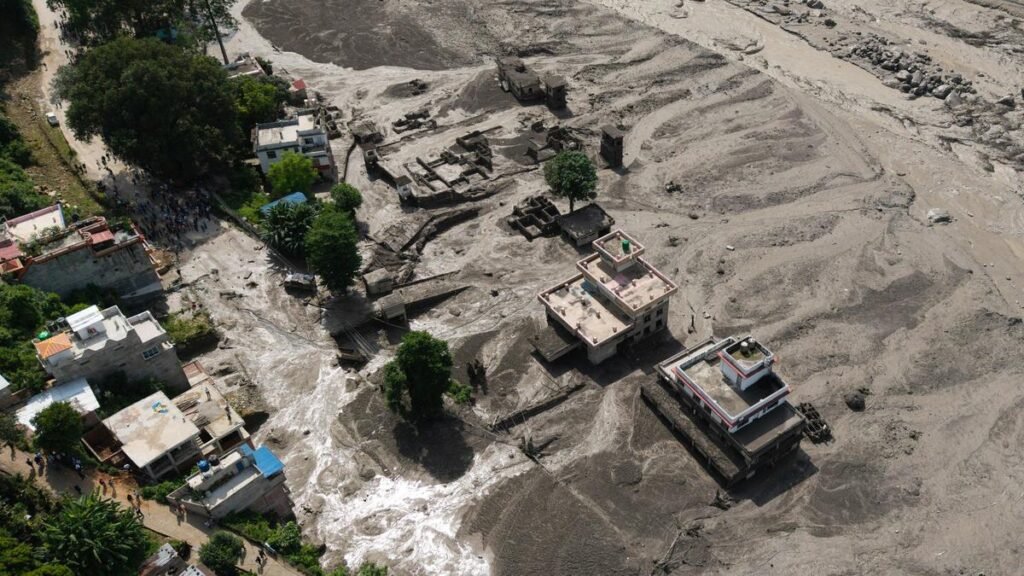
The Nepal floods claimed hundreds of lives and left many people missing. A torrential flood of water, mud, and other debris hit regions close to the border between Nepal and China. This catastrophe, which occurred on August 26, wreaked havoc in many districts. It washed away roads, houses, bridges, and even hydropower infrastructure.
The reason behind these floods is a large-scale collapse of rocks and ice in the Himalayan region. These rocks fell into the Lhende River, which is a tributary of the Bhotekoshi River system. At first, experts believed that an earthquake caused the glacier collapse. However, further analysis showed that the glacier and rock collapse itself caused the detected seismic activity in the region.
As of Thursday, August 27, the scale of the disaster continued to emerge as rescue teams recovered more bodies and searched for missing people. According to the reports, there were at least 270 victims of the disaster in Nepal, while hundreds of people remained missing. The catastrophe also affected Tibet, where there were deaths and hundreds of missing people.
Nepal Floods Leave Tourists and Pilgrims Missing
The loss of many tourists and Indian pilgrims has emerged as one of the major concerns following the Nepal floods. The area of interest in the floods is located along an important route through which travellers go to Kailash Manasarovar in Tibet.
Reports indicated that hundreds of people had gone missing, including a significant number of foreigners.
Several Indians were also affected, as the Ministry of External Affairs reported that authorities could not contact several groups travelling to or working in the affected areas. These include pilgrims from Tamil Nadu, West Bengal and Kerala, and Indian workers working on the Trishuli-1 power plant.
The Indian government is making attempts to rescue its citizens. However, the mountainous landscape and damage done to the road and communication infrastructure has made these efforts rather difficult. Nepal’s army is using helicopters to rescue victims, but the weather and high water level of the rivers make access to these remote areas even more challenging.
First, the flooding affected the regions such as Timure and Syabrubesi at the border with India. The floods have washed away the entire settlements located along the banks of the river. Residents reported significant damage as mud and floodwaters rapidly swept through the streams.
Infrastructure Damage Hampers Rescue Efforts
Nepal floods caused destruction in vital infrastructure as well. Floodwaters damaged at least 19 bridges and 40 kilometres of roads, while several hydropower projects were also affected. Moreover, the floods swept away hundreds of vehicles, mainly trucks.
As a result of the destruction, there have been significant difficulties for rescue teams to enter isolated places. In some areas, the destruction of power infrastructure has caused electricity outages, while damaged communication networks have also disrupted connectivity.
The consequences of this disaster are not confined to Nepal. Indian authorities have issued warnings to Northern states of India especially, Uttar Pradesh and Bihar, due to the fact that rivers coming from Nepal might bring floodwaters to Indian plains. Authorities of Bihar state have started evacuation of people from the regions considered to be vulnerable to flood.
Nepalese authorities have declared the worst-affected regions disaster zones and ordered officials to provide medical treatment to people injured in the disaster. Moreover, search and rescue operations are going on as the fate of many people remains unknown.
Disaster has yet again demonstrated the vulnerability of people living in Himalayan mountains to natural catastrophes such as floods, landslides, and glacier collapse. As rescue workers are conducting operations in order to find people who went missing, all consequences of the disaster are yet to come.
Follow The World Times for more such updates!