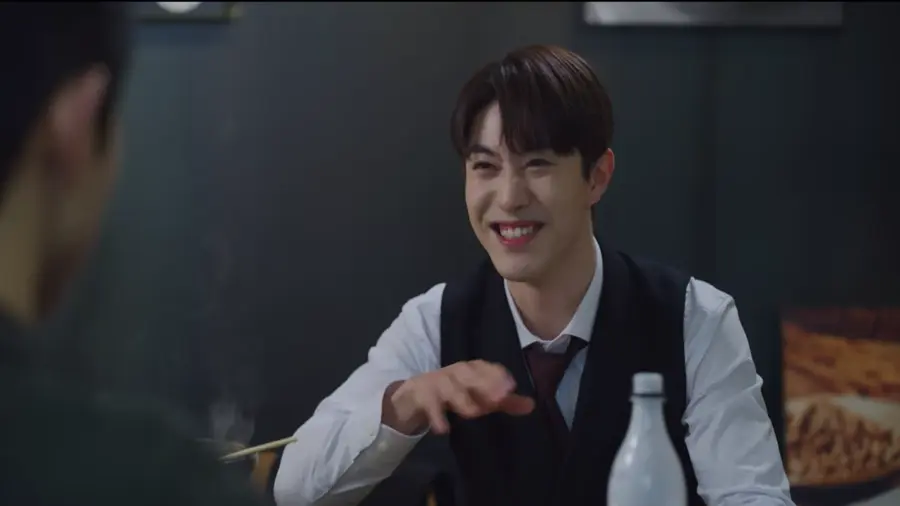
In the world of K-dramas, love is not measured by grand confessions or fairy-tale endings, but by sacrifice. A character gives away his last ticket to freedom to ensure her brother flying to another city. A man steps away from his dream to take a job that pays the bills. A parent hides their illness to protect their child. A lover chooses separation over being an unworthy choice who makes their partner suffer. These moments rarely portray defeat. Instead, they become the heart of the story.
Unlike Hollywood romcoms, where plots often reward characters for following their hearts, K-dramas frequently ask a different question: What are you willing to lose for someone you love? The answer determines some of the genre’s most unforgettable moments.
Click here to watch the full story of The Innocent Man, where Kang Ma-Ru is played by Song Joong-ki. He confronts a relentless tribunal of loss, separation, and cruel destiny.
Sacrifice Through A Cultural Lens
This storytelling tradition reflects values deeply rooted in many Asian societies. Duty, family, and collective well-being often stand alongside individual desire. Whether a son carries the burden of his family’s expectations or lovers choose responsibility over romance; the portrayal of sacrifice is not depicted as unnecessary suffering, but as an act of maturity, compassion, and emotional strength.
East Asian stories often prioritize duty towards one’s family and community well-being over personal happiness. Characters regularly face choices between their desires and responsibilities. Duty paves the way for growth and honor. On the other hand, mainstream Western cinema and series celebrate individualism. The climax occurs when characters finally break free from societal expectations to pursue their dreams. Thus, sacrifice is often portrayed as rare in Hollywood movies, where the film typically concludes with characters choosing themselves.
However, K-dramas tell a different story. Sacrifices are neither loud here nor dramatic. Sometimes, the quiet decision to let go, to endure, or to choose another person’s happiness over one’s own transcend borders. Whether viewers share their cultural values or not, these emotions become easy to recognize. Thus, they continue to connect with viewers around the world.
Kang Ma-Ru: Sacrifice From Devotion
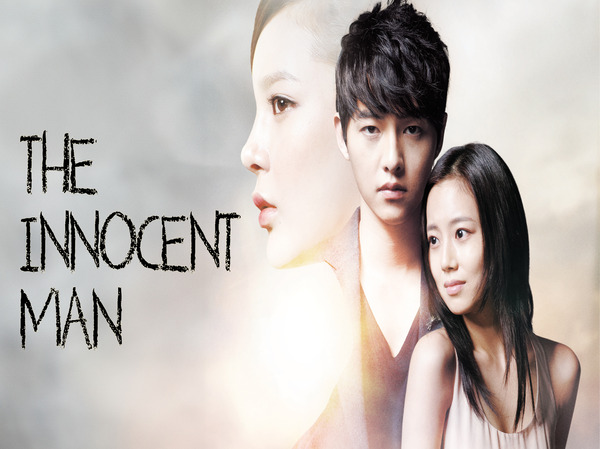
Ma-ru’s tragedy lies not in his willingness to sacrifice, but in how completely he sacrifices himself. Beneath his anger and desire for revenge, he remains the same person who once sacrificed himself for someone else. His relationship with Eun-gi, daughter of the man who stole the woman he loved, forces him to confront who he really is.
Ma-ru is a poor yet aspiring medical student at the beginning of the drama. He can barely manage the bills while his sister struggles with a fatal illness. On top of that, he serves prison on behalf of his long time girlfriend, Jae-hee, only to find out she has chosen a wealthy man over him! Naturally, when Ma-ru re-enters Jae-hee’s life, he is no longer the idealistic young man he once was. Nevertheless, it is Eun-gi’s love that transforms him into the best version of himself.
By now, if viewers are not already crying for him, they should collect more tissues for what is upcoming in the subsequent episodes. Seeking revenge he drifts into the wrong path emerging from a spiral of grudge and betrayal. He pursues her step-daughter seeking t0 use her against the couple.
Sacrifice At The Cost Of Self-Negation And Transformation Of The Heart
Even while pursuing revenge, he repeatedly abandons his own needs to protect Eun-gi. He distances himself to protect her from danger, returns only when her life is threatened, and willingly postpones surgery for his cerebral hematoma to help her reclaim Taesan. Ma-ru is also safeguarding her from Jae-hee, now the malevolent stepmother and her lawyer associates, while Eun-gi struggles with amnesia, unable to recognize the people in her life or recognize their intentions.
Choosing Her Safety Over His Own
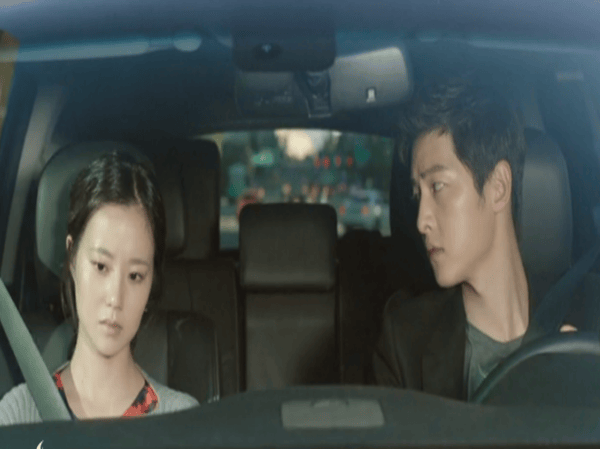
Yet, Ma-ru does not mind! Neither when he is reading Eun-gi her precious children’s books, now that she has the maturity of a five-year-old, nor when she is throwing tantrums over milk. Rather, he encourages Eun-gi to direct her anger at him than at herself. He expresses relief when she says she would never forgive him once her memories return.
Ma-ru comes a long way from wanting to use her to avenge his past. He tastes her food before her to ensure it isn’t poisoned, and he walks out of the hospital because he worries about her safety. In the final episode, he hides a stab wound he received while covering for her as they kiss! The exaggeration of his selflessness is at its finest when he waits for Eun-gi to get in the taxi, and he finally collapses after the vehicle drives away.
By the series’ conclusion, Ma-ru has renounced revenge but accepted self-denial. He has developed into a man for whom hatred is easier to bear than seeing Eun-gi harmed. He stands between danger and the people he loves, embracing the consequences.
Han Seo: A Man Trapped In The Wrong Side
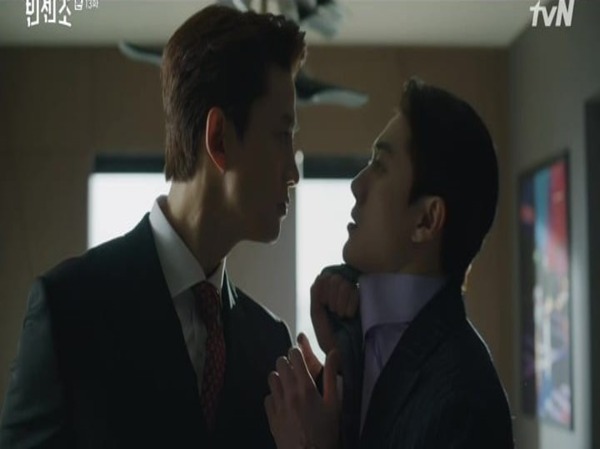
Unlike protagonists who sacrifice out of love alone, Han-seo’s sacrifices emerge from his desperate pursuit of freedom from his tyrannical step-brother. Throughout Vincenzo, he lives under the constant psychological and physical abuse of Jang Han-seok. Han-seo has to suppress his own identity to survive within Babel Group. Initially, he serves as a human shield to protect his brother from the legal consequences of his crimes.
Instead of feeling grateful, Han-Seok bullies him, threatens his life, and constantly reminds him how he pulled the plug on their father as he struggled while in a coma! All because Han-seok could not forgive him for the infidelity against his mother. According to him, his younger brother Han-seo is the living symbol of that betrayal, the son born to his father from his affair with the secretary.
Han-seo must change his wardrobe and hairstyle to pose as a CEO, allowing his brother to serve jail time if arrested. If this seems diabolical, the list does not end here.
He is also forced to change his mannerisms and the way he carries himself to not give anyone the benefit of the doubt. Although, most of the episodes establish that he fails miserably. Under the pretext of a hunting trip together when he finally shoots his brother and captor, he convinces himself he did so to gain the chairmanship of Babel, encouraged by the CEO of Wusan Law Firm. However, in reality, he only did it out of fear.
No matter how many times different characters use him to get to his brother, Han-seo’s struggles reveal that beneath his ambition to inherit the company lies a terrified young boy who just wants to live freely without faking his entire personality as an utter fool, lest his brother sees him as a threat.
His Final Act Of Liberation and Redemption
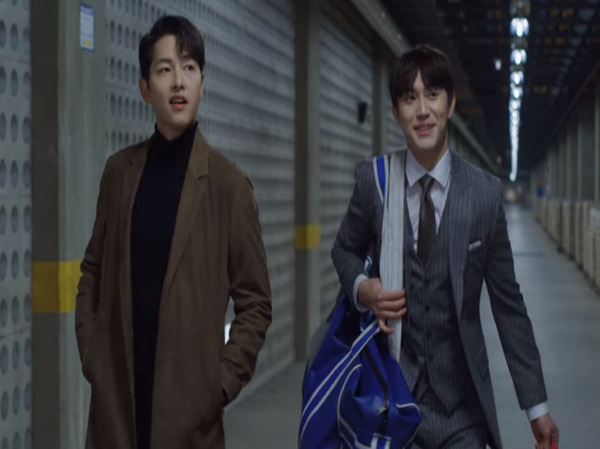
As Han-seo gradually allies himself with Vincenzo, he soon discovers a guardian in the Italian mafia boss that he never found before in anyone else. After all, he was someone who desperately needed guidance, support and maybe occasional lectures on morality! He insists Vincenzo if he can refer to him as an older brother. This is tragic to the core, because in that bond he seeks to discover brotherhood again that he rarely experienced with Han-seok.
Han-seo begins sacrificing the very privileges that once protected him. He secretly leaks information, undermines Babel’s operations, and repeatedly risks violent retaliation by defying Han-seok’s orders. He sacrifices himself in the final confrontation scene, where he shields Vincenzo from Han-seok’s gunfire, at the same time ensuring all the remaining bullets are wasted on him. This ultimately saves Cha-young and Vincenzo from Han-seok’s wrath.
Click here to watch the full death scene. Ironically, Han-seo’s last words were, “I… did well, didn’t I? For the first time… in my life… I’ve helped someone. Hey, you know what to do. Thank you… for everything.”
As someone who was always criticized by his brother, who never provided him encouragement or love, he died earning his place in the world by not only protecting his friends but also protecting the world by exposing his brother’s whereabouts before he could hurt more people.
Before dying, Han-seo secretly gives Vincenzo an unlocked phone that reveals Jun-woo’s location as he tries to flee to Mexico. Han-seo’s final act, Vincenzo is able to track down the antagonist and deliver the painful end he deserves.
This completes Han-seo’s redemption arc. By sacrificing the life long controlled by fear, he finally reclaims agency over his own choices, proving that redemption sometimes demands the ultimate price.
Conclusion
Sacrifice in K-dramas rarely guarantees happiness or justice. Instead, it exposes the cost of choosing others over oneself. Kang Ma-ru and Han-seo lose almost everything through their decisions. Yet, their sacrifices reveal resilience, compassion, and moral growth rather than weakness. These stories from K-dramas remind audience globally that true heroism often lies in quiet acts of selflessness, even if they end in loss.
Follow The World Times for more such updates!