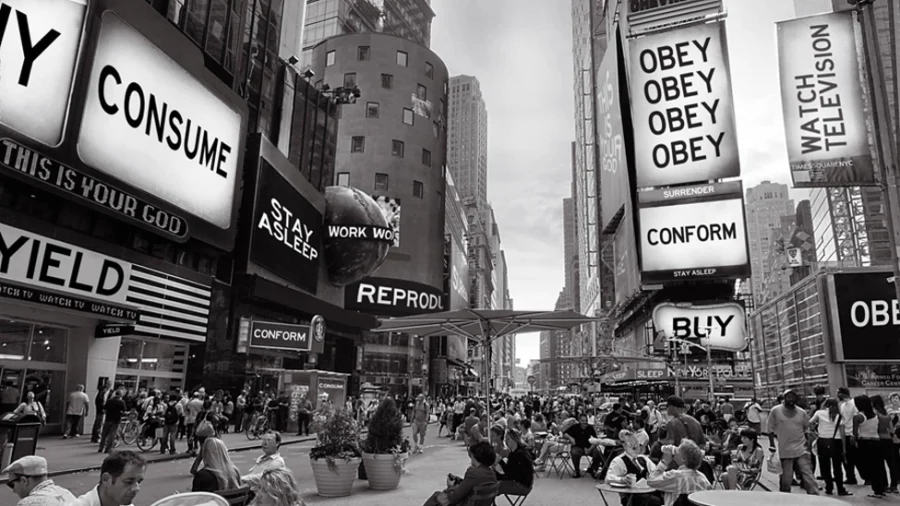
In 1944, Adorno and Horkheimer warned that mass culture would one day function like a factory. It would produce standardised cultural products that contribute to the standardisation of people’s thoughts and preferences. Within this culture industry, cultural products will not only be made for profit, but also to produce people adapted to the needs of the capitalist system.
Eight decades later, that prediction no longer reads like theory but like a description of everyday life. What passes as culture today is often an output of industries designed to standardize taste and desire. From algorithm-driven playlists to micro-trends on TikTok, the culture industry has only become more profitable.
The Culture Industry in Contemporary Life
Though Adorno and Horkheimer developed this concept in 1944, their insights have become even more relevant in 2025. Today’s digital landscape has amplified the mechanisms of the culture industry to unprecedented levels. The resulting standardization and manufactured desire is more pervasive than ever.
Algorithmic Personalization and the Illusion of Autonomy
Streaming services like Netflix, Prime, and Spotify exemplify the illusion of choice. These platforms offer thousands of options, creating the appearance of unprecedented freedom. Yet their algorithms funnel users toward content that keeps them engaged longer, optimizing for platform metrics rather than exploration. The “choice” is carefully curated to serve capitalist interests of keeping its consumers subscribed, watching ads, and generating data.
Music streaming services respond to preferences as well as actively shape them. The false psychological need here is the constant desire for algorithmically-curated novelty, keeping users dependent on the platform rather than developing independent musical exploration. The factory produces not just songs, but listening habits and musical identities that serve platform engagement.
Influencer Culture and Manufactured Aspiration
Social media influencers represent a contemporary evolution of celebrity emulation. People don’t just follow influencers now. They adopt their consumption patterns, aesthetics, speech patterns, and even their performance of “authenticity”. What is happening is the manufacturing of aspirational lifestyles that require endless purchasing to approximate. Every product placement, every “get ready with me” video, every lifestyle recommendation reinforces the notion that happiness and identity can be purchased, creating needs that didn’t previously exist.
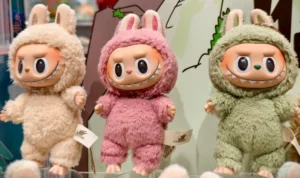
The rise of Labubus in 2025 is the clearest example of how influencer marketing can manufacture a need out of absolutely nothing. Labubus only became a status symbol solely because influencers staged it as an aesthetic accessory. Its value came from visibility, not substance. This obsession easily proves how in 2025, “necessities” are algorithmically boosted, influencer-endorsed, and ultimately, something no one genuinely needs.
Fast Fashion, Accelerated Consumption, and the Illusion of “Conscious” Capitalism

TikTok and Instagram shorts have turbocharged the fashion industry’s production of false needs. Micro-trends now emerge and die within weeks rather than seasons, creating artificial pressure for constant wardrobe updates to maintain social relevance.
Fast fashion brands like Shein, H&M, and Urbanic can respond to these manufactured trends almost instantly, producing cheap clothing that fulfills a need that barely existed days before. The cycle of desire, consumption, and obsolescence has accelerated to match the scroll speed of social media.
At the same time, the culture industry has become so sophisticated that it now sells resistance itself. Consumers can purchase “eco-friendly” products, “ethical” fashion, or brands that support social causes, but these remain commodities produced within the same capitalist system. Even anti-capitalist sentiment has been absorbed and repackaged for profit, fulfilling the false psychological need to be ethically virtuous through purchasing power rather than systemic change. The fashion cycle not only invents desires but also monetizes guilt, making consumption appear as a solution to problems created by consumption itself.
Standardized Films and Franchises

Contemporary cinema is dominated by franchises that follow predictable formulas. The Marvel Cinematic Universe pioneered this approach, creating an interconnected series of films that prioritize formulaic storytelling, post-credit teases, and brand recognition over artistic risk.
This formula has become so successful that it’s been replicated across industries and cultures. In India, Maddock Cinematic Universe exemplifies this spread of standardization. Beginning with horror-comedies like Stree and Bhediya, Maddock Films adopted the Marvel blueprint of interconnected storylines, cameo appearances, post-credit sequences teasing future installments, and a shared mythology that keeps audiences returning. The same predictable structure, the same cultivation of anticipation for “what’s next” rather than appreciation of “what is.”
Risk—once essential to artistic evolution—has been replaced by replication.
The Deepening of the Culture Industry
What makes the culture industry particularly powerful in 2025 is its ability to feel personal and authentic while remaining systematically manufactured. The factory has become invisible, operating through algorithms, data analytics, and the performance of individuality. We’re not just consuming standardized products. We’re consuming standardized ways of being, thinking, and desiring.
The greatest deception is that this system presents itself as freedom. We scroll through infinite content, customize our profiles, and express our unique identities—all within a framework designed to produce predictable, profitable behavior. Recognizing these mechanisms doesn’t mean we can easily escape them, but awareness remains the first step toward critical consciousness rather than manufactured consent.
Read more on Culture and Society on The World Times.