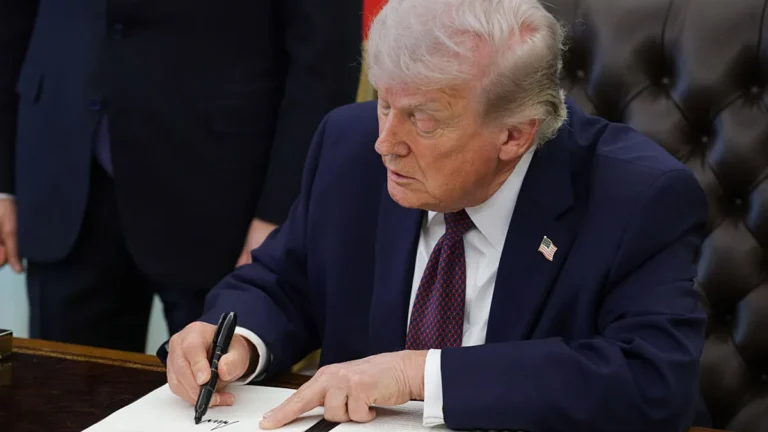
In a surprise diplomatic breakthrough, U.S. President Donald Trump and Chinese President Xi Jinping agreed to cut tariffs on key goods after a high-level meeting in Busan, South Korea. The move marks the most significant de-escalation in trade tensions between the world’s two largest economies in years.
The Trade Agreement
Following a meeting between U.S. President Donald Trump and Chinese President Xi Jinping on October 30, 2025, the U.S. agreed to reduce tariffs on Chinese goods from 57% to 47%. This was announced during a trade truce made on the sidelines of the APEC summit in Busan, South Korea.
Tariffs on Chinese goods related to fentanyl were cut from 20% to 10%. In exchange, China pledged to “work very hard to stop the flow” of fentanyl ingredients into the U.S. An immediate supply “roadblock” on rare earths was cleared with a one-year agreement. This is to keep exports flowing, which is renewable annually. China had recently tightened export restrictions on rare earth minerals, which are critical for tech manufacturing. China committed to resuming and expanding purchases of American agricultural products, including large quantities of soybeans.
The Diplomatic Moment
In an effort to cool rising trade hostilities, the United States and China have reached a mutual agreement on a one-year truce, temporarily easing the strain between the world’s two largest economies. Under this deal, both nations will suspend their tit-for-tat port fees on vessels connected to the other side for a period of twelve months — a symbolic pause aimed at creating space for broader dialogue, stability in shipping lanes, and perhaps a reset in their increasingly competitive maritime and trade relations.
The overall tariff reduction was described as a goodwill gesture following constructive dialogue. Both sides suspended a series of retaliatory measures concerning tariffs, export controls, and port fees.
U.S. President Donald Trump described his face-to-face meeting with Chinese leader Xi Jinping on Thursday as a roaring success. Chinese President Xi Jinping said China has reached a consensus with the United States on economic and trade issues, state media reported, after meeting Thursday with US leader Donald Trump.
Key outcomes

Following months of new tariff hikes, the U.S. agreed to reduce some tariffs on Chinese goods, including a cut on fentanyl-related imports from 20% to 10%. In return, China will make corresponding adjustments to its own tariffs. China agreed to pause new export restrictions on critical rare earth minerals for one year. This was in response to the U.S. suspending its own export controls on technology that were planned for November.
China committed to immediately resuming significant purchases of U.S. soybeans and other agricultural products, providing relief to American farmers. Both countries also agreed to address disputes involving TikTok and other corporate cases. They pledged to boost cooperation in key sectors such as energy and trade.
The agreement is being viewed by some analysts as a “partial freeze” or “minor rollback” that offers a period of “managed stability,” rather than a comprehensive resolution.
Economic impact
American tech firms and small businesses relying on Chinese imports may see lower costs due to reduced tariffs. However, the continued tariffs mean prices for some goods remain elevated compared to pre-trade war levels. Economists warn that easing tariffs could reduce the incentive for U.S. businesses to move supply chains away from China, potentially delaying long-term resilience strategies.
The renewed purchase of agricultural goods like soybeans provides critical market access for U.S. farmers who were heavily impacted by China’s retaliatory tariffs. While direct tariff impacts may be small, some economists link recent inflation spikes to rising tariffs and trade uncertainties.
For Beijing, the tariff cuts are seen by some economists as a validation of its resilience, framing the outcome as a return to “economic pragmatism”.
By pausing rather than eliminating export controls on rare earth minerals, China retains its leverage over global high-tech industries. It can choose to reinstate or tighten controls if political tensions rise. China continues to strategically move up the value chain by prioritizing the export of high-value components, like magnets, rather than raw materials.
Global implications
As the world’s two largest economies, the state of the U.S.-China trade has immense global consequences. This latest truce offers a temporary calming period for markets and supply chains, but the underlying tensions remain
The ongoing trade war has accelerated the push for supply chain diversification away from China. Countries like Vietnam, India, and Mexico have benefited from diverted investment and manufacturing capacity. This process is expected to continue regardless of short-term truces.
The strategic use of export controls, particularly on critical minerals, highlights the vulnerability of global supply chains. This has spurred new initiatives in Europe and other countries to secure their own rare earth supplies.
The trend of unilateral tariffs and bilateral agreements continues to challenge the authority of multilateral organizations like the World Trade Organization (WTO), contributing to an uncertain future for global trade.
The Busan Agreement may not end the U.S.–China rivalry, but it signals a pause in economic hostilities and a momentary path to cooperation. Whether this marks a lasting peace or a brief truce will depend on the months ahead — and the politics driving both leaders.
For more such informative articles stay tuned at The World Times.