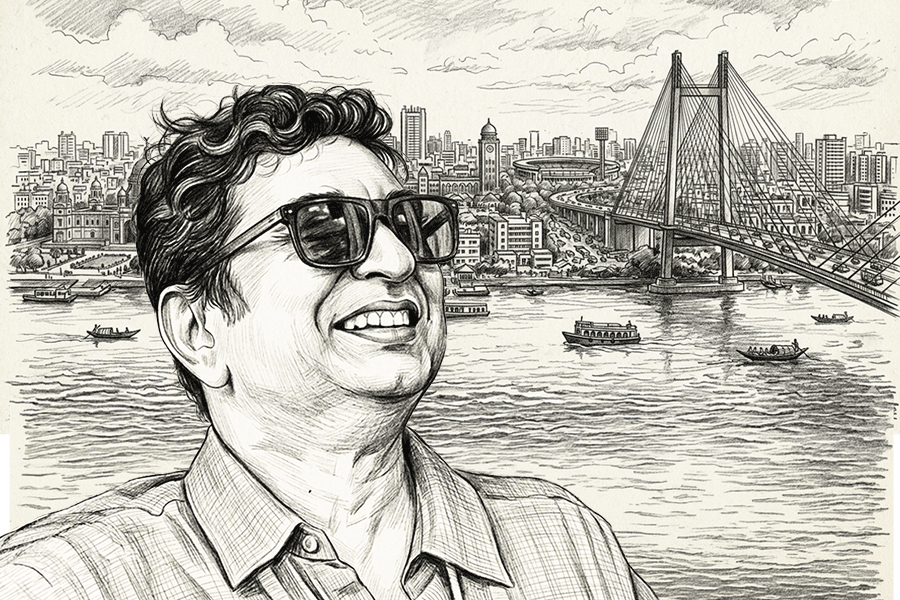
The untimely demise of Bengali filmmaker Anik Dutta has sparked a row among film lovers. A great loss to the Bengali film industry nonetheless. Dutta was the man behind a new genre of political satire in Bengali cinema. His death after allegedly falling from the roof of a six-story residence building at Hindustan Park near Gariahat on 27th May, 2026, has saddened filmmakers and movie lovers alike. Here is his journey as one of the best contemporary film directors in Tollywood.
Beginnings: How Did Anik Dutta Begin His Journey
He is the grandson of Narendra Chandra Dutta, the founder of United Bank of India. Anik Dutta was a student of Pathbhavan, Kolkata, and St. Xavier’s College, Kolkata. Highly influenced by Satyajit Ray’s style of filmmaking, his films often paid homage to timeless classics. The Times of India reports that Anik Dutta started his career in the Bengali advertisement sector. Priyanka Dasgupta notes his penchant for scoops and parody. He designed T-shirts inspired by Sukumar Ray and got his advertisement break by pioneering a jingle for Maggie.
Furthermore, he also worked with Arjun Gourisaria’s Black Magic. Apart from these, he developed a path-breaking advertisement for Biskfarm Biscuits. Prabhupada Banerjee notes that Dutta merged Bengali humour and upbringing with advertisement copies. Dutta’s hook lay in the fact that he could use musical spoofs with a talent which he later recreated for his movies as well.
Anik Dutta, A New Age Filmmaker
Dutta has directed eight films and co-written six of them. His films include a mix of old Bengali culture, often taking cues from Satyajit Ray. He focused on the old cultural heritage of Bengal. With a clever use of humour, wit, and satirical appearances, Dutta created a genre for himself. By doing so, he distanced himself from contemporary Bengali drama- drawing room narratives, larger-than-life movies, and commercial cinema.
Beginning of his Filmmaking Career
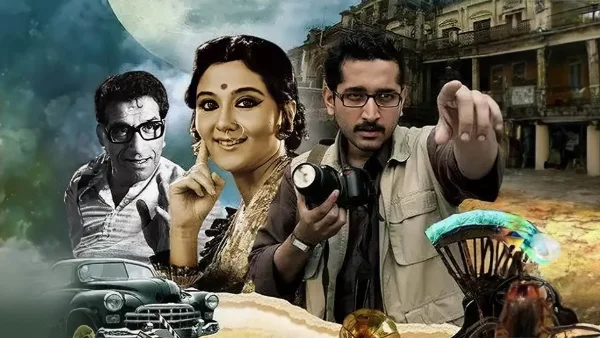
Bhooter Bhabishyat (transl. The Future of Ghosts), a 2012 fantasy-comedy-horror film, was Dutta’s directorial debut. It narrates the story of several Bengali ghosts living in a house together. The film focuses on the bygone glory of Bengal through its varied characters and its political history.
Moreover, with a clever touch of humour, Dutta makes it a satire where he points out the loss of Bengali cultural heritage through the demolition of old houses. Critics and audiences loved the movie, and it became one of the biggest hits of 2012. It inspired a Hindi remake titled Gang of Ghosts.
Ashchorjyo Prodeep(transl. The Magic Lamp), 2013, was the second directorial. Based on a short story written by Shirshendhu Mukhopadhay, it follows the life of an everyday couple who live with their unfulfilled aspirations. Their lives suddenly brighten up when the protagonist discovers a magic lamp with a genie in it. The genie takes him to unseen heights in life. While it also gives the couple luxury and happiness, they try to adjust to their newfound life.
Notably, the movie is a modern-day fantasy tale because it deals with the consumerist society and the middle-class couple’s aspirations of materiality. Dutta showcased a curious use of music in the movie. The first part has a more subtle use of flute, clarinet, and oboe, but as the couple’s life gets flashier, urban tones of drums and guitars replace them. This movie also performed well with critics and the audience.
Bhoobishyoyter Bhoot and Its Ban
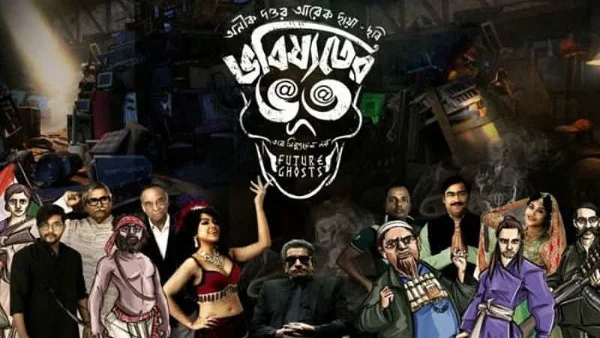
His film Bhobishyoter Bhoot (transl. Future Ghosts, 2019) also sparked considerable debate. Although he did not conceive it as a sequel to his first film, he used various kinds of ghosts—including politicians, extortionists, cabaret dancers, and Jatra actors—to tell the story. Through these characters, he explored the struggles of individuals confronting the social and political realities of the past. Moreover, he centred the narrative on their fight to preserve their place in a rapidly changing Kolkata, where developers were demolishing old houses at an alarming rate.
However, the film’s release soon became controversial. Authorities removed it from theatres across Kolkata, prompting strong reactions from industry stalwarts. Consequently, many critics condemned the move as “fascist” and “condemnable.” As the controversy intensified, the matter reached the Supreme Court, which ordered the West Bengal government to pay compensation and address the issue.
Aparajito and Other Ventures
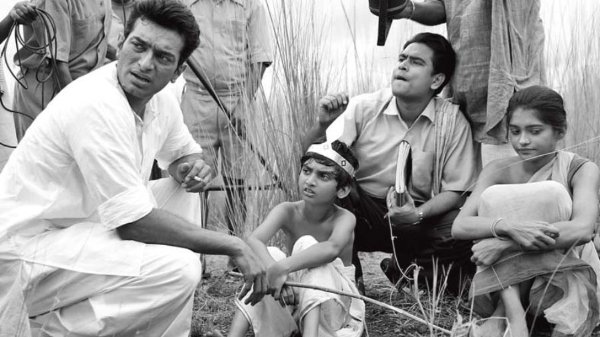
Dutta’s meta-narrative magnum opus, Aparajito (transl. The Undefeated),2022, chronicles the tale of Satyajit Ray making his cult classic film Pather Panchali. Jeetu Kamal starred in the titular role of Aparajito Roy, and the film was shot in black and white. The film premiered at the National Museum of Indian Cinema on 2nd May 2022 at a special screening.
Kamal’s performance, along with the cinematography, was highly appreciated by critics like Sham Benegal and Satyajit Ray’s son, Sandeep Ray. It earned various accolades at international film festivals, along with honours for makeup and production design at the 70th National Film Awards (2024).
Other directorial ventures of Dutta include Meghnadh Badh Rahasya(2017), Borun Babur Bondhu(2020), and the recent 2025 release Jato Kando Kolkatatei.
Demise and Speculations of Suicide
However, tragedy struck on 27 May 2026, when Anik Dutta passed away in circumstances widely speculated to be a suicide. Following the incident, investigators reportedly found a pair of leather sandals, a magazine, and a cinematography artwork on the roof of the building from which he fell. Furthermore, the magazine contained a handwritten one-page note addressed to his daughter, in which he reportedly stated that no one should be blamed for his death.
In the aftermath of his passing, industry stalwarts paid heartfelt tributes to the filmmaker and remembered the humility and grace with which he carried himself throughout his career. Nevertheless, his death marks a profound loss for the Bengali film industry. Even so, Anik Dutta’s contributions to cinema remain invaluable, and his legacy will continue to inspire generations to come.
Follow The World Times for more such news.