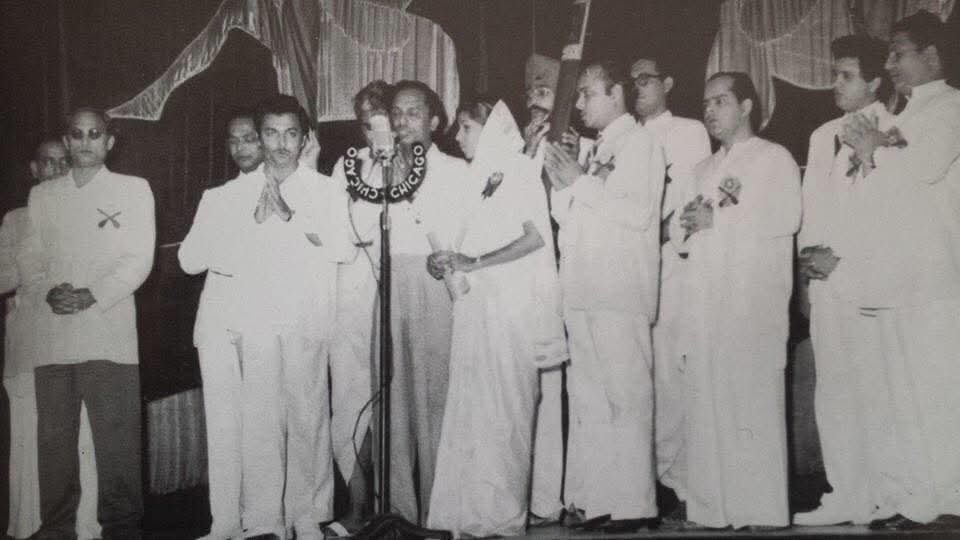
Bollywood music has always been one of the most prominent and captivating industries in the world. The evolution of Bollywood music tells a fascinating story of cultural and social change. Before India’s independence, filmmakers and musicians focused on creating content for a broad and inclusive audience. Religious and patriotic genres dominated the music scene, reflecting the nation’s mood as it moved toward independence. Filmmakers often portrayed ancient heroes to connect with the masses and inspire national pride. They also explored themes such as socialism, communal harmony, and cultural identity. Bollywood songs echoed these themes and played a significant role in shaping public sentiment during that era.
The Beginning of Bollywood Music
In the wake of independence, as the Cold War began to reshape the global landscape, socialist themes increasingly permeated cinema and music. Raj kapoor and Shailendra were the pioneers of this trend. The fascinating lyrics of “Mera joota hai Japani” reflected the mood of the country. It was the time when the country just got independence. People had new hopes and aspirations. The country was also going through different kind of social, cultural and economic turmoil. Songs of Mukesh which were picturized on Raj Kapoor mostly became very famous in the Soviet. Also cultural pride reflected in the Ganga-Jamuni ethos as well through Qawaali and Thumris.
There existed a subtle yet fascinating rivalry between the classically trained vocalists of the various Gharanas (traditional schools of Hindustani classical music) and the emerging world of Bollywood film music. Many musicians of Gharanas refused to sing in “Bollywood” as they felt music should be free and ever-flowing.
From Live to Playback
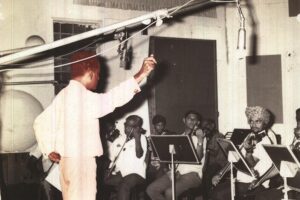
Before, actors only used to sing in the movies. This is the reason why actors who could sing well were given priority for example K L Saigal and Madam Nurjehan. So playback singing was introduced later on. Dhoop chaon by R C Boral in 1935 was the first film to introduce playback singing. Shamshad Begum and Mukesh were one of the earliest Playback Singers followed by Lata Mangeshkar, Manna Dey and Mohammad Rafi.
After the Partition, Madam Nurjehan migrated to Pakistan and now Lata Mangeshkar emerged as the primary female vocal for the leading ladies succeeding Suraiyya. If Madam Noorjehan had chosen to stay in India, who knows how the entire landscape of film music might have evolved. One can simply wonder now. Films like “Mahal” “Barsaat” they were milestones in the Bollywood music scenario.
The success of this flims owes largely to the soundtrack of the movie. Despite the Ministry’s crackdown on certain genres of music in the 1950s, Western influences began to appear in film songs.
It was an era when audiences would buy tickets solely on seeing the names of the composer duo Shankar-Jaikishan, highlighting the immense popularity and influence these music composers had on the masses.
Impact
The impact of early Bollywood music was immense, establishing a legacy where song and dance became an inseparable core of the cinematic experience. This influence transcended national borders, resonating deeply across the USSR and the Middle East. Central to this era was R.K. Films, renowned for their elaborate studio sets specifically designed to elevate grand musical and dance sequences. Despite this factor, singers and musicians were often underpaid leading to debates of unfairness. In the meanwhile, Raj Kapoor, Mukesh became a star in then USSR. Despite knowing the correct pronunciation of the lyrics,people started to “vibe” with them. This is another example of how music can always transcend artificial barriers to create a bridge.
Follow The World Times for more such updates!