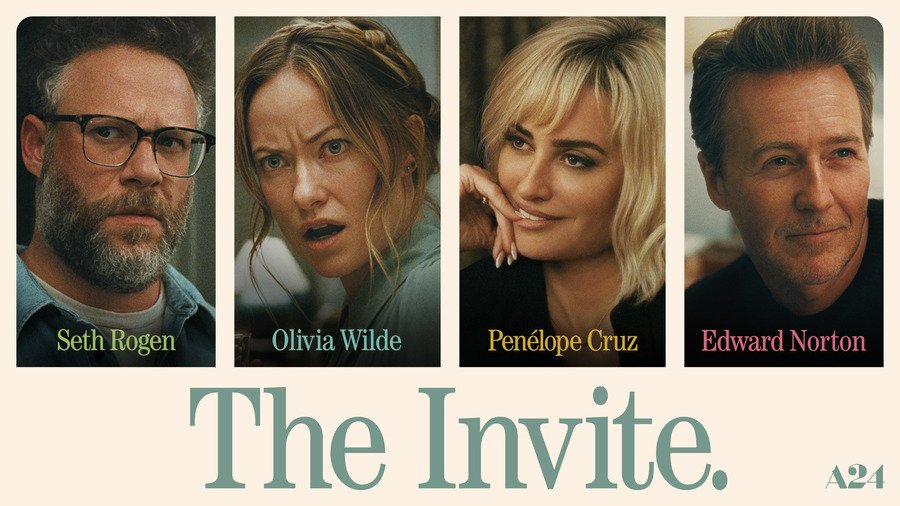
A married couple on the brink of separation, two enigmatic neighbors, and a dinner invite. Olivia Wilde’s 2026 directorial The Invite is a seemingly simple tale of disjointed relationships and the chaos that unfolds. What starts as an uncomplicated dinner invite from a chaotic couple soon turns into a series of hidden sentiments, desires, and problems. Meanwhile, with a heavy background score, brilliant cinematography, and excellent cast performances, the movie navigates through relationships, lust, and everything that comes after.
(Disclaimer: This contains spoilers.)
The Invite Champions the Art of Storytelling
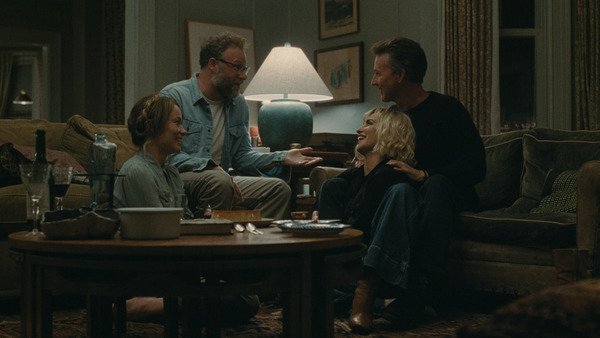
Remade from the 2020 Spanish film The People Upstairs, The Invite is a master class in storytelling. Will McCormack and Rashida Jones’ screenplay succeeds in creating an uneasy atmosphere. Consequently, this pivots the plot towards the dissolution of a couple’s marriage.
The plot is simple. Musician Joe and his stay-at-home wife, Angela, have a major falling-out in their marriage. Things are not as easy as they seem between them. Angela becomes an overbearing wife, instructing Joe about his life, while Joe dismisses her concerns. Arguments are the norm for them.
However, things take a sharp turn when Angela invites their enigmatic upstairs neighbors, Pina and Hawk, for dinner at their home. Reluctant to have them over, Joe sports a hostile courtesy. Angela, on the other hand, tries too hard to ease them. What follows is a confused hullabaloo where both the couples endeavor to adjust to each other’s whims.
The dinner invitation soon turns into a cocktail of revelations and buried passions. Joe and Angela’s chaos transforms into excitement when they hear about Pina and Hawk’s sex parties. The movie moves in an upward crescendo from here.
Cast Performances Uplift the Movie
The ensemble cast impresses audiences with their immaculate portrayals of four adults with different lives. The couples work in tandem to keep up with the polished tone of the movie. Since it’s a stylized sex comedy, the physical appearances and visually stimulating acts work well to situate the narrative.
Joe and Angela Perfectly Complement Each Other

Olivia Wilde impresses as a nervous, anxious, and stressed stay-at-home wife, Angela. She tries too hard to please her new neighbors while also painting a picture-perfect marriage. At times, she is overbearing. Light pastel colors, subtle nude makeup, and tied-up hair nod to her daily lifestyle. She is messy when it comes to her own life and managing other people, but she is calm and composed with the preparatory tasks.
Additionally, Olivia’s facial discomfort and bodily movements add an advanced texture to her character. Whether it is choosing a perfect dress for her neighbors or cooking the perfect meal — in an attempt to impress other people, Angela often overestimates herself. Essentially, she is someone tied down to her duties and responsibilities without a hint of emotional or social mobility.
Seth Rogen counters Olivia as the perfect, dismissive, musician husband, Joe. With a ruffled appearance, bad physique, airy and comfortable clothes, and an overall hostile reaction, Joe is trapped within what he wants from life and what life gives him. A failed band musician turned professor, Joe knows his limitations very well. Nevertheless, he regrets them and, having aged with a daughter and a wife, he no longer feels the compulsion to act better. The glaring lack of physical intimacy and emotional connection between the couple is evident. Bickering, overthinking, and fallouts are their specialty.
Pina and Hawk bring in a Stark Contrast

The enigmatic neighbors are completely opposite to the seemingly well-settled couple. While Joe and Angela are decked in pastel light shades and comfortable clothing, Pina and Hawk are the stylized sex-symbols of the movie. Dressed in darker shades, they represent the darker passions that engulf human desires. They challenge the mundane and lousy life that Joe and Angela lead.
In contrast, Penelope Cruz stars as the bold and beautiful Pina. Blond hair, dietary restrictions, and efficient knowledge are what make her charismatic. Pina never hesitates to stand up for what she thinks is right, be it the rights of women, sexual desires, or her own needs. A psychotherapist and sexologist, Pina’s greatest strength is in reading the room. She quickly warms up both Angela and Joe. Along with her carefree sexual appeal, there is a strange calmness in her words that tames the couple. With Pina, both Angela and Joe can be themselves. While Angela becomes freer about her desires, Joe learns to let go of his stress.
Alongside Pina, Edward Norton’s Hawk polishes up the game. With his suave charisma and a thirst for knowledge and other illicit desires, he too is quick to win over Angela. He dresses in all black, talks about his likes, and hypes up Joe’s aggressive truthfulness. Hawk is a polished gentleman throughout. Likewise, in a sharp contrast to Joe’s rebuttals, Hawk takes the initiative forward and communicates. His final vulnerable side makes Joe realize the mistake that he has been making. Underneath the sexual appeal is a man who is in touch with his inner sentiments. Norton plays the role with much ease.
Music as a Character in The Invite
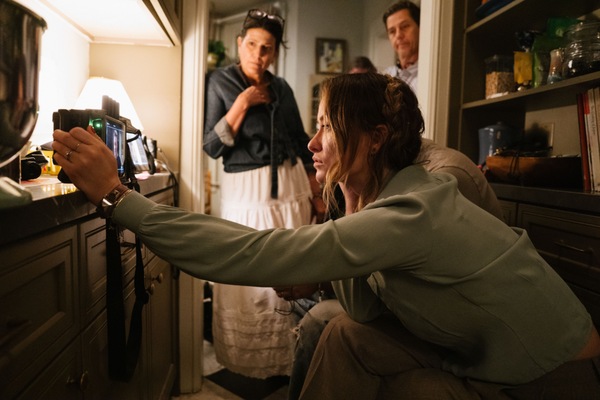
Apart from cast performances, music plays an important role. It is the backbone that glues the interactions together. Devonte Hynes’ score makes it feel less like a movie, more like an orchestra. The ensemble music features various instruments, a nod to the musical career that Joe pursues.
Moreover, the movie begins with the choral orchestra practice. With the high-rising crescendo and the sudden climax, it corresponds well with Joe’s psychological ups and downs when he reminisces about his life. Throughout the movie, there is sharp, stinging music. The arguments are played like a theatrical performance. Music accompanies throughout with the high and low meltdowns. The high-rising pitch is finally mellowed down with a piano ending. The velocity of their arguments closes with a subtle touch.
Cinematography in The Invite
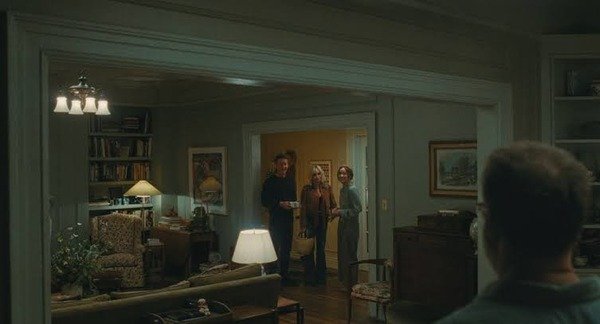
Another significant aspect of the movie is the well-defined cinematography. Techniques like blocking, fast camera movements, and a variety of short divisions encapsulate the momentary feelings of the characters. A technical use of lighting and camera angles to portray power adds nuance to the standpoint of the characters.
Steady use of color contrast in the way Joe and Angela and Pina and Hawk dress reflects their differential attitudes. While their house is all pastel and under construction, Pina and Hawk apparently have it figured out. A lot of times Angela is blocked out by various objects to reflect the state in which she is trapped. On the other hand, equalizing mid-close-up shots of Pina and Hawk showcase the equilibrium in the relationship.
The specific use of the house set ignites praise. Artistic rock walls, paintings, colored walls, and well-maintained bathroom tiles hint at Angela’s care. On the other hand, Joe’s cluttered study room hints at his own mental and emotional state. The chaos, along with the arrangement, makes a nice contrast.
Final Words: Should You Watch The Invite?
If you are looking for an elegant film with stellar performances and a cinematic appeal, then The Invite is perfect for you. Grab your popcorn and get ready for a steady ride!
Follow The World Times for more such movie breakdowns!