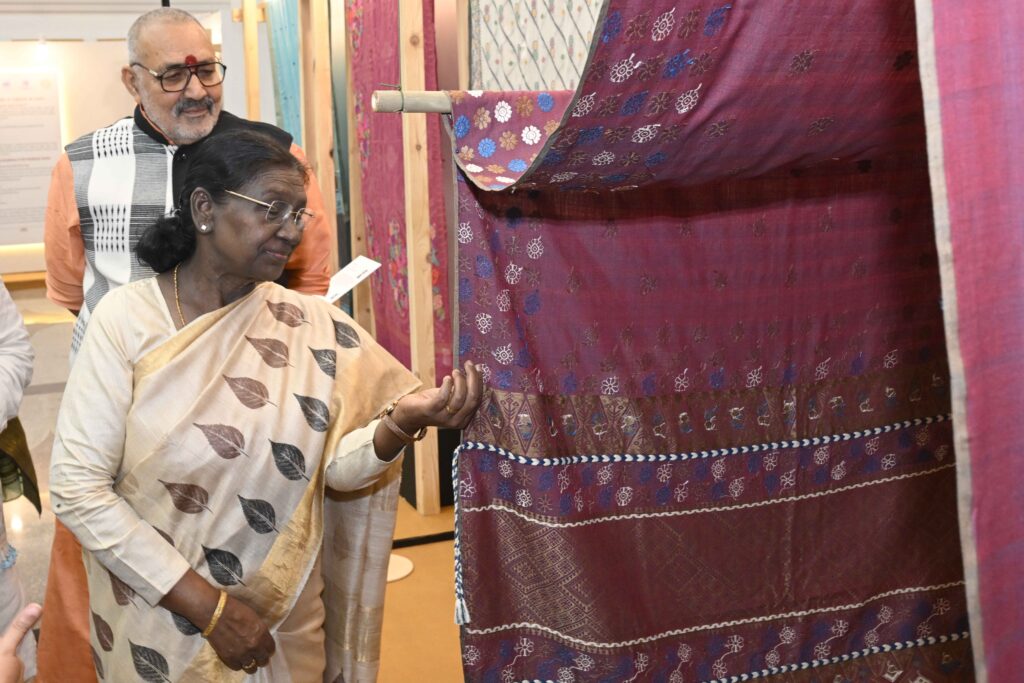
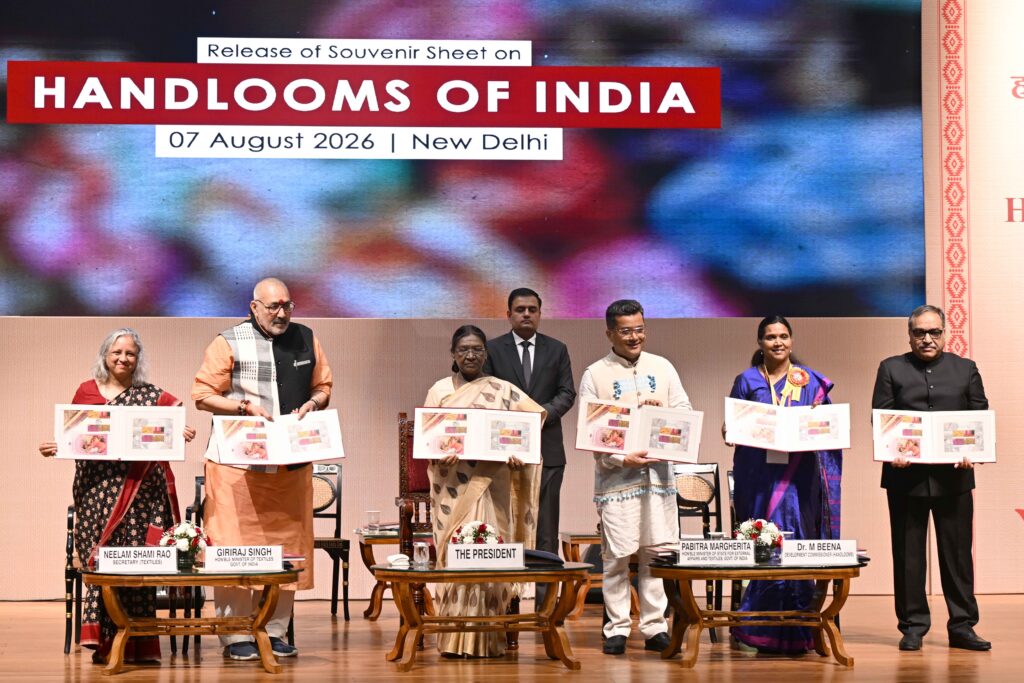
President Droupadi Murmu attended the 12th National Handloom Day celebrations at the Rashtrapati Bhavan Cultural Centre in New Delhi. She presented the Sant Kabir Handloom Awards and the National Handloom Awards 2025 during the event. Officials also released four commemorative postage stamps to honour India’s handloom weaving traditions.
President Murmu Highlights Handloom’s Role in India’s Heritage on National Handloom Day
The President said handloom has shaped India’s civilisation for centuries. Moreover, it reflects the country’s diversity and protects regional identity, she noted. The sector also drives employment, women’s empowerment, and cultural preservation, she added. Furthermore, handloom carries deep ties to India’s freedom struggle too.
She recalled that the Swadeshi Movement began on August 7, 1905, in protest against the Partition of Bengal. At the time, that movement pushed for indigenous goods and support for domestic weavers, she explained. India has marked August 7 as National Handloom Day since 2015 to honour this history. Therefore, she congratulated everyone connected to the handloom sector on the occasion.
Technology and Young Entrepreneurs Key to Sector’s Growth
The President stressed that new technology remains vital for the sector’s future. In addition, modern digital tools can widen market access for weavers, she said. E-commerce platforms, she added, can also boost global reach for Indian handloom products.
Young entrepreneurs and designers now bring fresh energy to this field, she observed. According to her, these innovators link traditional crafts with modern trends and global value chains. She praised Design Resource Centres under the Indian Institutes of Handloom Technology for engaging youth effectively. Government schemes must continue supporting this talent, she urged, to ensure long-term success.
The Sant Kabir Handloom Award stands as India’s highest honour for handloom weavers. It recognises lifelong dedication and outstanding craftsmanship in the field. Meanwhile, the National Handloom Award celebrates innovation, quality, and excellence among stakeholders across the sector.
Handloom Clusters Move Towards a Verified Cultural Economy
President Murmu noted that the handloom sector can become a strong example of India’s rural premium economy. Key handloom clusters now integrate modern technology with contemporary training methods, she said. The government continues to roll out measures aimed at boosting weavers’ incomes, she added.
She further noted that global perception of Indian handloom products keeps improving. This shift comes as the government works to transform the sector into a Verified Cultural Economy, she explained. Such recognition, in turn, can open doors to premium markets abroad.
Weavers’ Service Centres also play a growing role in this transformation, she said. These centres, alongside Design Resource Centres, help bridge traditional skills with contemporary demand. Together, they aim to secure a sustainable future for India’s weaving communities.
President Murmu expressed confidence that handloom will strengthen India’s inclusive growth. She called the sector a strong foundation for self-reliance going forward.
This article is based on a press release from the President’s Secretariat, credited to the Press Information Bureau (PIB), Delhi.
Follow The World Times for more such updates!