“Lights, Camera, Action!”: These three words immediately transform Abhirup Chakraborty. Sometimes he’s a guard at a school play, while elsewhere he’s the eccentric Radheshyam. Yet Abhirup remains constant with his vision-based approach to acting.
From school stints to the theatre and then advertisements, the Kolkata-based actor has been quietly carving out a name for himself. In an exclusive interview with The World Times, Abhirup Chakraborty recounts his journey. He also discusses the changing nature of the film and advertising industries.
Q. Tell us about your beginnings, Abhirup. How did you find out that you enjoyed acting and wanted to carve out a niche for yourself there?
Ans. I think I always had that knack for performing. When I was growing up, I would participate in elocution and recitation competitions. Alongside, I also tried my hand at storytelling competitions in inter-school fests and in Sri Aurobindo Ashram. And I used to enjoy being on stage, playing different characters, doing voices. So, the performing bug was already there.
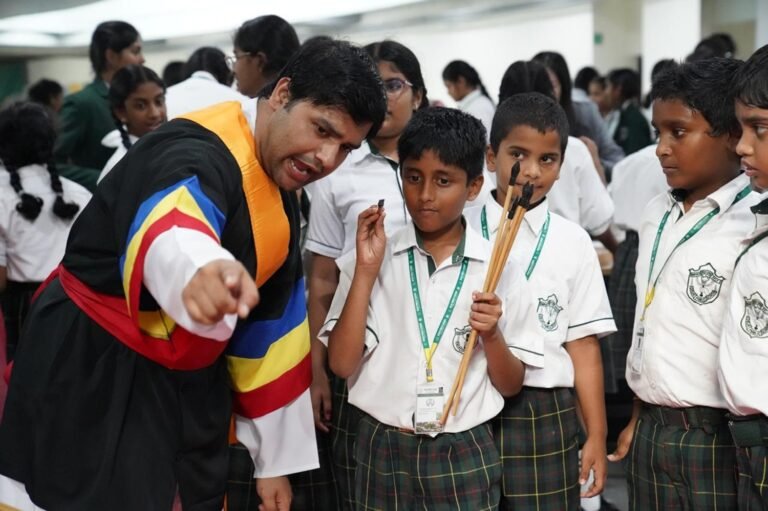
It was towards the end of Class 8 that I got an opportunity to participate in Masquerade, our inter-school play competition. We had adapted Salman Rushdie’s Haroun and the Sea of Stories, and I played a guard. It was during that process that I realized — “Oh, this is fun! This is something that I enjoy and am at ease with.” When I had completed school, having acted in every subsequent Masquerade since, I knew that acting was for me and that I would take it up as a career at some point in my life.
Q. Your roots lie in theatre. Elaborate on how theatre has shaped you as an actor.
Ans. Where do I even begin?! Theatre teaches you so much that I don’t think it’s possible to list or name specific elements. And it’s not just acting… like that’s there, obviously. I believe that theatre teaches you a lot about life as well. It teaches you about community – how to co-exist with different types of people, adapt to unforeseen and unexpected circumstances, and always be there for one another. It teaches you discipline, empathy, and to listen to one another.
To talk about specific elements, the lessons are the elements that help me to embody and be truthful to the character. It teaches you to be present in the moment. Like while a show is going on, and once your scene is done, you just can’t put your feet up. You have to continue to be there in character as well as notice if your team, your co-actors, needs something. It also means being present in the scene, which is how and when your performance feels genuine.
Right from my Masquerade days, I have met with some amazing people who have kindly passed on their expertise to me. And it’s not just my seniors I am talking about; it’s my peers and people who are younger than me. Especially, I credit Mr. Swarnendu Chatterjee for shaping me as an actor. We had met while our college group, Talk of the Town, was staging a play called The Last Show. He gave me a much-needed push towards the profession.
Q. Abhirup, you have worked in the advertising sector with specific ads for Koshe Kosha, Tata Steel Pipes, and OlyvIndia. Is there a difference in your approach when you start working on advertisements, as they are short segments?
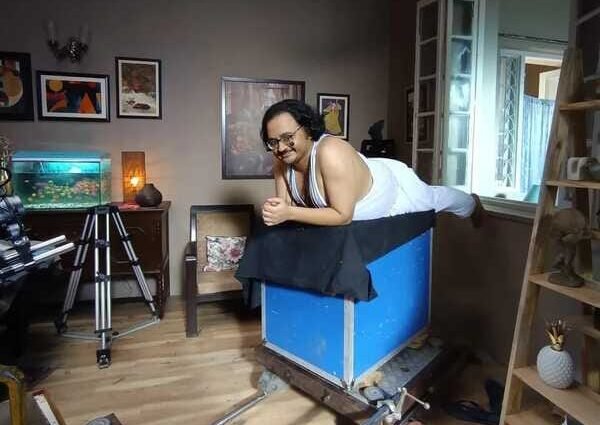
Ans. No, there’s not much of a difference in how I approach an advertisement. Irrespective of the medium I am working in, the objective is the same: to do justice to the character and make the character feel more alive. In turn, it makes the project feel more alive, authentic, and entertaining. However, since the scale of an ad is very different, one doesn’t get that scope or space to explore and play the character. It has to be more immediate or instant. But the approach remains more or less the same.
In terms of pressure to deliver… I would have to say no! At least I have never felt that kind of pressure. See, an ad is very precise and to the point, and so the acting is also very reflective of that… compact and crisp. As long as you know the script and what you need to do, you should be good. And ads are in general very fun to shoot because you often get to play quirky characters, wear quirky clothes, and just have a blast!!
Q. With the rise of Instagram content creation and brand collaborations, has the nature of advertisements changed in the recent past?
Ans. More than a change in the core nature of advertisements, I feel a separate/different category of advertisements has come up. I would classify the Instagram content, the brand collaborations, and the TV/Digital ads as two separate categories. Mainly because the target audiences, scale, and sometimes even the products being advertised are different in both cases. The only common thread is that the content or the story has to be strong enough to be able to keep the audience engaged throughout to be able to sell the product to them.
From an actor’s perspective, Instagram Content Creation has opened up newer avenues for actors, allowing them to put themselves out there and helping them to get more opportunities. It has also aided financial independence. But at the same time, it has led to a shift in casting for projects based on the number of followers, rather than whether someone fits the project or not. And it’s a very delicate balance to maintain for an actor.
Q. Do you think that Instagram will be the future of advertising?
Ans. No, I don’t think that Instagram brand collaborations will be the future of advertisements, as they serve a very different purpose compared to traditional advertisements; Instagram content operates more on a micro level, whereas traditional advertisements operate on a much broader level.
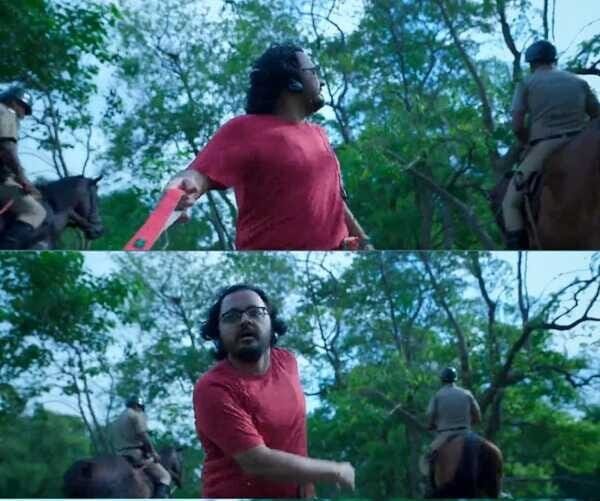
Q. Recently, you had an acting stint in the Bollywood blockbuster Dhurandhar. What do you think are the significant differences between the film industry back in Kolkata and in Bollywood?
Ans. A very noticeable difference has been how both industries handle scheduling and time management. For example, in Bollywood, if my character has to be on set at 10 am for a scene, my call time on location will usually be at 8 am. And once I reach the location at the given time, within minutes my hair and make-up will start, and within an hour or so I will be ready to go.
In contrast, in the Kolkata film industry, if my scenes are supposed to be shot at night, say, 8:30 pm, my call time will be sometime in the afternoon. Even the process of my getting ready won’t start until a few hours after I have arrived on location. To be clear, this is based on what I have experienced as an actor on various sets. While there are exceptions to the rule in both industries, this is usually the norm. This is also where I feel an actor’s adaptability comes into play, as every set, irrespective of industry, has its own rhythm and one has to adapt to that.
Q. Additionally, you have also worked on YouTube projects and OTT series. Abhirup, what are the main differences between these two platforms, and how have they helped in shaping you as an actor?
Ans. To be completely honest, I don’t believe there is any difference because they are both episodic content. The scale of the two projects might vary, but again, in both cases, the content has to be strong enough to keep the viewers engaged and for the series to be deemed a success.
In terms of shaping me as an actor, I feel neither platform has significantly contributed to or revolutionized my acting process. As I had mentioned earlier, my approach to acting remains the same, irrespective of the medium — only the execution differs. But what these projects on these two different platforms have most certainly given me is experience and exposure and the opportunity to keep on constantly refining my craft!
Q. What do you think is the key to sustaining oneself in a fast-paced industry?
Ans. The key is to have unwavering self-belief (the fact that you are going to make it), which actually goes a very long way and, more importantly, a life outside of the industry. There will be days when the belief will be low, which is why having a life outside makes it easier to go through those days and not get caught up in one’s thoughts. The fast-paced nature of our industry makes that a bit difficult, and it is very easy to get consumed by our need to consistently get good work and achieve success. But sometimes, it is important to remember to focus on yourself as well.
Additionally, me-time is very important, like going on solo movie dates, reading books, or taking walks. It’s just about doing things that make you happy and relaxed. It’s easier said than done, though, as you are constantly thinking about how you can improve yourself, what you need to work on, but it would do a world of good if we sometimes just stepped back and took some time out for ourselves. A good support system also goes a long way. I am really lucky and grateful to have parents and friends who understand what I go through and don’t judge me. They are the ones who support and believe in me, and whom I know I can talk to.
Q. Finally, Abhirup, could you add a brief note on the changes that you would love to see in the Bengali film industry to create more opportunities for young budding artists like you?
Ans. I would love to see casting calls with more intent, and by intent I mean the characters that are being advertised are meaningful, performance-oriented characters. Instead of minor characters that end up having 1–2 scenes or sometimes even just a single line. While I do believe that it’s not the length of the character that matters but what you do with it, an audition process should offer a character process of some substance.
I also feel that budding artists should be compensated fairly. I am absolutely not expecting the remuneration of a top actor, but I would definitely like to see young artists make decent pay so that they can be financially independent and able to sustain themselves in this industry.
Most importantly, I feel young, budding artists need to be backed more, especially if they have already demonstrated their ability to deliver. There should be a belief in them that, given the right opportunity, they can pull off the same character that an established actor of the same age is expected to play. This trust and backing will go a long way in creating more breakthrough opportunities for young, talented artists.
Final Words
The gradual rise of content creation has surely transformed the trajectory of actors. But, for Abhirup Chakraborty, an actor’s art remains the final verdict. The medium might change, but adaptability is the key to stability in a fast-paced celluloid world. With excellent acting prowess and a knack for comic timing, Mr. Abhirup is thus slowly making a mark in the industry.
Follow The World Times for such exclusive interviews!