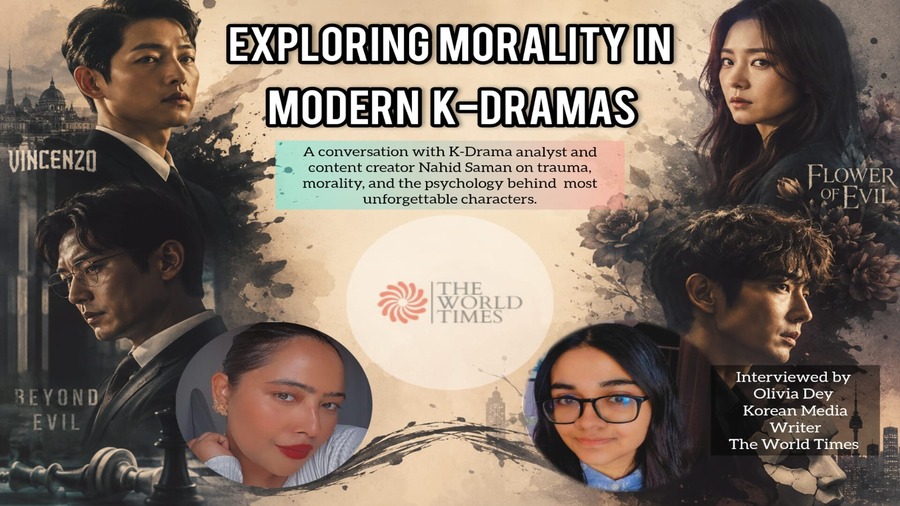
Beyond their commercial success, K-dramas have earned praise for tackling complex themes such as trauma, grief, morality, and psychological conflict. This is because in the 21st century, we see good and evil as parts of human nature. We understand that our morality may vary based on our circumstances, experiences, and social influences. Naturally, we seek stories that challenge divides between the heroes and the villains, with the roles often blurring into one another.
To explore these ideas, I spoke with Nahid Saman, a long-time K-drama enthusiast and content creator. She loves Korean shows and enjoys analyzing them passionately. When asked to describe her page, she answered, “My page isn’t just about recommendations; it’s about discussing memorable characters, hidden gems, life lessons, and the comfort these stories bring. I love creating content that makes people discover their next favorite drama or revisit one they haven’t thought about in years.”
Influencers are thus not just persuading audiences to engage in lifestyles or forms of entertainment for views. They are actively trying to create a safe space for themselves online where they will not be judged based on their preferences. Nahid is building a community of like-minded viewers on her channel, sharing reviews and insights on trends in the Korean entertainment industry alongside her teaching profession. Her journey began in 2009 when she watched the first K-drama of her life; Jewel in the Palace on Doordarshan.
When Stories Reflect Human Complexity

Like most viewers, she admired the platonic bond between Park Dong-hoon and Lee Ji-an. In her words, “It taught me that sometimes simply being kind to another person can change their life.” She also appreciated the storytelling unfolding at a slower pace. Healing often occurs quietly, not just through dramatic changes.
A character who challenged her understanding of morality, relationships, or life was Baek Hee-sung from Flower of Evil. “Rather than seeing characters as simply ‘good’ or ‘bad’, I started appreciating the grey areas in human nature”, she reflected. From a psychopathic serial killer to a devoted husband, the character resonated with her because of these nuances. Conversely, the characters who initially appear respectable turn out to be monsters. This indicates that appearances can be deceptive.
Morality in Modern K-Dramas and Childhood Trauma
It’s Okay to Not Be Okay (2020) is a psychological romance following Moon Gang-tae, a psychiatric caregiver. He has spent his entire life looking after his autistic older brother after the traumatic murder of their mother. When Gang-tae meets Ko Moon-young, a successful children’s book author, their lives change. Moon-young is emotionally detached because of years of abuse and manipulation by her own mother. The series explores how childhood neglect, abuse, and grief continue to shape adult relationships including her bond with Gang-tae.

The Glory (2022), on the other hand, has Moon Dong-eun. Her childhood was destroyed by school bullying and violence. Unable to obtain justice as a teenager, she spends years carefully planning revenge against those responsible. Rather than moving on, she dedicates her entire life to achieving revenge, even after confronting her abusers, the series does not suggest that emotional healing comes easily or that revenge alone can erase years of suffering.
Nahid appreciates the “honesty” in both dramas, as neither suggests that healing happens quickly. According to her, they portray these experiences very differently, yet accurately. When debating which leaves behind the highest possible impact on an individual, trauma or personality, she answers, “Trauma and circumstances may explain why someone behaves a certain way, but they don’t excuse every action. Personality influences how people respond to difficult situations, while moral choices ultimately define who they become.”
Morality in Heroes and Villains: “Real People Are Not Good or Completely Evil”
When asked about the relevancy of leads like Lee Dong-sik, the demoted mentally scarred detective in Beyond Evil or Italian gangster Vincenzo Cassano in Vincenzo, Nahid answers, “they stay with us because they constantly challenge our expectations.” Characters like Vincenzo arrive in a country with the sole objective of demolishing a plaza to obtain his gold buried under it. But he grows into someone responsible for protecting its residents from corrupted corporate giants.
His transformation happens gradually rather than suddenly. It is possible because, beneath his tough mafia exterior, there lies a heart that craves purpose and desires his life to mean more than just eliminating rivals or accumulating wealth. This quality makes him human amid the larger-than-life persona. Nahid goes on to explain, “Real people aren’t perfectly good or completely evil, so when dramas allow characters to make mistakes, struggle with guilt, or make morally questionable decisions, they become much more believable.”
Revenge, Morality, or Another “Cycle of Violence”?
Actions of protagonists become difficult to justify when innocents suffer for it. In shows like Snowdrop, Lim Soo-ho plays a character who, as a spy, takes a group of university students hostage. He even refers to his girlfriend as a “human shield”. Unlike typical revenge motives, his actions stem from his identity as a German spy. In the show The Innocent Man, Kang-Maru pretends to love Eun-gi to take revenge on her stepmother, who was his adulterous ex.
Similarly, in Lady Vengeance, upon discovering that Mr. Baek was the serial killer, Geum-ja contacts the grieving parents of his other victims. She forces them to watch brutal, taped recordings of their children’s final moments to confirm Baek’s guilt. After that she does not waste much time, inviting them into a dark alliance fueled by pain and loss. Once just grieving parents, they forgo their morality and become entangled in a darker web of violence and crime.
Nahid argues against this blind obsession with revenge. In her words, “…when revenge starts consuming a character’s humanity or hurting people who had nothing to do with the original crime, it stops feeling like justice and becomes another cycle of violence.”
Healing Beyond Romance: “Love Can Certainly Support Recovery, but It Shouldn’t Replace It”
Love wins against all odds. That is the phrase all of us grew up hearing. However, it is highly debated whether love can battle against our self-created demons, or inner darkness. As adults, we often crave and romanticize the idea of finding an ideal partner or soulmate. However, they cannot magically “fix” us unless we desire to change and actively work on ourselves.
“I appreciate dramas that recognize that healing is a lifelong journey rather than a happy ending,” claimed Nahid. She believes recent dramas are “moving away” from the idea that “love can magically fix old wounds.” She goes further to mention shows like My Mister, Daily Dose of Sunshine, and It’s Okay to Not Be Okay. These dramas acknowledge therapy, self-growth, and personal healing.
Korean Vs. Indian Storytelling: “Indian Cinema Has Traditionally Leaned Toward Clearly Defined Heroes and Villains.”
Nahid appreciates how modern K-dramas explore character development and their “willingness” to devote time to achieve it. Every episode is usually layered with backstories and switching points of view of almost every character who shapes the plot. Each character has unique motivations, personalities, and desires that drive them to act rather than just following stereotypes. She highlights old Bollywood movies that are predominantly populated by stock characters.
These typically included a small-town hero with big dreams. He generally had a long-suffering, ailing mother. A beautiful and wealthy heiress was his love interest, and her influential yet morally corrupt father served as the main antagonist. Other portrayals of morally grey characters in the 90s included mostly rejected lovers who were ready to descend into the deepest pits of hell observed in movies such as Darr (1993), Gupt (1997) and many more. They were driven by heartbreak, often leading them to engage in ruthless actions.
However, this idea has changed in recent years in Indian entertainment. The character of Maya Malhotra in the popular thriller series Beyhadh (2016) was the first trendsetter in this wave of morally grey protagonists. Portrayed by the talented actress Jennifer Winget, the character is a wealthy industrialist who has a history of physical and sexual abuse from her father and ultimately falls for her employee. The series followed her journey as she oscillated between love and control.
A Beginner’s Initial Step Toward Moral Ambiguity
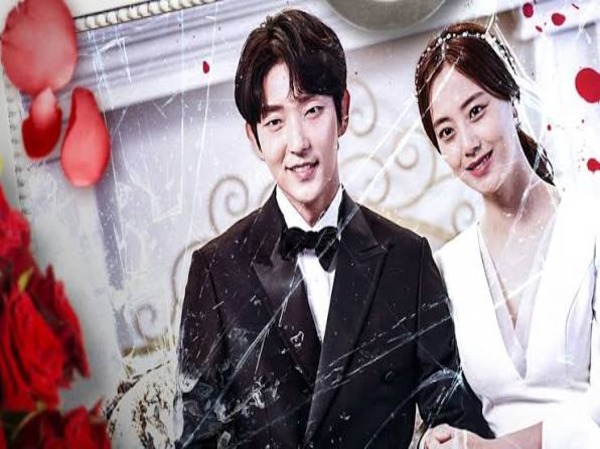
When asked which K-drama she would recommend for a beginner to watch, Nahid concludes, “I would recommend Flower of Evil. It’s suspenseful, emotional, beautifully written, and incredibly accessible even for someone who’s never watched a K-drama before. The central character constantly challenges your assumptions, and the drama explores trust, identity, family, forgiveness, and redemption without giving easy answers. By the end, you’ll realize that people are often much more complicated than they first appear and that’s exactly what makes the story unforgettable.”
Click here to watch the trailer.
Finally, our conversation attains a closure. The most memorable K-dramas are those that encourage us to question people, choices, and even our own understanding of morality.
Follow The World Times for more such updates.