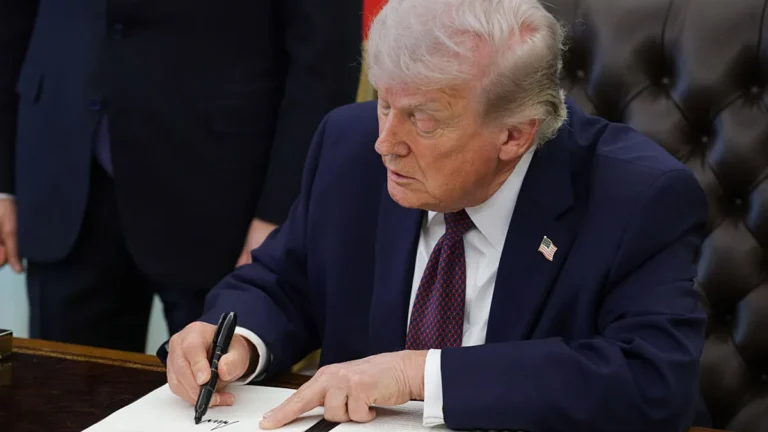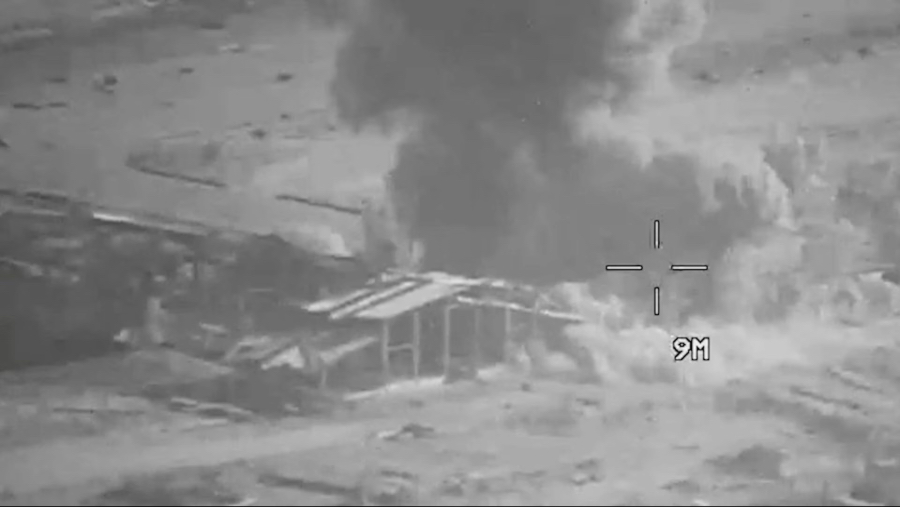
US President Donald Trump has threatened “severe military consequences” against Iran and the Yemen-based Houthis. The warning came after the militant group claimed responsibility for the Red Sea attacks on two Saudi oil tankers. The attacks have raised fears of further disruption to a major global shipping route amid escalating tensions in the Middle East.
While the attacks on the oil tankers took place as the war approached its five-month mark, the ongoing tensions also persisted in the region’s other waterway—the Strait of Hormuz. The strategic passage has already experienced shipping disruptions. According to Reuters, the latest developments caused oil prices to surge. Brent crude rose more than 6% to above $100 per barrel, marking the first such increase since May.
According to reports from the Houthis, the militants conducted missile and drone attacks against the Saudi ships Encelia and Layla. A maritime security source told Reuters that the tanker Encelia sent out a distress signal after suffering a missile attack in waters near the Saudi port of Jizan. The port is located north of Yemen. In turn, according to the Saudi state media outlet, the attack caused a fire to break out near the bow of the ship.
Red Sea Attacks Raise Fears Over Global Shipping
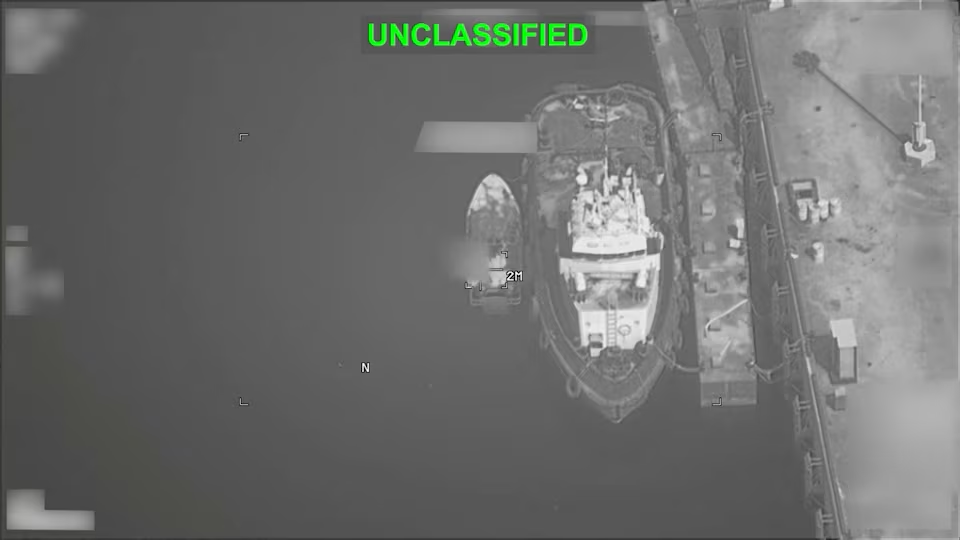
Recent Red Sea attacks have fuelled worries that the conflict could spread to the Bab el-Mandeb Strait. It is an important international sea route linking the Red Sea and the Indian Ocean. This strait plays a vital role in global energy transportation. It is particularly important for ships traveling between Europe, the Middle East, and Asia.
The Houthis, which dominate large territories of northern and western Yemen, claimed that they had imposed a naval blockade on Saudi Arabia. The group has already carried out several attacks against civilian ships in the region. Further attacks could jeopardize energy transportation as traffic through the Strait of Hormuz has already declined significantly.
A few tankers have redirected their courses away from the Bab el-Mandeb to the Suez Canal and Africa. Longer transport may lead to additional expenses and increased pressure on the global energy market. Reuters noted that shipping insurance rates in the southern part of the Red Sea have doubled for certain firms due to recent attacks.
US President Donald Trump stated that the US will hold Iran accountable for any future Houthi aggression. He called the Houthis proxies of Iran. In addition, Trump said he is thinking about resuming combat action against Iran and that he is very close to the decision to do so. The US President also said that all costs arising from cargo ship destruction would be covered with Iranian money. He was referring to frozen Iranian assets held by the US.
The Iranian foreign minister, Abbas Araqchi, rejected the threat, noting that the seizure of the assets of one country is a dangerous precedent.
Iran Faces Growing Regional Pressure
The escalation came amid continued US military strikes on Iran, which entered their 13th consecutive night. Iranian state-owned media announced missile strikes on Qeshm Island located close to the Strait of Hormuz. Meanwhile, Iran accused the US of attacks on military bases in Jordan and Kuwait.
Jordan’s military said it intercepted four Iranian missiles and six drones over the previous 24 hours, destroying one missile over an unpopulated area. Additionally, the Revolutionary Guard claimed that Iran launched strikes on a US electronic warfare detachment in Kuwait. However, both US and Kuwaiti officials reported no casualties.
Furthermore, the ongoing conflict has caused political pressure in the US. The US House of Representatives approved a bill requiring Trump to stop military strikes against Iran, while the Senate subsequently voted against the analogous bill.
Rising oil prices and disrupted maritime traffic have increased uncertainty surrounding the regional conflict. The Red Sea attacks continue to heighten concerns over regional stability. Further strikes on civilian ships could place even more economic pressure on the region.
Follow The World Times for more such updates!