
Olivia Rodrigo’s newest release, “the cure”, from her upcoming album, “you seem pretty sad for a girl so in love,” is a quest for self-definition and identity. The music video on YouTube tracks the journey of a young, insecure girl who thinks love is the “antidote” to all her problems. Underlying the video is an artistic and personal manifesto of self-recognition and growing up.
Furthermore, her previous works – angsty teenage albums, sour and guts rhythmise a deep melancholia, and go beyond the yearning of teenage love. Rodrigo’s voice encapsulates the very being of a girl, challenged by societal expectations, insecurities, romantic failures, comparisons, and converging into teenage rage. A soft, husky tone, along with occasional rock pumps, reigns the hearts of young girls.
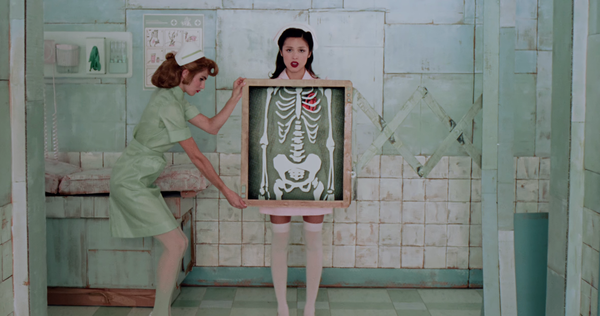
The Cure, stylised as “the cure,” plays on the same themes. It’s about a young girl (played by Rodrigo) dressed as a nurse, trying to find an antidote to her inner suffering. She presumes that love might cure her. On the contrary, it is the lack of self-evaluation that affects her. This Rodrigo is yet to break apart her own mental walls.
The verses carry a concomitant of meanings, along with echoes from her previous work.
Verse 1

“All the pretty girls in the foreground of my mind
I thought I’d done enough, but they keep moving the line
I thought I found the antidote this time
I thought I found the antidote this time”
Themes of insecurity, comparisons, and self-hatred swim up in the opening verse itself. The persona constantly compares herself to other “pretty girls,” without even realising that they might be going through the same thing. Young hearts, often tainted by societal expectations of what it means to be normatively “pretty,” are compelled to think this way.
Additionally, the video shows girls in identical uniforms entering various rooms, all a mindscape of their own. An entire girlhood ritual is portrayed. While all of them go through similar experiences, the girls fail to realise their individual self-worth.
Hence, it deeply echoes the previous lyrical compositions of “brutal” from sour, where she admits being “insecure.”
Verse 2
“All the nights I spend fighting bad thoughts in my room
Feeling so alone, might as well be on the moon
I thought I found the antidote with you
I thought I found the antidote with you”
The persona fixates on finding an antidote to ward off the feelings of unworthiness inflicted by her brain. The inner voice negates her worth, making her an incompetent loser, while she believes that her only saviour would be love. The repetition secures the urgency of the cure.
Moreover, the nurse in the video tries various potions and ultimately administers one to a beating heart. Love that she injects fails to be the cure and turns the heart cold; it dies. The nurse has to navigate other ways to cure herself.
Interestingly, she is both the nurse and the patient in her own mind—a tragic outcome to be sure.
Chorus
“But my head is full of poison
And my heart is full of doubt
I got toxins in my bloodstream
You tried hard to suck them out
And it feels like medication
And it’s good for me, I’m sure
But it don’t matter how your love feels anymore
It’ll never be the cure
It’ll never be the cure”
After a steady amount of trial and error, the persona realises that it is she who is the “antihero” with recurring negative thoughts and self-doubt. No matter how much love she receives, it is never enough to fill the existential void that she confronts daily- a point of anagnorisis. The addictive romantic venture feels like a drug, a replacement for actual self-love and acceptance.
The music video shows the agony of the nurse who finally accepts that assurance and validation will never be enough to make her a whole self. The refrigerated hearts die due to such experimentation; there is no more hope left. It is a turning point for the character.
Verse 3 – the cure is nowhere to be found
“Used to play a game in my head when I’d date a guy
Tally up the girls that he fucked till I start to cry
I thought I found the antidote this time
I thought I found the antidote this time”
Drawing from her earlier lyric, “comparison is killin’ me slowly” from “jealousy, jealousy“, and her tendency to scrutinize her ex’s new partner in “happier“, Rodrigo explores the habit of measuring herself against every other girl. Driven by low self-esteem, she constantly compares herself to others, only to emerge feeling worse each time. Moreover, since she once believed love would serve as her “antidote,” it ultimately became a double-edged sword that deepens her insecurities instead of healing them.
Meanwhile, the nurse abandons her experiments and shifts her attention elsewhere. Instead, she begins sewing together a tally of other nurses who appear to be treating and repairing patients. Through this imagery, the narrative suggests a move away from self-fixation and toward observing the ways others attempt to heal the wounds she continues to grapple with.
Refrain

“But I’m unraveled
I’m unraveled
I’m unraveled
I’m unraveled
I’m unraveled
I’m unraveled
I’m unraveled
I’m unraveled”
The nurse finally drops the tally and disentangles her world, the mental landscape that has been her home for a long time. In a crucial moment of self- recognition, she notices that the red strings come out of her own body, making her the worst enemy of herself. Such a revelation makes her take accountabilitily of her own actions, the tone rises with a guitar chord, the music is chaotic and loud now.
Chorus
“And my head is full of poison
And my heart is full of doubt
I got toxins in my bloodstream
You tried hard to suck them out
And it feels like medication
And it’s good for me, I’m sure
But it don’t matter how your love feels anymore
It’ll never be the cure
It’ll never be the cure“
Now more confident about her own faults, the nurse bleeds the red strings out; they are finally letting her go and see herself in a new light. She knows that the love she receives is good for her, but is reluctant to let that change her completely. It is self-love that she must learn; she must escape her toxic frameworks.
Refrain
“Oh, ’cause baby, I’m unraveled
I’m unraveled
I’m unraveled
I’m unraveled
I’m unraveled
I’m unraveled
I’m unraveled
I’m unraveled
I’m unraveled”
The nurse is laid on a bed and taken back to the Operating Room (OR). In a metanarrative effect, it stands for Rodrigo’s initials as well. Meanwhile, the nurse has been operating and looking for a cure in the OR. Thematically, it has been Rodrigo’s heart which could not be cured. It had to die several times, rather several parts of her to dissolve, before her transformation.
Bridge

“Why can’t you come stitch me up?
Why can’t it ever be enough?
Why can’t you come stitch me up?
Why can’t it ever be enough?
It’s not enough”
The vocals plead for a resurrection as Rodrigo asks her lover to heal and save her. However, the irony lies in the fact that she ultimately becomes her own cure. Rather than finding salvation in someone else, she discovers the strength to mend herself.
Meanwhile, the nurse’s red strings wrap around a heart and bring it back to life. Through this imagery, Rodrigo aligns herself with the act of healing. By releasing her insecurities and self-doubt, she allows her heart to beat freely once again—to breathe, to live, and, most importantly, to love itself.
Furthermore, the visual suggests a process of reintegration. The fragmented versions of Rodrigo that have appeared throughout the narrative begin to merge into one. As she embraces every part of herself—her vulnerabilities, mistakes, growth, and resilience—she moves toward becoming whole again. Ultimately, the journey is not about transforming into someone new but about reclaiming every piece of herself and restoring a sense of completeness.
Chorus – she is the cure
“Oh, because my head is full of poison
And my heart is full of doubt
I got toxins in my bloodstream
You tried so hard to suck out
And it feels like medication
And it’s good for me, I’m sure
But it don’t matter how your love feels anymore
It’ll never be the cure
It’ll never be the cure
It’ll never be”
In the final angsty chorus, Rodrigo tears down the walls of her former self, while everyone around her walks away. As a result, the catharsis reaches its peak, and she finally frees herself from her inhibitions.
Subsequently, the metanarrative shifts to an older Rodrigo, who dismantles the dollhouse she has inhabited for so long. As she prepares to move forward and embrace a new chapter of her life, she symbolically crushes her teenage self. In doing so, she leaves behind the version of herself that shaped sour and guts—the naive, insecure, emotional, and vulnerable young woman.
Instead, Rodrigo steps confidently into the next phase of her journey as a successful artist who has confronted and outgrown her past. Ultimately, an era defined by self-love, growth, and self-assurance lies ahead.
Final Words: Does she find the cure?

Therefore, Olivia ultimately reaches a state where she can begin her new era. She explained to iHeartRadio that the song is the “climax of the record” and a realisation that real love won’t solve all problems. She has also listed it as her favourite song on the album.
“you seem pretty sad for a girl so in love” is available to stream now.
Follow The World Times for more such insights into music and celebrities.