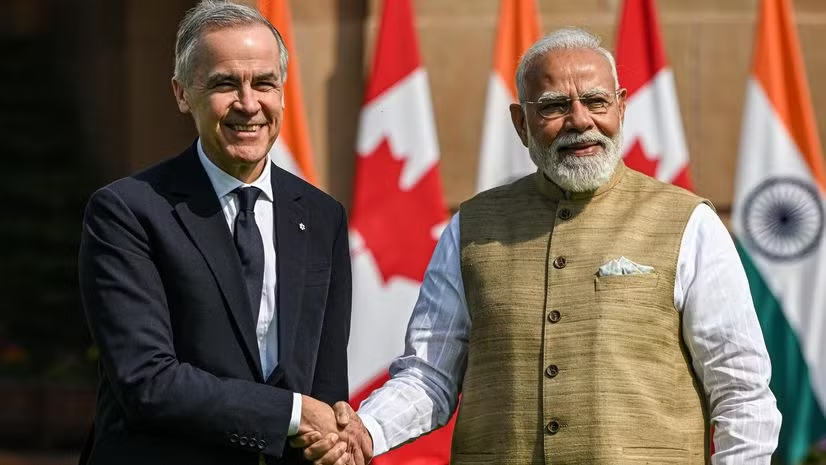
India and Canada signed a landmark uranium supply agreement worth about $2.6 billion. It marked a major step in strengthening bilateral energy cooperation. Leaders from both countries announced the agreement during high-level talks between Narendra Modi and Mark Carney.
The deal aims to ensure a long-term supply of uranium fuel for India’s growing nuclear energy programme. Officials said the agreement also signals a broader reset in diplomatic and economic ties between the two nations.
Long-Term Supply for Nuclear Expansion of India
Canadian uranium giant Cameco will supply nearly 22 million pounds of uranium ore concentrate to India under the terms of the agreement. Deliveries will begin in 2027 and continue until 2035, supporting the fuel needs of India’s expanding fleet of nuclear reactors.
Indian officials view nuclear power as a crucial pillar of the country’s long-term clean energy strategy. The government plans to expand nuclear energy capacity significantly in the coming decades to meet rising electricity demand and reduce carbon emissions. Reliable access to uranium remains essential for maintaining reactor operations and supporting future projects.
Canada possesses some of the world’s richest uranium reserves and already ranks among the leading global suppliers of nuclear fuel. The partnership therefore, strengthens India’s efforts to diversify its sources of uranium imports while ensuring a stable fuel supply for civilian reactors.
Diplomatic Reset and Economic Cooperation
The uranium agreement also reflects improving diplomatic relations between India and Canada after a period of strained ties. Both governments announced plans to accelerate negotiations for a Comprehensive Economic Partnership Agreement (CEPA) aimed at expanding trade and investment cooperation.
Officials from both countries expressed optimism that deeper economic engagement could significantly increase bilateral trade in the coming years. Leaders have set a target of boosting annual trade volumes to $50 billion by 2030, reflecting growing cooperation in energy, technology, and critical minerals.
The uranium deal highlights a broader strategic shift toward long-term partnerships in energy security and clean power development. Analysts say the agreement positions both countries to deepen collaboration in nuclear technology and strengthen their roles in the evolving global energy landscape.
Stay tuned with The World Times for the latest updates.