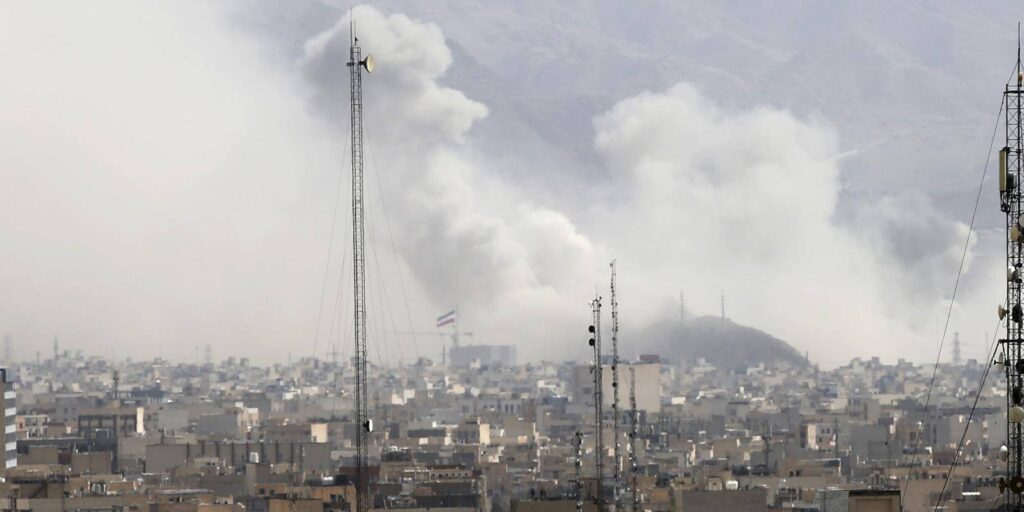
Smoke Rising Above Tehran
Rising Middle East Tensions
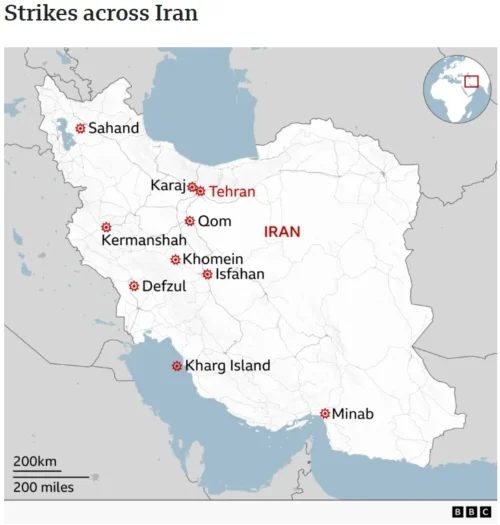
Middle East tensions have risen rapidly after reports of a major escalation involving Iran, the United States, and Israel. The situation became more serious after reported joint United States–Israeli strikes inside Iran that targeted military and strategic locations. These reportedly included nuclear-related facilities, missile production sites, IRGC bases, and military command centers in Tehran and other cities.
The United States and Israel said the strikes were meant to stop Iran’s nuclear and missile progress. Iran, however, called the attacks an “act of war,” which shows how serious the situation has become.
What Triggered the Crisis
The crisis appears to have started with strikes on multiple sites across Iran rather than a single location. Reports suggest that nuclear-linked infrastructure, missile facilities, and military planning centers were among the main targets. From the U.S. perspective, the operation was seen as a way to prevent Iran from getting closer to nuclear weapon capability and to send a strong warning. However, attacking sites inside a country’s territory usually leads to retaliation, and that is what seems to have followed.
Iran’s Response and Expansion of the Conflict
Instead of responding only against Israel, Iran reportedly widened its response by targeting U.S. military locations across the Gulf region. Missile and drone threats were reported near bases in Bahrain, Qatar, Kuwait, and the United Arab Emirates, where American forces are present.
By targeting regional bases rather than the U.S. mainland, Iran appears to be sending a message while trying to avoid a direct large-scale war. As a result, the conflict is no longer limited to Iran and Israel and is now affecting several countries in the region.
Important U.S. Bases in Focus
Several key U.S. military bases have come into focus due to their strategic importance. The U.S. Fifth Fleet Headquarters in Bahrain plays a major role in naval operations and in protecting oil shipping routes in the Persian Gulf. Any threat near this base raises concerns about maritime security and global oil transport.
Al Udeid Air Base in Qatar is another critical location. It is the largest U.S. military base in the Middle East and serves as a central point for air operations in Iraq, Syria, Afghanistan, and other regional missions. Missile threats near this base directly affect U.S. military coordination in the region.
In Kuwait, bases like Camp Arifjan and Ali Al Salem Air Base are important for logistics, troop movement, and storing equipment. If these hubs encounter threats, military operations and supply chains might be impacted.
In the UAE, U.S. forces are based at locations near Abu Dhabi, including Al Dhafra Air Base. Reports of airspace alerts and restrictions in the UAE highlight how close the situation is to civilian areas.
Impact of Middle East Tensions on Civilians
The rising tensions are not only about military actions. They are also interfering in the lives of ordinary people. In some Gulf countries, emergency alerts are announced, advising residents to stay alert and take shelter during missile threats. Flights have been delayed or redirected. This has made travel stressful and difficult, and increased uncertainty for both residents and passengers.
Recent travel advisories have been issued for flights from the UAE to India, making it extremely difficult for common people. Because the Gulf region is an important global travel and trade centre, even small disturbances can quickly affect international flights, business activities, and everyday economic life.
Middle East Tensions and Global Oil Supply
One of the major global problem is the Strait of Hormuz, a narrow sea route through which a big portion of the world’s oil supply. If the conflict disrupts shipping in this area, oil prices could rise sharply. This would affect countries like India that are dependent heavily on imported oil, resulting in higher fuel prices and economic strain.The decrease in the supply of LPG is a major cause of concern, affecting the lives of common people. Markets often respond quickly to instability in this region because of its relevance to global energy supply.
Possible Role of Regional Groups
There are worries that armed groups aligned with Iran, including Hezbollah in Lebanon, Houthis in Yemen, and defence forces in Iraq, may become more active if tensions continue. If this happens, the dispute could spread further and become more difficult to manage. This is why many observers are closely watching the actions of these groups and the responses from major powers.
What Could Happen Next
If attacks stay limited and casualties remain low, the situation may not escalate into a full-scale war. But, if the contrary happens, the conflict could grow larger. For countries like India, the situation is especially critical because of their dependence for energy and the number of citizens working in Gulf countries. Overall, the situation is tense, uncertain, and closely monitored by the entire world because of its potential effects on security, energy, and global stability.
For more such insightful updates, stay tuned to The World Times.