Most people won’t be familiar with the term “jibonmukhi,” which roughly translates to “life-oriented” or “facing life.” But the audience is familiar with the genre, as they have heard it somewhere in some form. Especially in films of Anurag Kashyap, whether it is Gangs of Wasseypur or Gulaal, we see the impact of this genre. Jibonmukhi as a genre is unconventional and can sound off-tune, as it emphasizes lyrical genius more than musical polish. We had stalwarts like Salil Chowdhury who incorporated their musical genius as well.
Background

Many people have listened to Bob Dylan or Bob Marley crooning songs that are of the masses, by the masses, and for the masses (Lincoln much, eh?). They believed that music can go beyond artificial barriers and boundaries. Dylan’s Mr. Tambourine Man is one of the perfect examples of this.
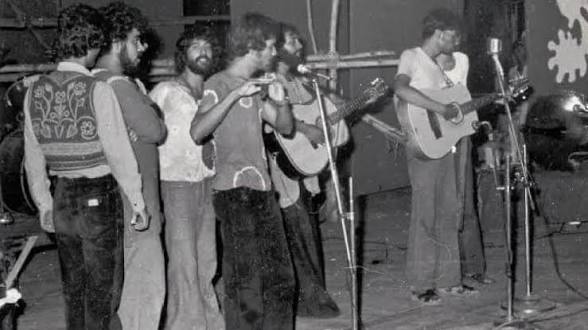
That period was also bringing a change in the eastern part of India. The seed was sown long back when India was on the verge of gaining independence. Progressive artists from different fields came together, creating a unique and diverse platform named the Indian People’s Theatre Association (IPTA). Salil Chowdhury, Hemant Kumar, Shailendra, and Balraj Sahni all belonged to this organization.
Salil Chowdhury and Hemant kumar were the modern pioneers of this genre, though they never claimed to be pioneers themselves. The process was very organic. Songs like Neel Akasher Neeche, Runner, and Pothe Ebar Namo Saathi, among others, created such an imprint on the Bengali mind that they are still played on many occasions. These songs were directed toward the masses and their plight in society, which was different from what mainstream music was about.
In Hindi cinema, the collaboration between Raj Kapoor and Shailendra gave many hits in this genre. Though they never explicitly mentioned it as a “different” genre, its presence was evident. The iconic picturization of Ramaiya Vastavaiya in Shree 420 (1955), combined with Shailendra’s profoundly impactful lyrics, remains one of Hindi cinema’s most unforgettable and innovative sequences. The song masterfully highlights the stark disparity between the so-called upper class and the lower class, while narrating a poignant story of longing, moral conflict, and the redemptive power of simplicity and community.
Now, if we come back to the East, not mentioning Kabir Suman in this genre would be considered a crime. He was the one who popularized the genre among the next generation. He mentioned Bob Dylan, Lalon Fakir and Tagore as his inspirations.
The Road Ahead

Nachiketa Chakraborty who was previously a ghazal singer, started experimenting with jibonmukhi songs after the 1990s. Like his predecessors, he wrote, composed, and sang those songs himself. They remain a source of nostalgia for the generation of the 1990s and 2000s. His songs became a sensation due to their anti-establishment messages, somewhat similar to what Bob Marley did.
The 2020s era saw a shift in the music industry, especially after the pandemic, and rappers came to prominence. Whether it is Divine or Krsna, they have portrayed the struggles of the masses through their music in their own ways. Whether talking about issues like corruption, poverty, or gender equality, their lyrics are hard-hitting and easily accessible to Gen-Z audiences.
Thus, we can see how this genre has evolved over time, from what it once was to what it has become today.
For more articles on music, stay tuned to The World Times.