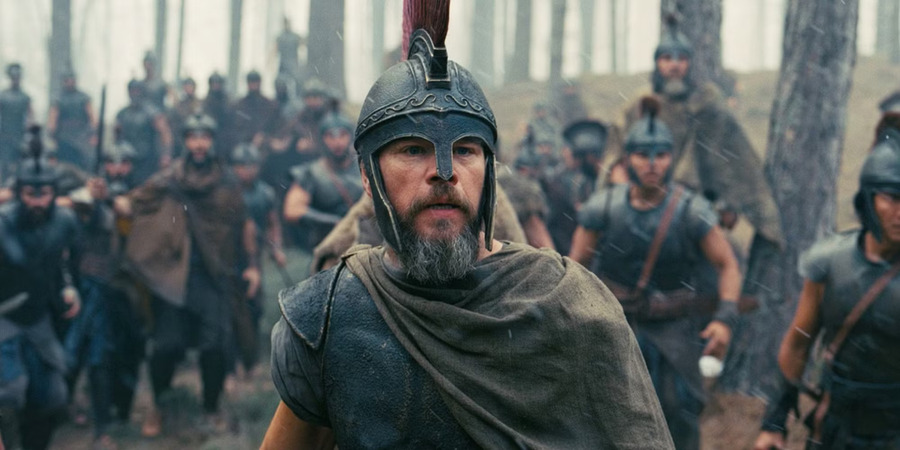
Homer’s Odyssey narrates the story of the trickster Odysseus. Christopher Nolan’s 2026 directorial The Odyssey casts him as an Everyman. The story follows Odysseus, the Greek king of Ithaca, as he journeys home after the Trojan War. Mythical beings, a sea journey, magic, fate — the movie has everything. Yet Nolan’s film misses the grandeur of Homer’s epic.
(Disclaimer: This review contains spoilers.)
What Works for The Odyssey?
With a $250 million budget, a star-studded cast, and an IMAX 70mm film camera, Nolan aspires to retell one of the greatest Greek epics. His vision is aspirational. Indeed, his idea is to capture the existential dread of a man — the most popular trickster figure in history.
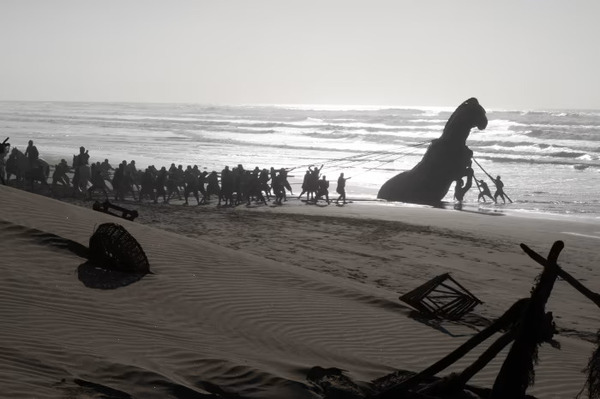
The path-breaking filmmaking technique works in its favor. With a camera runtime of two minutes, Nolan captures a three-hour film in IMAX. A dedicated screenplay and a talent house of actors aid him. Likewise, the metanarrative with disjointed storytelling and a disruptive space-time continuum adds to the classic Nolan-esque effect. In terms of scale, it is appropriate — Nolan soars through the Mediterranean seas of Morocco, Greece, Italy, Scotland, etc., with his crew and ships.
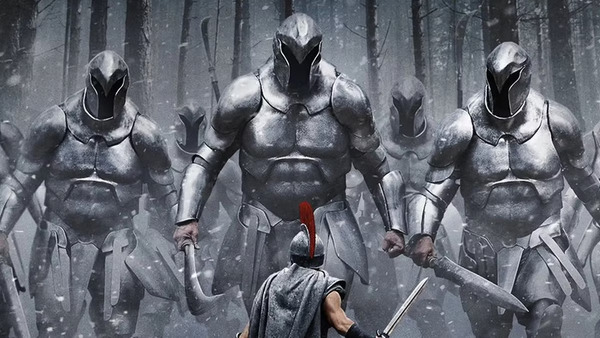
With little to almost no CGI, he relies on practical effects and encapsulates the true essence of old-school filmmaking. In fact, cinematic techniques like blocking and perspectives perform well for the artistic vision. Consequently, the Laestrygonian scenes are a splendid example of Nolan’s filmmaking. Instead of using CGI to enlarge the giants, Nolan hires 7 ft. stunt doubles and, in turn, places them against 5 ft. people to bring in the perspective.
Alongside, the music works well for the film. The brooding and gloomy Ludwig Goransson score captures the mental state that Odysseus and his crew go through. At times it is eerie. It evokes a sense of impending doom. Additionally, the storm scene with its visual and auditory impulses encapsulates a true cinematic experience.
Cast Performance
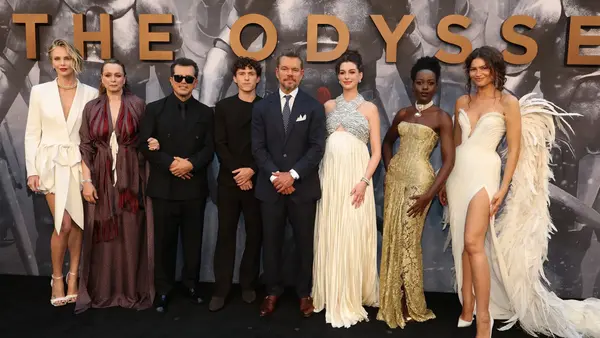
Besides, some of the best bits of the movie come from the acting. The actors make the most of the measly script and half-baked dialogues. Anne Hathaway shines as the reluctant Penelope. Her bodily movements are tense, signifying the liminal space she inhabits. She constantly battles whether to give up her pride and throne or to keep holding on to her husband’s riches. Tom Holland impresses as the young, impressionable Telemachus. He is curious but has his feet on the ground. His age gives him the necessary naivete that a young prince at the threshold should have.
Perhaps the best performance comes from Samantha Morton’s Circe. A witch stranded on the island of Aeaea, she impresses with her physical repulsion. As a representative of the gendered victims of war, Morton’s Circe imparts an unknown knowledge. Robert Pattinson’s Antinous is a sleazy opportunist. His physical tantrums and cunning make him the contender for the Best Actor Role. Finally, Benny Safdie impresses as the enigmatic Agamemnon. Hidden from the audience, he is just a menacing physical presence. Towering over everyone with his armor, Agamemnon is truly an epic sight to behold.
Surpassing critical comments about racial diversity and historical accuracy, Lupita Nyong’o plays a formidable Helen of Troy and Clytemnestra. Yet, the screenplay lacks the essential depth that comprises Homer’s characters. Most of them are unconvincing — they play a part in the grand scheme of things. However, the grand scheme, too, remains glaringly underexplored. Character motivations are unclear, and one wonders about the actual moral dilemma.
Weaker Aspects of the Film
The movie has divided cinephiles and geeks. While literature loyalists claim a steady departure from the central tenets of the myth, dedicated film bros have praised the sheer skill that Nolan intended to touch. However, the filmmaking attempt that Nolan used backfires in several aspects.
Audiences have been quick to point out the dialogue and editing as the weakest parts of the movie. Given the runtime of the two-minute IMAX cameras, the dialogue in some parts appears to be hasty, with expressions that do not convey the essence. A similar trope has been visible in the editing as well. Thousands of 2-minute films are adjusted to make a 3-hour movie, resulting in editing glitches throughout. With a few crucial scenes appearing blurry, the movie seems less like a magnum opus. It feels like an attempt at something novel.
The gloomy color grading underlines the lack of mystic imagination in the film. Shades of blue, brown, and green dominate. However, the striking absence of vibrant colors gives it a modern touch. The epic is stripped of its glamorous ideological inclinations. Therefore, it becomes a topical conversation about the politics of war and the role of a common man. With its shambling epic qualities, the movie does not leave much scope for Odysseus to ascend the heights as an epic hero.
Morality as a Double-Edged Sword
The dilemma around morality evokes a dual response. On one hand, Odysseus is the unforgiving hero with an apparent right to plunder, trick, and punish. He puts his crew in trouble by entering the Cyclops’ den, blinding it, and ultimately drawing them to Poseidon’s wrath. However, in a contradiction of epic conventions, Odysseus feels guilty for his actions, as the historical and literary background is thoroughly ignored. Yet, when the crew is attacked, or the suitors line up to conquer Penelope and Ithaca, it becomes a moral question.
The general greatness of epics lies in the fact that it is beyond such contemporary moralities. In contrast, the film adopts a confusing standpoint and ultimately fails to deliver its moral vision. The sense of regret and lamentation, manifested through both Odysseus and Helen, fails to hit the sweet spot. Likewise, Athena functions as a visual stimulus of Odysseus’ guilt rather than guiding him.
Does The Odyssey Become an Existential Premise?
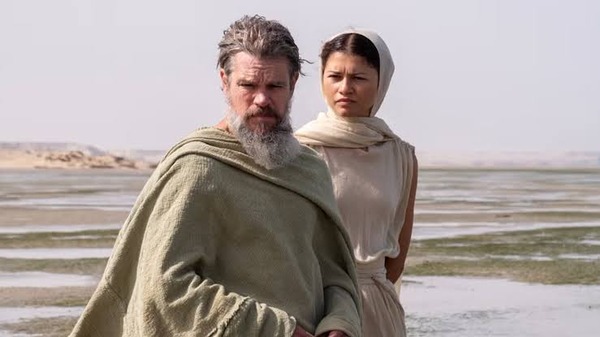
Much of the criticism surrounding the film lies in Nolan’s handling of themes. While Homer’s Odysseus faced the external wrath of Poseidon, Nolan’s counterpart must confront himself. Gods exist in the movie as external manifestations; they provoke an internal crisis in the epic hero.
Going beyond the traditional notions of Odysseus as a witty, sarcastic trickster, Matt Damon plays a man plagued by the consequences of his actions. He suffers from severe PTSD. Critics question whether Homer had intended such a psychological outcome. The stoic control and hubris of epic heroes are just a surface layer of this Odysseus. He is quick to realize his mistake. However, once the damage is done, he can only repent.
Consequently, the narrative becomes a veritable study in existentialism where Odysseus is left with no choice but to accept his tragic consequences. His own wrongdoings, combined with Poseidon’s anger, derail his life significantly. Yet in the actual myth, that is exactly what made him the great epic hero. One who is of a noble birth, grand, respectable, and a great warrior. He significantly battles against the odds and is resolute to return home. In contrast, Nolan’s Odysseus is quite different.
The Epic Hero Becomes an Everyman
Odysseus here becomes an Everyman. The movie explores the great travesty that led epic heroes to their ultimate destiny arbitrarily. Rather, the hero is altered to be relatable to the general public. He becomes somewhat like a modern tragic hero. This Odysseus, too, has no control over his fate, but he can repent. However, the redemption arcs are significantly leveraged upon without a proper explanation, thus making them the weakest point of the screenplay.
The fate of Odysseus was to survive and return to Ithaca without his crew. The sheer magnitude of his position made him eligible for such a survival. The entire point is negated by the writer’s imagination in the movie. A tired, failed, and lost man is what Nolan’s Odysseus is.
Should You Watch The Odyssey?
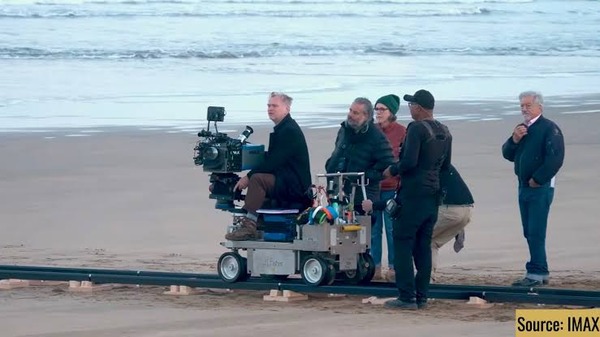
If you love watching fine filmmaking, then The Odyssey is a great pick. However, if you are a myth Nazi, the movie might sting you at times. It lacks the pure Greek passion that has immortalized the myths. Yet, with a steady box office run and mixed responses, The Odyssey has generated a renewed interest in Greek literature.
However, critics have not let it go easily. Emily Wilson (the classicist whose 2017 translation of the epic Nolan cited during his publicity) voices the literature lovers’ concerns. She points out that the film “has nothing convincing to say.” Furthermore, Wilson accuses the film of lacking “psychological, emotional, political, and ethical depth.” After such scathing remarks, it is now left to the audience to decide whether or not they like the film.
Follow The World Times for more such movie breakdowns.