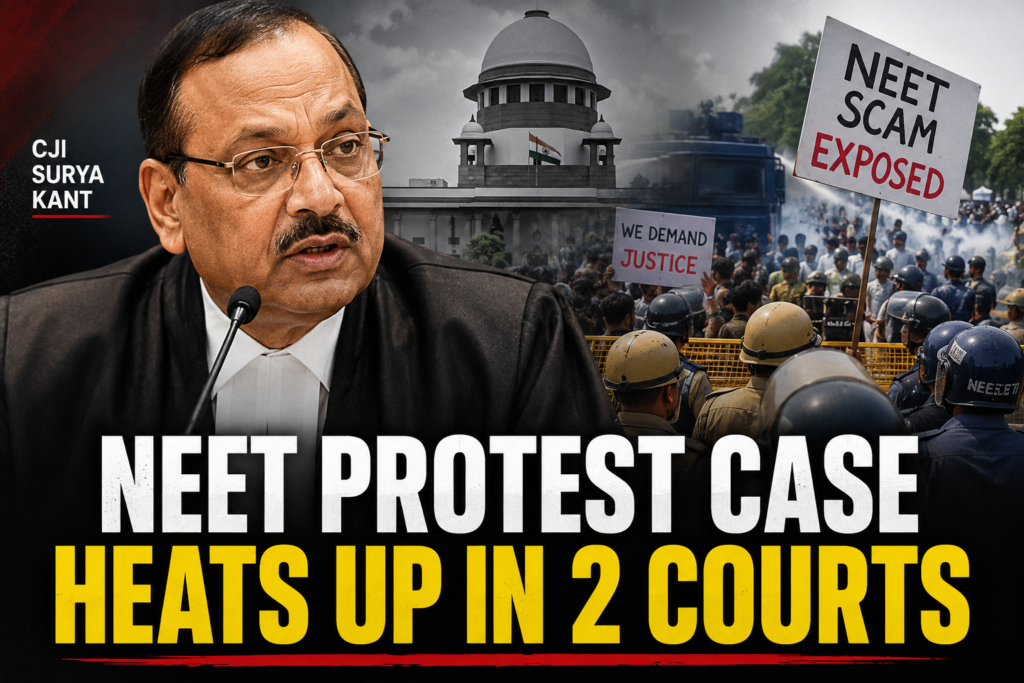
The NEET protest case has reached two courts even after the protest itself ended. The Supreme Court and the Delhi High Court both heard fresh pleas on Monday. Both cases trace back to the July 20 student march near Parliament. Courtroom scrutiny continues, even though the standoff on the streets is now over.
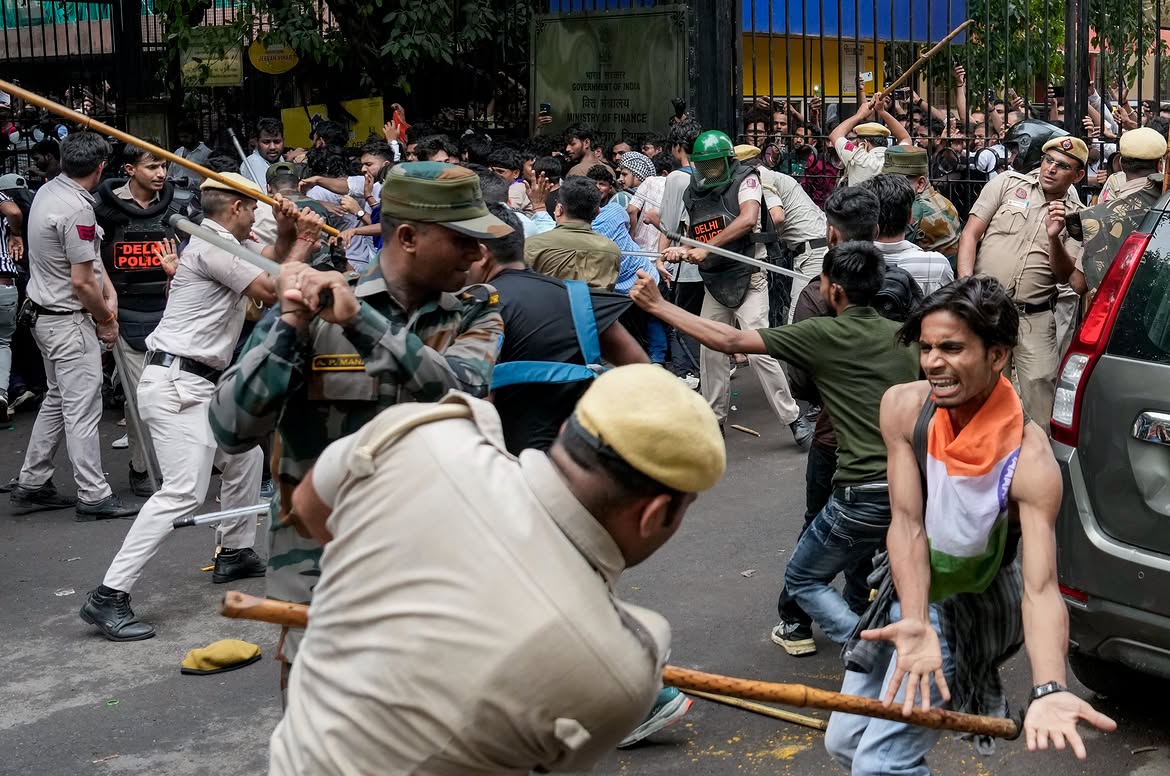
The petitions follow weeks of protests at Jantar Mantar. Students alleged a paper leak hit the NEET-UG 2026 exam. Demonstrators under the Cockroach Janta Party banner held a sit-in since June. Their “Chalo Sansad” march on July 20 turned tense near Parliament Street as police used lathi charges and tear gas to disperse the crowd.
The wider protest has since reached a turning point. Union Education Minister Dharmendra Pradhan resigned on Saturday, July 25. The CJP called off its 36-day agitation soon after. Pradhan said the past ten days had “saddened” him deeply. He added that the matter was “not a personal prestige” issue. Even so, the NEET protest case continues before both courts today.
Supreme Court Flags Need for Uniform Protocol
Chief Justice of India Surya Kant led the bench on Monday. The bench heard a batch of pleas on alleged police excesses during the march. Notably, Justices Joymalya Bagchi and V Mohana also sat on the bench. Judges took up the pleas during Monday’s proceedings.
CJI Surya Kant made a strong point on peaceful protest stating “the Constitution guarantees this right absolutely”. “Agitation alone cannot justify a lathi charge”, he added. Moreover, he stressed that “Any alleged excess deserves independent examination”. He also called for uniform protocols across all states.
The pleas asked the court for clear steps, and want the 2006 Prakash Singh police reforms enforced. They also want an independent panel led by a retired judge. This panel would probe the excesses and the claims of wrongful detention. One plea asked for an FIR over alleged assaults on female protesters.
Delhi Police has denied firing pellet guns at demonstrators. Protesters still allege eye injuries from such weapons. The Rapid Action Force, which led the ground operation, has opened its own inquiry. This probe runs alongside the Supreme Court’s independent review, not instead of it.
Delhi High Court Presses on Protest Surveillance
A separate legal track continues at the Delhi High Court. Former JNUSU president Aishe Ghosh filed this plea. She challenges continuous police videography at the protest site. Her petition also raises concerns over facial recognition use. The matter, listed for further hearing on Monday, remains before the court.
Solicitor General Tushar Mehta has defended the practice in earlier hearings. He called videography a routine law-and-order tool, not surveillance. “Protest organisers had themselves urged people to record events”, he noted. “So privacy claims at a public protest site seem contradictory”, he further argued.
The bench had earlier sought a clear answer from the authorities. It asked whether any SOP governs protests and hunger strikes. No interim relief has been granted in the case so far. The court continues to weigh privacy rights against law-and-order concerns.
Two Courts, and the NEET Protest Case
Together, these two cases capture the scale of the legal fallout. One court is examining how police acted on the ground, the other is scrutinising how police monitor protesters at rest. The protest itself may have ended with Pradhan’s resignation. Yet accountability questions remain squarely before both courts.
Both benches appear to want lasting protocols, not one-off orders. The Supreme Court’s push for uniform rules could reshape protest policing nationwide. Legal experts will watch closely for any interim directions from either bench. The outcome will matter far beyond the NEET protest case itself. It could shape how Indian courts balance public order against the right to dissent.
Source: The Hindu
Follow The World Times For Such Updates!