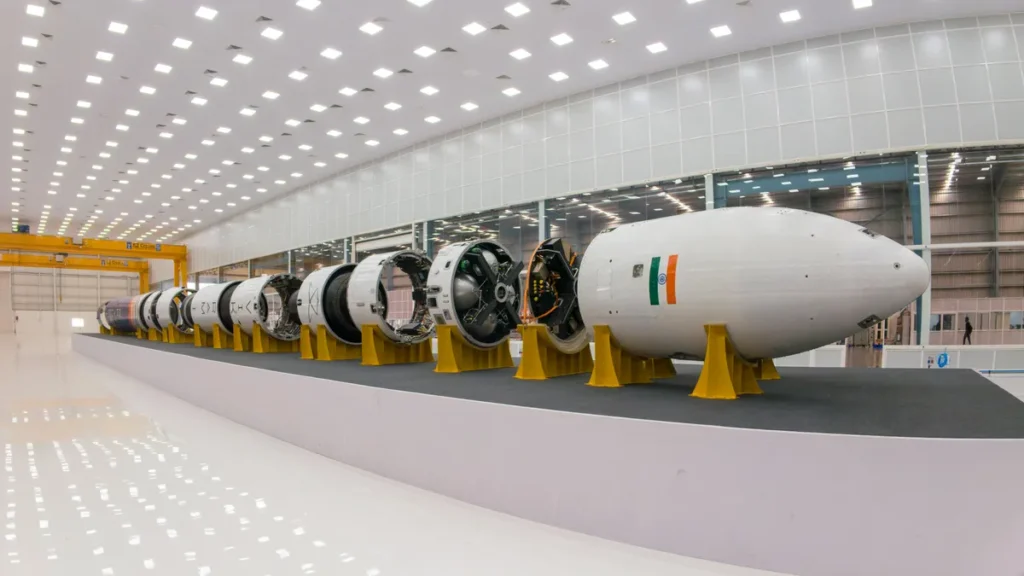
India’s private space sector has officially crossed a major frontier. Skyroot Aerospace’s Vikram-1 successfully reached orbit during its maiden orbital mission, Mission Aagaman. It is the first privately developed orbital-class rocket from India to achieve this milestone. It therefore makes the launch an important moment for the country’s growing private space industry.
Vikram-1’s Historic Orbital Leap
The rocket lifted off from the Satish Dhawan Space Centre in Sriharikota, Andhra Pradesh. After following its planned flight sequence, it successfully placed its payloads into a nearly 450-kilometre Low Earth Orbit (LEO). The mission also placed India among the few countries with private orbital launch capability.
Prime Minister Narendra Modi congratulated Skyroot Aerospace after the successful mission. He described the achievement as an important milestone for India’s growing space ecosystem and appreciated the team’s efforts in completing the launch.
The mission is another example of how private companies are becoming a bigger part of India’s space programme. For Skyroot Aerospace, the successful maiden orbital flight is an important milestone as the company moves ahead in the launch services sector.
How Vikram-1 Reached Orbit
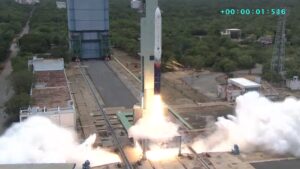
The 24-metre carbon-composite Vikram-1 rocket completed every major phase of its flight according to the planned mission profile. The launch vehicle used three solid-fuel stages along with an Orbital Adjustment Module (OAM), which carried out the final orbital insertion.
The flight began with the Kalam-1200 first stage carrying the rocket through the densest layer of the atmosphere. After completing its job, the stage separated as planned. A short while later, the payload fairing also separated, exposing the payloads to space for the first time.
The second stage, Kalam-250, then completed its burn and separated, followed by the ignition of Kalam-100, the rocket’s third and smallest solid stage. Once the solid propulsion phase ended, the Orbital Adjustment Module took over to complete the remaining part of the mission.
The Orbital Adjustment Module is powered by a 3D-printed liquid engine capable of starting, stopping and restarting while operating in space. According to the mission details, it performed the final manoeuvre required to place the payloads into the intended orbit.
Inside the Cargo: Diamonds, Messages, and Satellites
Apart from demonstrating the rocket’s performance, Vikram-1 also carried multiple payloads as part of its maiden mission. One of them was “Diamond Lotus”, a lab-grown diamond developed by Bengaluru-based Cosmos Diamonds.
The mission also carried a handwritten postcard from Prime Minister Narendra Modi bearing the words “Vande Mataram”. Along with it, handwritten messages from members of the Skyroot team, investors, policymakers and well-wishers from different parts of the world were also sent into space.
These symbolic items travelled alongside the mission payloads, making the launch memorable beyond its technical achievement. Apart from placing the payloads into orbit, the mission also showed that Vikram-1 performed as planned throughout the flight. It also reflects the growing confidence in India’s expanding private space ecosystem.
Mission Aagaman marked Skyroot Aerospace’s first successful orbital mission. From completing every planned stage of the flight to placing its payloads into orbit, Vikram-1 delivered the expected results during its maiden launch and added another milestone to India’s private space journey.
Read more on ANI.
Follow The World Times for more such updates!