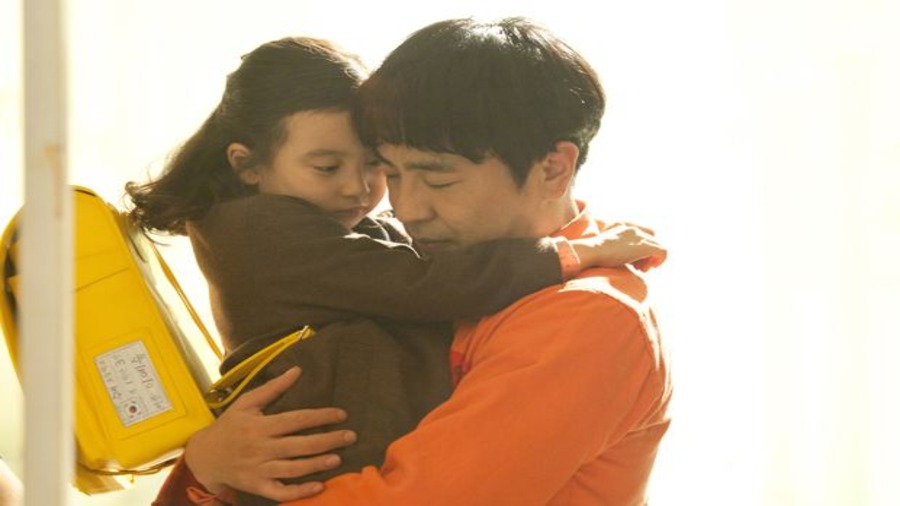
Miracle in Cell No.7 , a 2013 Korean movie, continues to captivate audiences through its powerful themes of love, friendship and loss. The plot takes a break from the style and sensationalism usually found in the glamourized world of K-dramas. It offers a grounded perspective. A mentally challenged man is wrongfully convicted of raping a child. Authorities arrest him and separate him from his daughter. He encounters prison and his inmates who start with despising him, ultimately become his protectors.
Click here to watch the trailer.
Countries such as the Philippines, Indonesia, and Turkey have remade and re-adapted the same film. In 2017, filmmakers adapted the story for Indian audiences by creating the Kannada-language film Pushpaka Vimana. The masterpiece marked the directorial debut of S. Ravindranath, starring Ramesh Aravind and Yuvina Parthavi in leading roles.
In the spirit of Father’s Day, it is worth revisiting a story that has touched audiences for years with its moving portrayal of a father’s love. What makes this film so memorable that viewers continue to be moved by it today? Let us explore why the original Korean version remains beloved and how its remakes have adapted the story for different audiences while retaining its emotional core.
Miracle in Cell No.7 : The Universal Father-Daughter Bond
Movies about single fathers always resonate deeply with audiences. Traditionally, people associate caregiving more closely with mothers than with fathers. As a result, narratives that portray fathers as primary caregivers often strike us as especially moving. These stories challenge conventional expectations surrounding parenthood and reveal forms of affection that parents do not always express openly.
Yong Gu, in contrast, is different from most men. Due to his psychological condition, he has the maturity of a six-year-old. This allows him to connect with his daughter, Ye-seung, on a deeper level, as it is then a child bonding with another child.
Ye-seung’s mother is neither shown nor mentioned throughout the film. There are no other caregivers present, making Yong Gu her sole guardian. However, this dynamic undeniably makes Ye-seung more vulnerable, and the audience’s hearts bleed for this little girl.
Ryu Seung-ryong delivers one of the best performances of his career in this film. He portrays Yong-Gu’s mannerisms, gestures and awkward physical movements with almost natural perfection and ease. Thus, it becomes rather difficult to distinguish him from the mentally challenged man he plays on screen.
The child actress Kal So-won was only six years old at the time of filming. Her youth, combined with her innocence and raw portrayal of grief, moved the audience to cry with her for Yong Gu.
Miracle in Cell No.7 : A Story of Love and Sacrifice
A rich man forcefully snatches a bag that Yong Gu was going to buy for Ye-seung. and kicks him out of the shop, to purchase the item for his own daughter. Later in a sudden turn of events, the same girl with that schoolbag meets with an accident which kills her on spot.
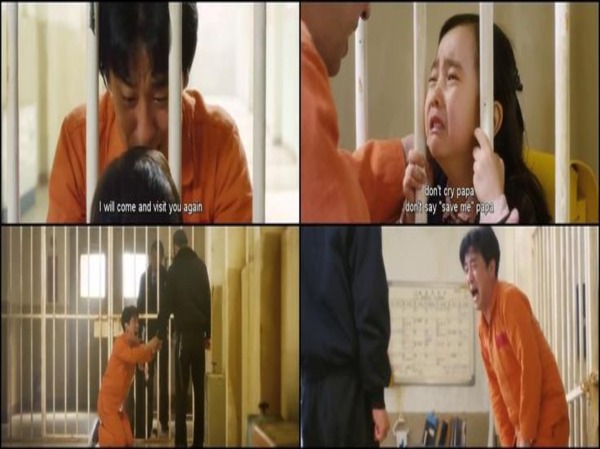
Yong Gu is charged with molesting her after a witness misinterprets his attempt to unzip her pants to provide her some ease while performing CPR. Soon, the police arrest him. The victim’s influential father threatens him, warning that he will bring unspeakable harm upon Ye-seung if he refuses. Faced with the possibility of losing his daughter, Yong-gu chooses to sacrifice himself to protect her. Perhaps the film’s most heartbreaking scene takes place on the day of Yong-Gu’s execution, which coincides with Ye-seung’s birthday. The inmates celebrate the little girl’s birthday one last time before they take Yong Gu away. Although he initially accepts his fate to ensure his daughter’s safety, the reality of never seeing her again proves unbearable.
As he is led away to his execution, Yong Gu breaks down. The pain of permanently separating from his child overwhelms him. He begins apologizing for a crime he did not commit, hoping for a life where he can be with his daughter, even if she can only visit him in his prison cell. His desperate cries for Ye-seung remain one of the most gut-wrenching moments in Korean cinema.
Miracle in Cell No.7 and Freedom Above Prison Walls: The Air Balloon

A memorable sequence from the original film is of the hot air balloon that symbolizes flying away or freedom. The inmates of Cell No.7 secretly build a hot air balloon in a desperate attempt to reunite father and daughter beyond the prison walls.
However, the balloon is caught in the barbed wire, and their escape plan fails. Just like Yong Gu’s dream of staying with Ye-seung, this adventure, too, remains incomplete. This symbol becomes more prominent years later, when the adult Ye-seung, a lawyer, fights to clear her father’s name.
The film opens with her imagining herself and Yong Gu flying together in the balloon. After she finally succeeds in restoring his honor, the story returns to this image. In her vision, father and daughter are at last able to soar away higher in the skies, finally free from injustice and separation. Through this ending, the film suggests that although Yong Gu could not be free in life, he and Ye-seung are finally reunited in memory.
How the Turkish Adaptation Rewrote Tragedy
In the Turkish adaptation Koğuştaki Mucize, the inmates initially view Memo (Aras Bulut İynemli) with suspicion and hostility. They mock him, beat him, and treat him as an outsider. However, the cellmates become his surrogate family as they begin to recognize Memo’s innocence and childlike purity. This happens precisely when Memo risks getting stabbed to save the life of one of the most notorious inmates, Askorozlu (İlker Aksum).

The Turkish adaptation also highlights the moral complexity of the supporting characters. An elderly convict burdened by guilt over his own past actions, eventually develops a close bond with Memo’s daughter, Ova. Years ago, he had killed his daughter to protect his family’s reputation.
He is deeply religious yet remains isolated from the others. This man is also responsible for the film’s most powerful deviations from the Korean original. Instead of Memo, he sacrifices himself by taking the younger man’s place, allowing father and daughter to reunite.
This act explores the beauty of redemption and the power of true penance from the heart. The old man’s sacrifice cannot undo the injustice to his own daughter, yet by saving another man’s family, he finds peace and spiritual fulfilment in afterlife. The ending itself reflects a significant difference between the two versions. While the Korean original enforces destiny above all, the Turkish adaptation offers hope.
Adapting the Story Through Local Faith and Family Values
The Indonesian and Filipino remakes of the story take a fresh approach, weaving in elements that resonate with their local cultures. In both versions, there’s a stronger focus on religious faith and spirituality compared to the original Korean film.
Faith serves as a source of comfort for all characters during their toughest moments in the Indonesian version. In addition, local comedians added not only humor but also a dash of native Indonesian flavor. In the prison scenes, they balanced serious themes with laughter while maintaining the warmth and emotional heartfulness that made the original Cell No. 7 so impactful, so special.
Similarly, the Filipino version strikes a chord by highlighting values that are significant to Filipino audiences, such as family, sacrifice, and the power of community support. These adaptations not only tell a story but also connect to a personal level, making them relatable to their viewers.
Thus, more than a decade after its release, Miracle in Cell No. 7 still makes audiences laugh, cry, and hope. Its global remakes prove that stories about love, family, and sacrifice will always find a place in people’s hearts.
Follow The World Times for more such updates.