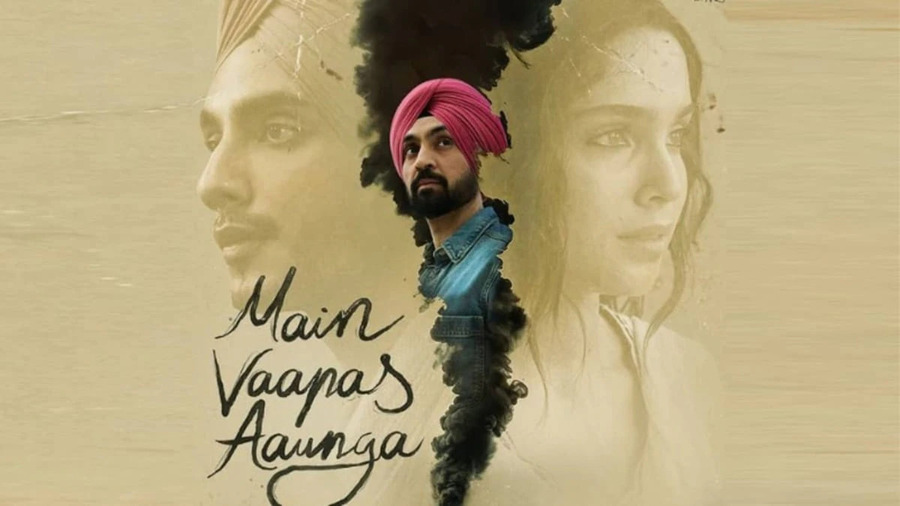
Imtiaz Ali’s latest movie Main Vaapas Aaunga stars Vedang Raina, Diljit Dosanjh, Naseerunddin Shah and Sharvari Wagh. The film offers an emotionally reflective portrayal of an interfaith love story set during the Partition. It fills its narrative with love, longing, separation, and a profound sense of displacement.
The Plot Surrounding Main Vaapas Aaunga
The film reveals the hidden love story of Keenu (Vedang Raina) and Jiya (Sharvari Wagh), who come from Sikh and Muslim families, respectively. However, the Partition of India in 1947 divided Punjab and forced the lovers apart. The story unfolds through Nirvair’s (Diljit Dosanjh) ailing grandfather, who lies on his deathbed unable to find peace because he never fulfilled a promise he made to his beloved.
As he begins murmuring memories from his youth before Partition, Nirvair learns about Keenu’s unfinished story and sets out to fulfill his promise. Although decades have passed, Keenu remains mentally rooted in Sargodha (now in Pakistan), a place that was not only his home but also the setting of a defining chapter of his life.
Keenu’s Search for Home Drives the Story
The story is much deeper than just a mere love story. It shows how displacement and separation from one’s homeland can change a person. Keenu was a fearless boy who didn’t fear showing his love to Jiya despite the religious issue, or entering into Muslim society despite knowing the ill-will. He stood by what he thought was right, even when he sneaked into Jiya’s home at night to assure her. He knew that he will fullfill the promise he made, or at least he believed himself to do that.
But the escape and continuous fight for survival changed something in him, especially when all the women in her family were left alone. As if the people he knew, the faces alongside him grew, and the society that brought him up was dead, and simultaneously something inside of him died too. It killed the innocent, fearless and carefree Keenu and gave birth to someone who is filled with anger, guilt, and regret. He felt living as a refugee in his own country, as if there was a hole in his heart which is impossible to be filled.
For him, home was his family, his friends and Jiya, completely different from a geographical boundary. So with Jiya’s separation after independence, he was overwhelmed with the feeling of something hollow left, surrounded by her memories. It shows how seperation of physical connection is completely irrelevant to emotional and heartfelt connections.
Imtaiz’s Touch in Main Vaapas Aaunga
At this point, Imtiaz Ali has mastered the art of emotionally devastating his audience with heartbreaking love stories. In Main Vaapas Aaunga, he once again explores love, separation, and longing. Much like Laila Majnu and Rockstar, where Laila and Heer appear in Qais’s and Jordan’s imaginations dressed in white, Jiya also appears in Keenu’s imagination wearing a Christian wedding dress, just as they had once planned their marriage.
One of the film’s most striking lines comes from Diljit’s character: “Ye ishq bada hi zehreela hota h. Iski ek boond bhi dil me reh jaye to chain se marne bhi nhi deti.” The dialogue recalls a memorable line from Anwar (2007), when Master Pasha says, “Jab kisi ke mann me itna pyaar ho aur dene ke liye koi bhi na ho, to pagal ho hi jayega aadmi.”
While Keenu has carried Jiya in his heart for 78 years and lived with the burden of an unfulfilled promise, Nirvair struggles to commit to the relationship he already has. He remains uncertain about defining his future or even discussing marriage. Time has erased much of Keenu’s memory, yet he still remembers Jiya’s face, the emotions he felt in her presence, and fragments of the tragedies that shaped his life. More importantly, he remembers how Jiya used to describe those moments. Through Keenu’s journey, the film shows how love can quietly reside within someone’s heart for decades and still retain its power.
Nirvair’s Character
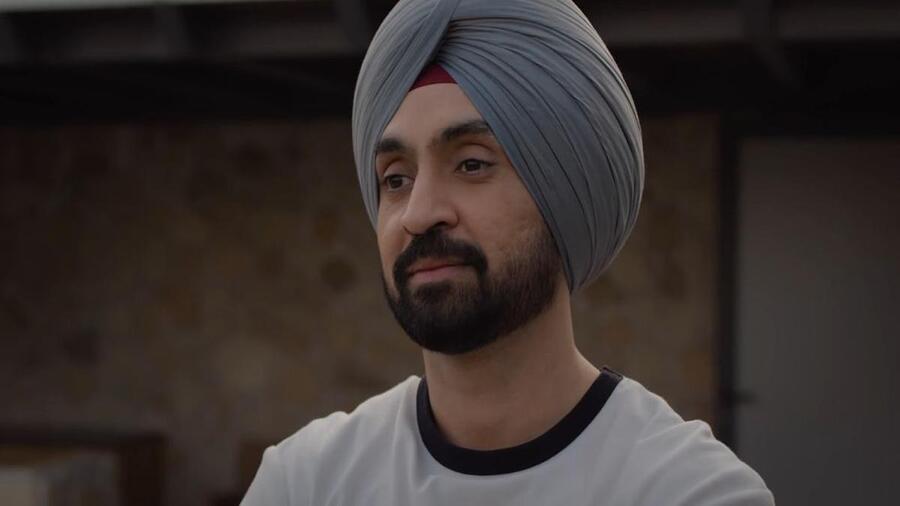
This deeply affects him and makes him realise the kind of love he wants in his own life. However, the film never reveals what happens to his story afterward. Was he merely a mediator whose sole purpose was to fulfill a decades-old promise? The narrative leaves several questions unanswered. What happened to his job? Did he return to it? How did Keenu’s story truly connect to his own life? As a result, the film leaves his journey feeling incomplete.
Conclusion
Main Vaapas Aaunga movie moves at a slow pace while telling Keenu’s and Nirvair’s stories side by side. The filmmakers unfold the scenes and emotions in a calm and humble manner, helping the audience connect with the characters and understand their state of mind. However, I found the pacing tiring. Although the film successfully conveys its emotions and messages, it often moves too slowly, making parts of it feel boring. This sense of boredom is not limited to a few scenes but lingers throughout much of the runtime.
Naseeruddin Shah deserves huge praise for his performance. With remarkable subtlety, he captures Keenu’s confusion, hesitation, sorrow, and helplessness in love. Small moments, such as reaching toward the canopy of trees from his bed, carry deep emotional weight. One of the film’s most memorable scenes comes when Keenu fixes his beard after looking at Jiya’s portrait. The moment blends peace and sadness beautifully, while the shayari and his question, “Main jau?” make it even more powerful. Vedang Raina also impresses with his portrayal of pure love and affection. Through constant reassurance, stolen glances, playful mischief, and unwavering devotion to Jiya, he brings sincerity and warmth to the role.
Overall, the movie works as a decent one-time watch. By revisiting the horrors of Partition, Imtiaz Ali reminds viewers of the inhumane atrocities inflicted upon countless people. In particular, he highlights the suffering of women, many of whom chose death over violence and humiliation. His emotional focus on the characters allows the film to effectively convey their pain, longing, and displacement. Nevertheless, the persistent slowness remains difficult to ignore.
For more such interesting content, stay tuned to The World Times