
There is a very famous dialogue in Bollywood: Kabhi-kabaar kuch pal kaafi hote hain, aur kabhi umar guzar jaati hai kisi ko samajhne ke liye (sometimes a few moments are enough, and sometimes a lifetime passes to understand someone). A similar idea appears in Three of Us (2023), directed by Avinash Arun. The story revolves around Shailaja (Shefali Shah), who suffers from dementia and returns to her childhood town in Konkan with her husband. There, she reconnects with her former lover, Pradeep (Jaideep Ahlawat). The film explores memory, distance, and emotional maturity through characters who understand one another in ways they themselves may not fully realise.
Three of Us and Emotional Maturity
Shailaja and Dipankar (Swanand Kirkire) have spent many years together, yet he encounters a completely different side of her in Vengurla. Although the film offers only limited glimpses of their life in Mumbai, there is a sense of distance between them. However, that distance should not be mistaken for emotional detachment. In fact, their relationship reflects a deep level of maturity, particularly in the way they respect each other’s privacy.
When they meet Pradeep at the bank, Dipankar seems uncertain. He does not know who is who or what to say beyond a few polite ice-breakers. Shailaja leads the interactions. As she begins rediscovering herself, she also reveals a side of her that Dipankar has never fully seen. Further, she searches for her friend’s house, Dipankar does not bombard her with questions. Instead, he quietly walks a few steps behind her. Whether she is meeting old friends or reconnecting with her former lover, he simply accompanies her without interference.
Trust Without Possession
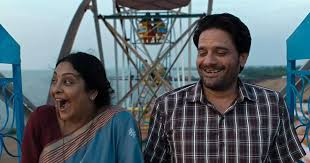
Dipankar gives Shailaja the space she needs. He respects her privacy and allows her and Pradeep to navigate conversations and memories that he may never have known about. He does not insist on becoming a part of every moment, including occasions such as the Ferris wheel ride. Rather than reacting with jealousy or possessiveness, he understands the emotions behind the situation and maintains a respectful distance. During their stay in Konkan, he sees Shailaja genuinely happy. She is living in the moment and reconnecting with a version of herself that had faded over the years. Instead of feeling threatened by this transformation, he quietly appreciates it.
The same emotional maturity is visible in Sarika (Kadambri Kadam). She knows her husband is meeting someone who once played an important role in his life. Yet there is a quiet trust between them. Neither she nor Dipankar requires constant reassurance. Their bond is built on understanding rather than explanations. They are emotionally aligned enough to recognise the meaning behind each other’s silences and unspoken feelings.
How Shailaja Finds Her Udgam
For Shailaja, returning to Vengurla feels like meeting her younger self again. Her friends, memories, and everyday adventures are all essential parts of who she is. These experiences shaped her identity far more than the version of herself visible on the surface. One of the film’s most touching moments comes during a conversation between Shailaja and Gauri (Sharvari Lohokare). When Gauri says, “Wapis bhi to aayi na” (but you came back too), the line feels deeply comforting. It reflects how certain places, memories, and people remain connected to us regardless of how much time passes. Returning to them can feel like rediscovering a forgotten piece of oneself.
The poem that Dipankar writes about Shailaja’s condition, Udgam (origin or beginning), reinforces this idea. It suggests that Shailaja has returned to her source, the place where she can reconnect with the essence of who she truly is. Before her memories fade further, she is given one last opportunity to revisit that part of herself. As Shailaja spends time with Dipankar and Pradeep, walking through familiar streets and revisiting old memories, she becomes immersed in nostalgia. The stories she shares and the places she revisits offer a temporary escape from her present reality.
Pradeep, however, is not entirely like Shailaja. While she remains emotionally connected to her past, he has accepted the life he now leads. Even so, traces of regret remain. The Ferris wheel scene and the conversations that follow reveal how deeply they understood one another. They shared experiences and phases of life that neither could fully communicate to their respective partners. Somewhere within them remains a quiet desire to revisit what once was and imagine what might have happened had circumstances been different.
Three of Us More Than Memory and Lost Love
The film reminds viewers that the version of a person we encounter is often only a small part of who they truly are. Even individuals themselves may not be fully aware of the many layers that shape them. It explores a wide range of emotions. Through Dipankar, it examines understanding, patience, anger, insecurity, and acceptance.
Rather than suppressing these emotions, the narrative allows them to exist openly. Through Pradeep, it explores the experience of unexpectedly revisiting one’s past. Through Shailaja, it portrays the painful process of slowly losing oneself while simultaneously searching for a sense of origin, closure, and peace.
In the end, Three of Us feels less like a story about memory or a love triangle and more like a reflection on human incompleteness. It reminds us that no matter how close we are to someone, there are always parts of them that remain undiscovered. Some relationships are not loud, possessive, or dramatic. They quietly exist through understanding, space, and acceptance. Perhaps that, in itself, is enough.
For more such content, stay tuned to The World Times.