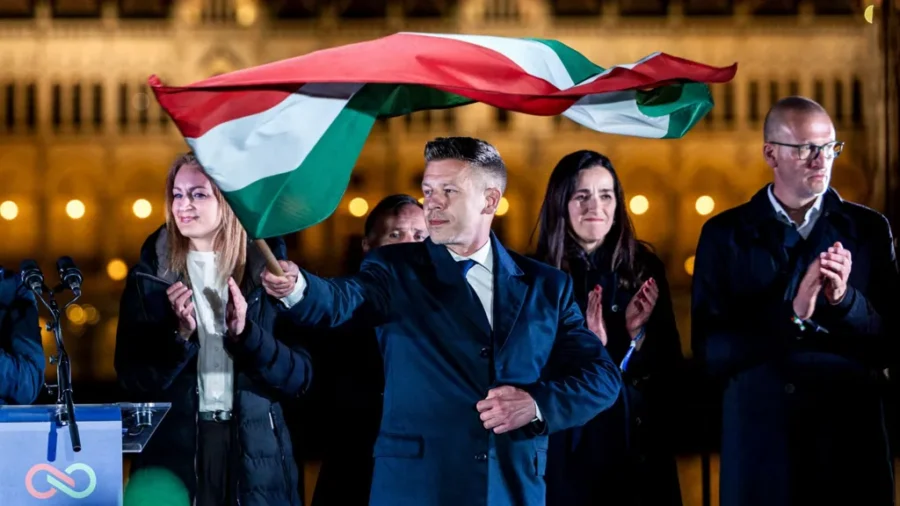
Péter Magyar is on course for a constitutional majority he needs to reverse Orbán-era reforms (Courtesy - BBC)
Péter Magyar has secured a landslide victory in Hungary’s election, ending 16-year rule of Viktor Orbán. Preliminary results showed Magyar’s Tisza party winning around 138 seats, comfortably defeating Orbán’s Fidesz party. Magyar addressed supporters in Budapest and declared that Hungarians had “overthrown the regime” through democratic means. The result followed a record voter turnout of nearly 79.5 percent, reflecting strong public demand for political change.
Orbán conceded defeat soon after early results emerged and acknowledged the outcome as clear and painful. His party secured only 55 seats, marking a dramatic collapse after years of political dominance.
Anti-Corruption Campaign Drives Electoral Shift
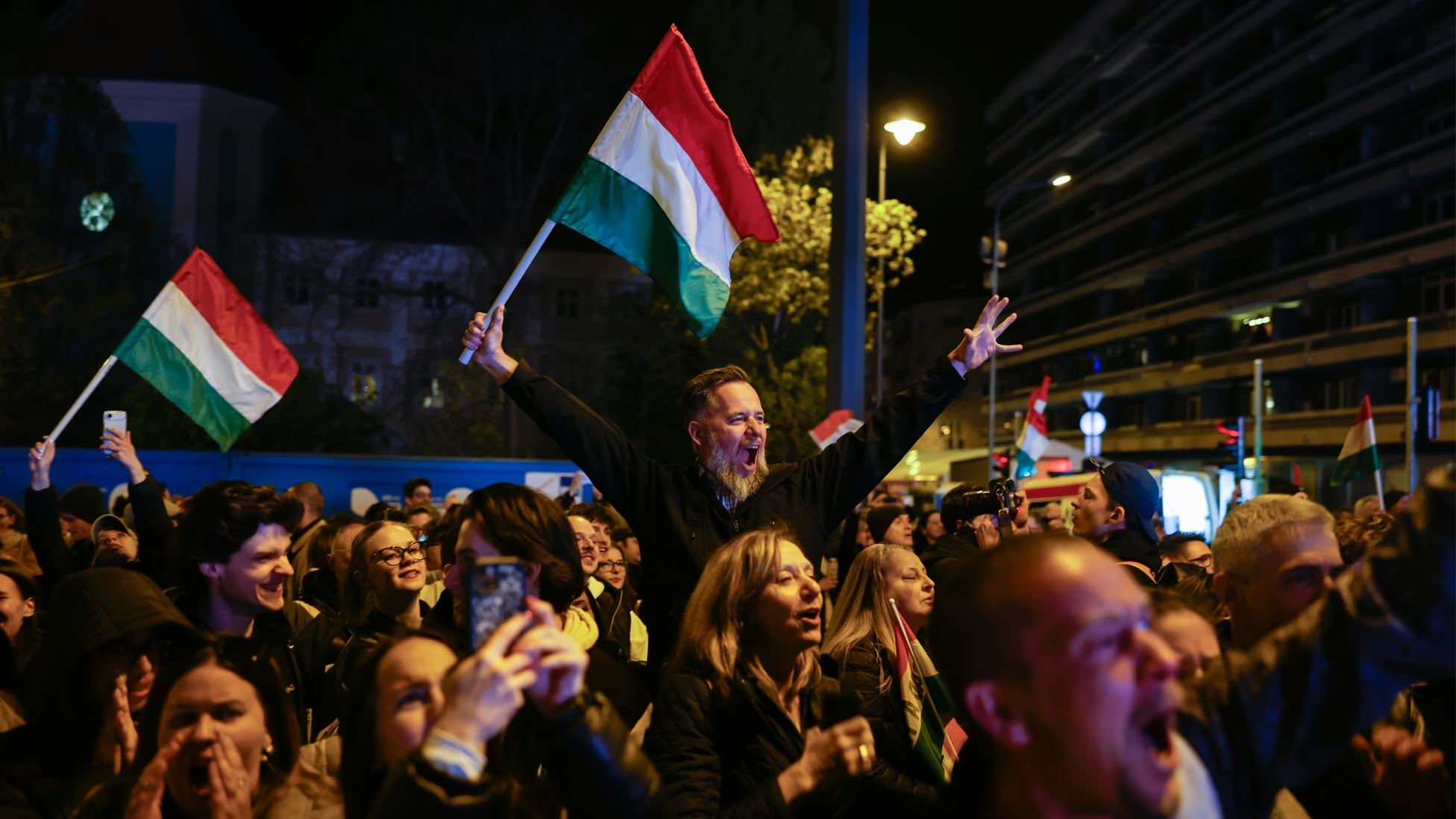
Magyar built his campaign on promises to tackle corruption, dismantle patronage networks, and restore institutional independence. He criticised the entrenched system known as NER, which many accused of benefiting political loyalists. Over two years, Magyar mobilised support across cities, towns, and rural regions through grassroots campaigns. His message resonated with voters frustrated by rising corruption, economic challenges, and governance concerns.
Analysts said the election marked a rejection of Orbán’s increasingly centralised political system, often described as an “electoral autocracy.” The scale of the victory gives Magyar a strong mandate to pursue sweeping reforms.
Foreign Policy Shift and Reform Agenda
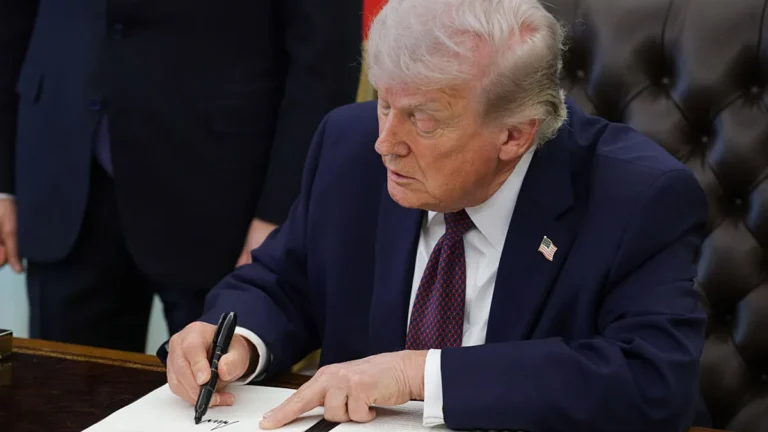
Magyar has pledged to reset Hungary’s foreign policy by strengthening ties with the European Union and Ukraine. He also aims to distance Hungary from Vladimir Putin, reversing Orbán’s close alignment with Moscow. Orbán had maintained strong relations with Donald Trump and faced criticism within Europe for opposing EU positions. The new leadership signals a shift towards greater European integration and cooperation.
Magyar plans to reform education, healthcare, and the judiciary while restoring democratic checks and balances. His expected two-thirds majority would allow constitutional changes and structural reforms.
Political Transition and Future Challenges
Hungary now enters a critical transition period as the new government prepares to implement major policy changes. Analysts warn that dismantling entrenched systems will require sustained political will and administrative reform. The election outcome represents a significant shift in European politics and signals changing voter priorities across the region. Hungary’s new leadership faces high expectations as it attempts to deliver democratic renewal and economic stability.
Stay tuned with The Word Times For Latest Updates