EU flag projected on Bulgaria’s central bank. [Courtesy: Al Jazeera English]
Effective from January 1, 2026, Bulgaria adopts euro as its new official currency, while the Bulgarian lev remained in circulation during a short transition period. Bulgaria’s admission to the Eurozone marked a significant step toward its full European integration.
People celebrated in Sofia with fireworks, crowds cheering outside the central bank building on Thursday. A countdown displayed on the Bulgarian central bank’s facade, followed by images of new Bulgarian Euro coins and the EU flag.
From February 1, 2026, the euro will become Bulgaria’s sole legal tender.
Context
Although Bulgaria joined the EU in 2007 with a promise to eventually adopt the euro, many countries in the same boat have dragged their feet. Bulgaria, however, is keen to make the switch.
In reality, the country has been tied to the currency for decades. After a financial crisis in the 90s, the Bulgarian lev was pegged to the euro at a rate of about two lev to one euro. This means Bulgaria gave up control over its own interest rates long ago. This has forced it to follow the European Central Bank’s lead to keep the exchange rate stable. Because of this, the euro is already a massive part of daily life for ordinary Bulgarians.
Economically, Bulgaria has met the criteria set by EU institutions, often referred to as “Brussels.” It has maintained low inflation rates, stable public debt and exchange-rate stability since 2020. Following positive assessments by the European Union institutions, Bulgaria was approved for Eurozone membership.
What is the Eurozone?
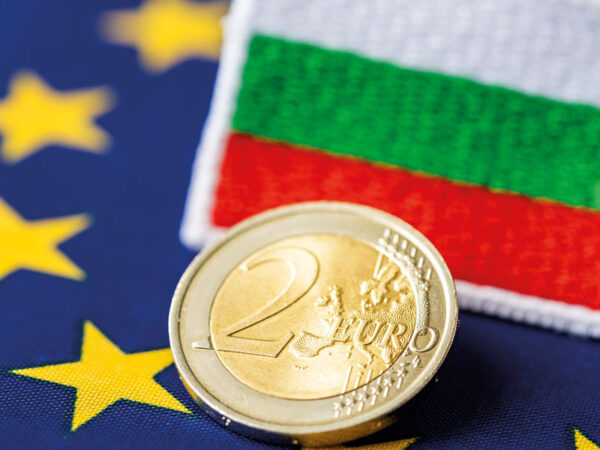
The Eurozone includes countries that are part of the European Economic and Monetary Union (EMU). These countries have a shared economic policy, a common currency, and a unified central banking system under the European Central Bank (ECB).
At present, 21 out of 27 EU member states have adopted the euro, with Bulgaria being the 21st member of the Eurozone.
How does Eurozone Membership benefit Bulgaria?
Bulgaria will have many benefits by adopting the euro as its official currency:
- It brings Bulgaria closer to its full integration into the European Union.
- It ensures currency stability with risks of currency devaluation reduced nearly to zero.
- Elimination of transaction costs during currency conversions, lower interest rates, and increased trade with EU partners
- Euro membership signifies trustworthiness, leading to increased foreign investment
- Access to European Central Bank facilities
- Full participation in Eurozone decision-making and a stronger voice in EU economic governance.
Public Response
Public response has been mixed. The country is divided by two types of sentiments- pro-European and pro-Russian.
Surveys show that almost half of the population believes it is not a good idea. People fear inflation, resulting in rising living costs. The Bulgarian membership in the Eurozone was followed by the largest protests in decades due to a lack of trust in politics and concerns regarding corruption. A protester on Al Jazeera English reported that it is “just a political move to destroy our sovereignty.”
People with pro-European sentiments celebrated the historic event at the Bulgarian central bank. They believe that while there may be initial price rounding, the long-term stability is worth it, similar to the experience of other EU member states such as Latvia. Cybersecurity specialists reported on Al Jazeera that fears about the euro were spread through a disinformation campaign coming from a far-right party, formally linked to President Vladimir Putin’s United Russia Party.
Nonetheless, when euro changeovers happened before, the European Central Bank (ECB) said the effect on inflation has generally been between about 0.2% and 0.4%, and it quickly faded.
Bulgaria may face higher risks due to ongoing political instability, with seven elections in four years and persistently high levels of corruption. Critics argue that weak institutions could hinder a smooth euro transition. Meanwhile, the unstable political climate has also fueled misinformation. Consequently, over half of Bulgarians are feeling poorly informed about the euro adoption plan.
What’s Next After Bulgaria Adopts Euro
In the short term, Bulgaria’s economy is expected to absorb the transition to the euro with only limited inflationary effects. Over the medium to long term, the outcome will largely depend on how effectively institutions manage the process. Continued political instability and governance challenges could complicate implementation. Meanwhile improved coordination and transparency would help ensure a smoother transition and broader public confidence.
For more such informative articles, stay tuned at The World Times.