The death of a young protest leader has shaken Bangladesh, unleashing waves of anger that spilled onto the streets in violent confrontations.
A Symbol of Youth Resistance in Bangladesh
The death that has struck the deepest chord with young protesters in Bangladesh is that of Sharif Osman Hadi. A, 32-year-old youth activist and spokesperson for the radical cultural group Inqilab Mancha, or Platform for Revolution. Hadi emerged as a prominent voice during the student-led “July Uprising” of 2024 that toppled former prime minister Sheikh Hasina. He died on December 18, 2025, in a Singapore hospital, days after masked gunmen shot him in the head as he was leaving a mosque in Dhaka’s Bijoynagar area on December 12.
Hadi had become a leading critic of the former Awami League government and a key advocate for the families of those killed during the 2024 protests, often referred to as the “July Martyrs.” At the time of his killing, he was preparing to contest the February 2026 general elections as an independent candidate from the Dhaka-8 constituency. As head of Inqilab Mancha, he also pushed for a complete ban on the Awami League and called for what he described as a “generational rupture” from foreign influence, particularly from India.
From Mourning to Mayhem
Violence swept across Bangladesh following the killing of Sharif Osman Hadi, a key leader of the 2024 July Uprising. Masked attackers shot Hadi, a spokesperson for the political platform Inqilab Moncho, on December 12, 2025, after he left a mosque in Dhaka’s Purana Paltan area.
Doctors flew him to Singapore General Hospital for treatment after he suffered critical injuries. During this period, Bangladesh’s Foreign Ministry accused outlawed Awami League members of carrying out the attack and claimed they had fled to India, stoking anti-India sentiment.
Hadi died from his injuries on the evening of December 18. Interim government chief adviser Muhammad Yunus announced his death on television, declared a day of mourning, and urged restraint.
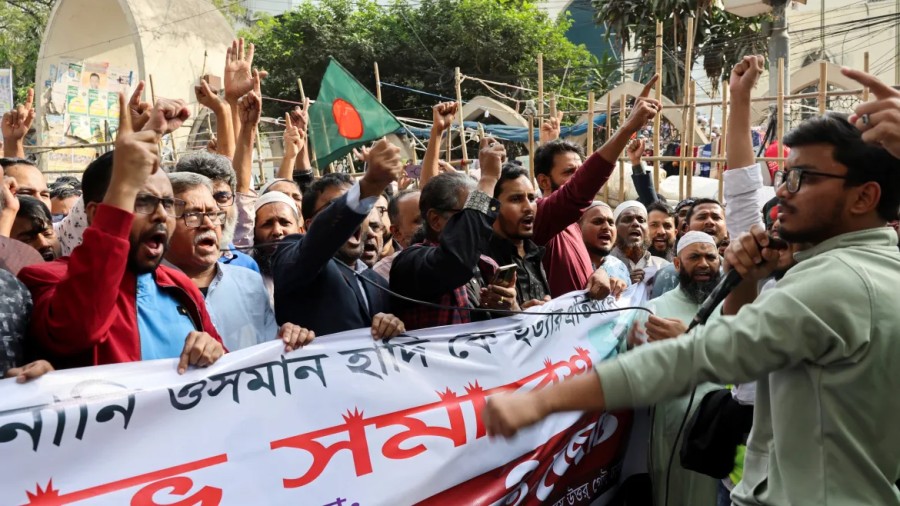
The announcement triggered immediate unrest. Protests turned violent overnight and continued into December 19, with clashes reported nationwide. Hadi’s body arrived in Dhaka that evening, drawing large crowds ahead of his funeral prayers. The interim government and the United Nations appealed for calm and called for investigations, including into the lynching of a Hindu man in Mymensingh that same night.
Dhaka emerged as a major flashpoint, with mobs vandalising and torching the offices of Prothom Alo and The Daily Star, trapping journalists inside. Protesters also attacked the Bangabandhu Memorial Museum site and the Chhayanaut Sangskriti Bhaban.
In Chattogram, demonstrators clashed with police while trying to storm the Indian Assistant High Commission and set fire to homes of former Awami League ministers. In Rajshahi, protesters used bulldozers to demolish a party office and attempted to march toward the Indian mission.
Arson and violence were also reported in Lakshmipur, Magura, Bandarban, Sylhet, and Barishal. Protesters blocked highways and railway lines, deepening the nationwide crisis.
Calls for Justice Grow Louder
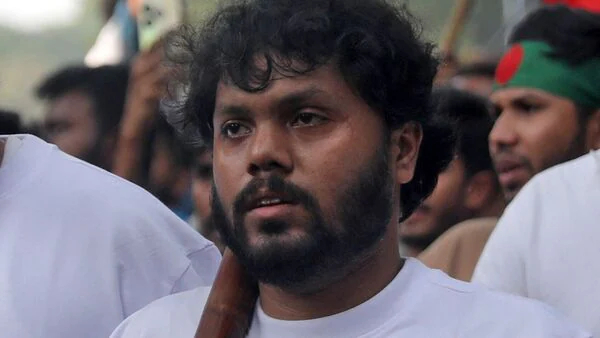
Protesters are demanding the immediate arrest and punishment of those responsible for the attack. They claim suspects belong to the outlawed Awami League student wing and later fled to India. The allegations have fueled strong anti-India sentiment. Demonstrators are accusing New Delhi of sheltering the suspects and interfering in Bangladesh’s internal affairs. Indian diplomatic missions and symbols linked to the former Awami League government have been targeted, alongside chants asserting national sovereignty.
Some groups have also called for the resignation of the interim government’s home adviser. They are blaming the authorities for failing to maintain law and order. Others are demanding accountability for mob violence, including attacks on media outlets and the killing of a Hindu man. While fringe factions have gone further by urging the replacement of the interim administration with a so-called “revolutionary government.”
Bangladesh protests target India
Violence linked to the killing of youth leader Sharif Osman Hadi has also put Indian diplomatic missions in Bangladesh on alert. The Indian High Commission in Dhaka and Assistant High Commissions in Chattogram, Rajshahi, Khulna, and Sylhet faced threats after police said the masked attackers who shot Hadi had likely fled to India, a claim that fuelled anti-India protests.
Demonstrators marched toward the Indian High Commission a day before Hadi’s death. They are demanding the return of former prime minister Sheikh Hasina, prompting India to briefly shut its visa application Centre. Attacks were later reported at the Indian Deputy High Commission’s residence and office in Chattogram, including stone-pelting.
Anger also turned toward the media, with protesters accusing leading dailies Prothom Alo and The Daily Star of favoring India and the former Awami League government. Mobs ransacked and set fire to their offices in Dhaka, chanting slogans and demanding justice for Hadi. Both newspapers rejected the allegations, noting their support for last year’s anti-Hasina protests.
A Test for Stability
The death of a youth protest leader has exposed deep frustration simmering beneath Bangladesh’s streets. As anger spills into violence, the country faces a critical test of restraint, accountability, and dialogue. How authorities respond now may determine whether calm returns or unrest deepens.
For more such informative articles, stay tuned to The World Times.