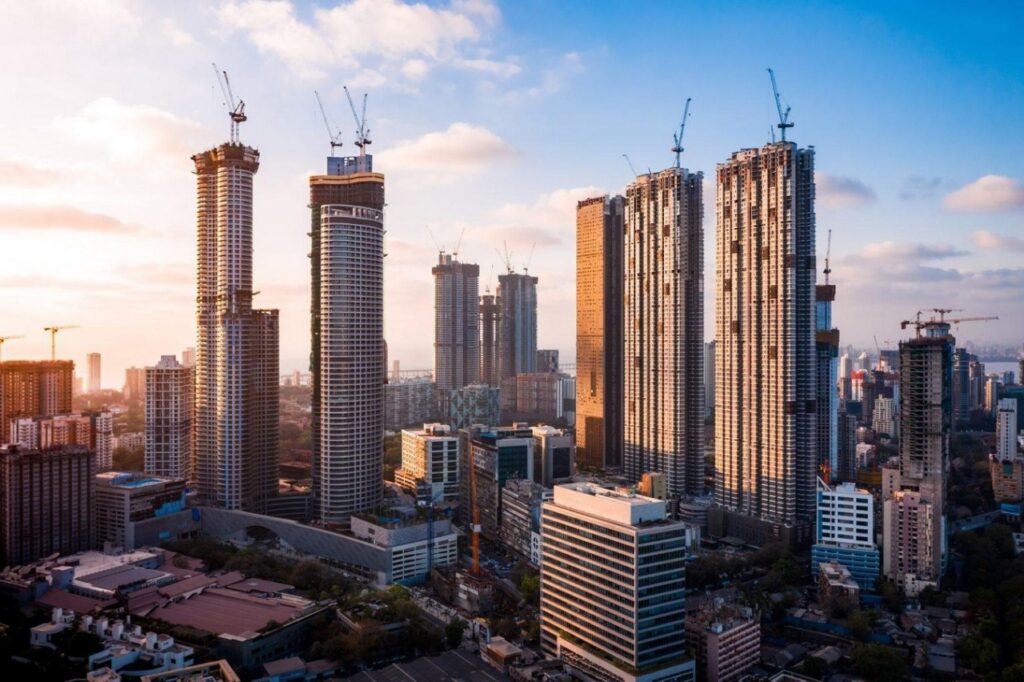
India’s rising skylines shadowed by lives lost to negligence. (Image Source: Rethinking the Future)
On a humid evening in Mumbai, a small crowd gathered near Marol Metro Station. They weren’t there for the trains. They were mourning Amar Parage, a truck cleaner who never made it home. An iron rod, carelessly left unsecured at an under-construction site, fell and struck him. In a city obsessed with speed and vertical growth, Amar’s death barely made headlines. But for his family, it was the end of a world. Amar’s story is not an isolated tragedy. It is part of a larger pattern — one where negligence hides in plain sight, where safety is treated as optional, and where the human cost of India’s Construction Boom is measured in lives lost.
The Child Who Should Have Been Safe
Months earlier, another name had shaken communities: Sanskruti Amin. A young girl, full of promise, whose life was stolen by construction negligence. Her death sparked outrage and a grassroots campaign under #JusticeForSanskrutiAmin.
Her parents didn’t want sympathy alone. They wanted accountability. They wanted to know why safety checks were ignored, why shortcuts were taken, why a child had to pay the price for someone else’s negligence. Sanskruti’s story became a symbol. It reminded families across India that when they buy a home, they are not buying square footage alone. They are buying sanctuary. And when that sanctuary collapses, so does trust.
The Invisible Backbone
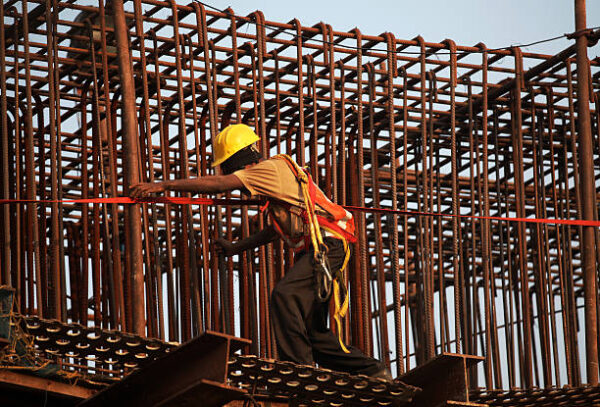
Working on a reinforcing bar structure (Courtesy: Getty Images)
Workers like Amar rarely appear in glossy brochures. They are the invisible backbone of India’s urban growth — men and women who risk their lives daily to build the towers that define our skylines.
Most work without proper safety gear. Few receive training. Many are migrants, far from home, with little recourse when accidents happen. Their deaths are often dismissed as“occupational hazards.” But each one is a name, a family, a story cut short. Amar’s death forces us to ask: who protects those who build our cities? And why do their lives seem expendable in the race for progress?
It’s easy to talk about regulations, audits, and compliance in abstract terms. But negligence is not abstract. It looks like a locked fire exit when smoke fills a corridor, it sounds like families pounding on doors that won’t open. It feels like the silence after a worker falls from scaffolding.
The recent Tai Po blaze in Hong Kong, which claimed over a hundred lives, is a global reminder of what happens when safety is compromised. But India doesn’t need to look abroad for warnings. Sanskruti and Amar’s names are enough.
What Must Change
India’s cities are racing skyward, cranes dotting the horizon from Mumbai to Bengaluru. But every new tower raises a question: are we building homes, or hazards? Growth without safety is not progress — it is betrayal.
The path forward isn’t complicated, but it demands courage and accountability:
1. Independent Audits: Safety cannot be left to glossy brochures or hurried inspections. Every project must be tested, checked, and certified by independent eyes. Families deserve to know that the walls around them will protect, not trap.
2. Worker Protection: The men and women who pour concrete, weld steel, and climb scaffolding are not expendable. Helmets, harnesses, training, and strict accountability for site conditions must be non‑negotiable. A worker’s life is worth more than a deadline.
3. Community Vigilance: Buyers and residents cannot afford silence. Asking harder questions, demanding certified safety standards, refusing to settle for vague assurances — this is how communities protect themselves. Safety is not a luxury; it is a right.
India’s future cannot be built on negligence. Because negligence is never just a statistic. It is a child lost, a worker forgotten, a family broken, and a trust betrayed.
Stay updated with the latest news onThe World Times. Get all the trending City News, India News, Business News, and Sports News.