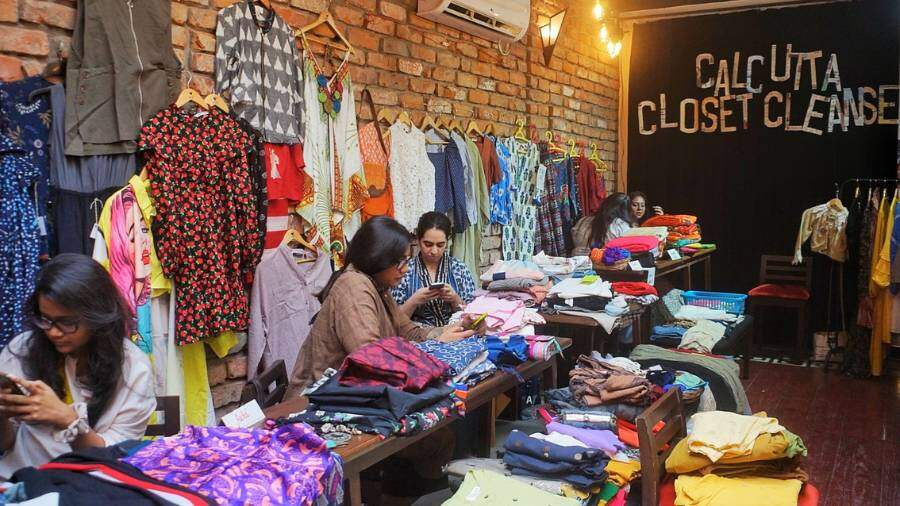
For many Indian households, the idea of “new” clothes has never been strictly about shopping bags and billing counters. Siblings grew up wearing each other’s handovers. Bridal sarees were restitched into festive lehengas. The raddiwala took away old textiles that re-entered the economy in some invisible form. What has changed is not the instinct to reuse, but the way it is branded and transacted. Instagram thrift pages, “pre-loved” boutiques and resale apps are formalising what once lived in Sunday flea markets. Thrifting has moved from being a quiet necessity to an aesthetic lifestyle choice, especially for young, urban Indians.
The Economics of Pre-Loved Fashion: Thrifting in India
At its core, thrifting is about stretching the rupee. A student can access brands that would normally be out of reach, at a fraction of the original price. According to the Financial Express, India’s second-hand apparel market is estimated to grow from around three billion dollars in 2023 to over nine billion dollars by 2032, expanding at an annual rate of about 13 percent. For a country where disposable income is volatile and youth unemployment remains uncertain, cheaper access to fashion is a game changer.
Thrifting also plays into India’s consumer culture. The growth of resale and pre-loved luxury is partly driven by young shoppers in Tier‑2 and Tier‑3 cities, who want branded goods without luxury price tags, as noted by market analysis from IMARC Group. In effect, the resale economy allows a single garment to serve multiple income groups over its lifetime. It is first a premium purchase, later a mid-market thrift find. That layering of demand is economically efficient. It squeezes more utility out of each unit of production.
Waste, Climate and the Case for “Slow” Wardrobes
The other driver of India’s thrifting boom is less about wallets and more about conscience. Fast fashion has been criticised globally for its outsized environmental footprint, and India is very much part of that story. IndiaSpend’s reporting on textile waste points out that more than one million tonnes of textiles are thrown away every year in India, much of it ending up in landfills or being burnt.
A detailed “Sorting for Circularity” study by Fashion for Good estimates that roughly 8.5 percent of global textile waste (nearly 7,800 kilotonnes) annually is accumulated in India alone, combining domestic and imported waste. Those numbers are sobering in a country already struggling with air pollution, groundwater contamination and overflowing landfills.
Thrifting does not magically solve this crisis, but it changes the math. Every time clothes are bought second-hand instead of new, it avoids the resource use that a fresh garment would demand. Sustainability writers and designers interviewed by platforms such as IndiaSpend and Unsustainable Magazine repeatedly emphasise reuse, resale and upcycling as key pieces of a “circular” fashion economy. Thrifting operationalises that idea at street level.
Between Sarojini Nagar and Instagram: An Uneven Thrifting Landscape
It is important, however, not to romanticise the trend. India has long had thriving informal resale markets–from Delhi’s Sarojini Nagar and hill-cart markets in the Northeast, to export-surplus lanes in Mumbai and Chennai. What social media has done is carve out a more curated, and often more expensive, corner of that ecosystem aimed at English-speaking, urban consumers.
Online thrift stores invest in curation, steaming, photography and packaging; their mark-ups reflect this labour. For sellers, this can create a micro-entrepreneurship pipeline: students and young professionals turning closet clean-outs into side incomes. For buyers, though, “thrift” sometimes ends up only modestly cheaper than mid-range fast fashion, raising questions about how inclusive the new wave of resale really is.
Trust and hygiene also remain friction points. As founders of pre-loved marketplaces told The Financial Express, authentication and pricing transparency are persistent concerns for Indian consumers still wary of counterfeits and stains. Until these anxieties are addressed at scale, thrifting will remain a niche within the broader apparel market, not its core.
From Jugaad to Circular Economy
From an economy view, secondhand shopping in India mixes desire, low cost, and worry over trash. Families can refresh their look without raising expenses much. Firms and online spots find fresh buyers while making items last longer. At the same time, eco-aware shoppers get a real method to shrink their clothing impact, just by small steps.
The real issue? Whether officials plus big clothing makers see this trend as anything beyond a short-lived teen phase. Data from groups such as Fashion for Good or IndiaSpend highlights how key India remains in making clothes worldwide—and dumping them too. Should India aim to lead in eco-friendly progress, it could connect old practices, like turning sarees into blankets, handing jeans to younger relatives with today’s re-selling apps, structured fix-up hubs, and smarter fabric recovery.
In this way, thrifting’s growth isn’t merely about fashion trends. Instead, it’s a rough trial run for how circular clothing systems might work in developing regions. Here, clothes don’t lose worth after one sale, rather their meaning shifts through use, reuse, travel between towns, social layers, and age groups.
Stay tuned for more with The World Times.