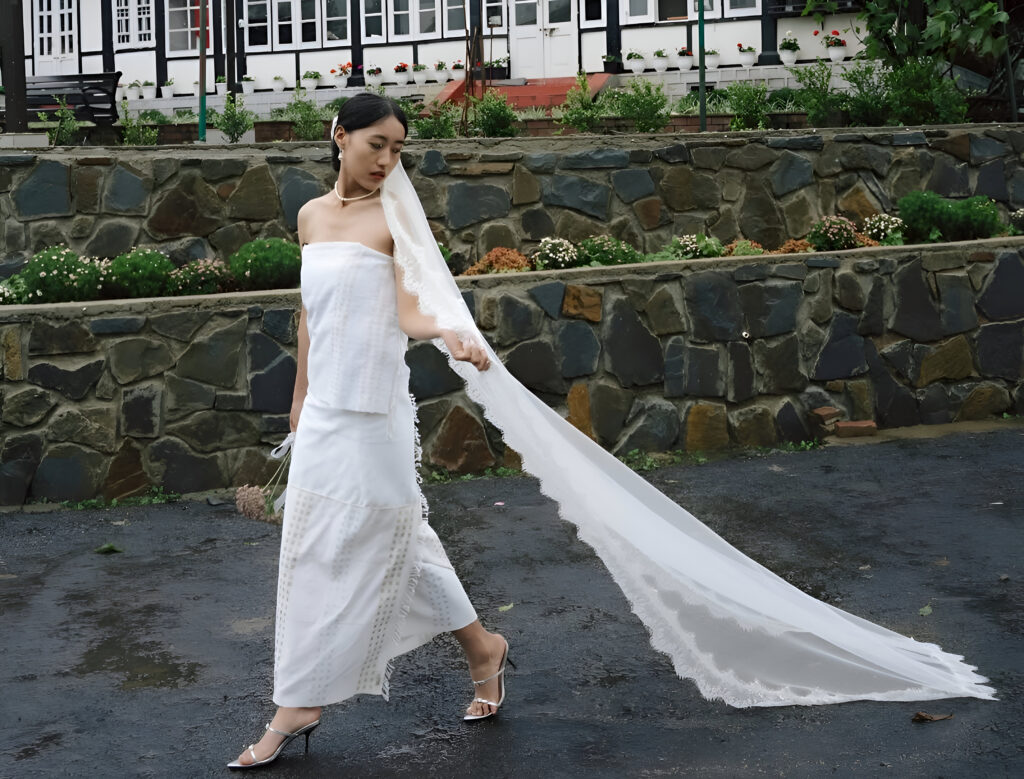
Move over, classic white gowns. A quiet sartorial revolution is rocking the bridal world — and, it’s emerging from the highlands of Nagaland. The Naga mekhala, a handwoven fabric that breathes cadence, lineage and the finesse of generations, has shattered the traditional bridal mold to become the most defining and meaningful silhouette for the modern bride. Far beyond warp and weft, the ensemble becomes an expression of cultural identity and quiet self-possession.
What was once a garment reserved for rites of passage has been reborn as a symbol of fierce continuity. In a world of fleeting bridal trends, the mekhala offers something rarer and it’s reclamation; quite a powerful one. A handwoven declaration that says, “we were always here”.
Fabric of Identity
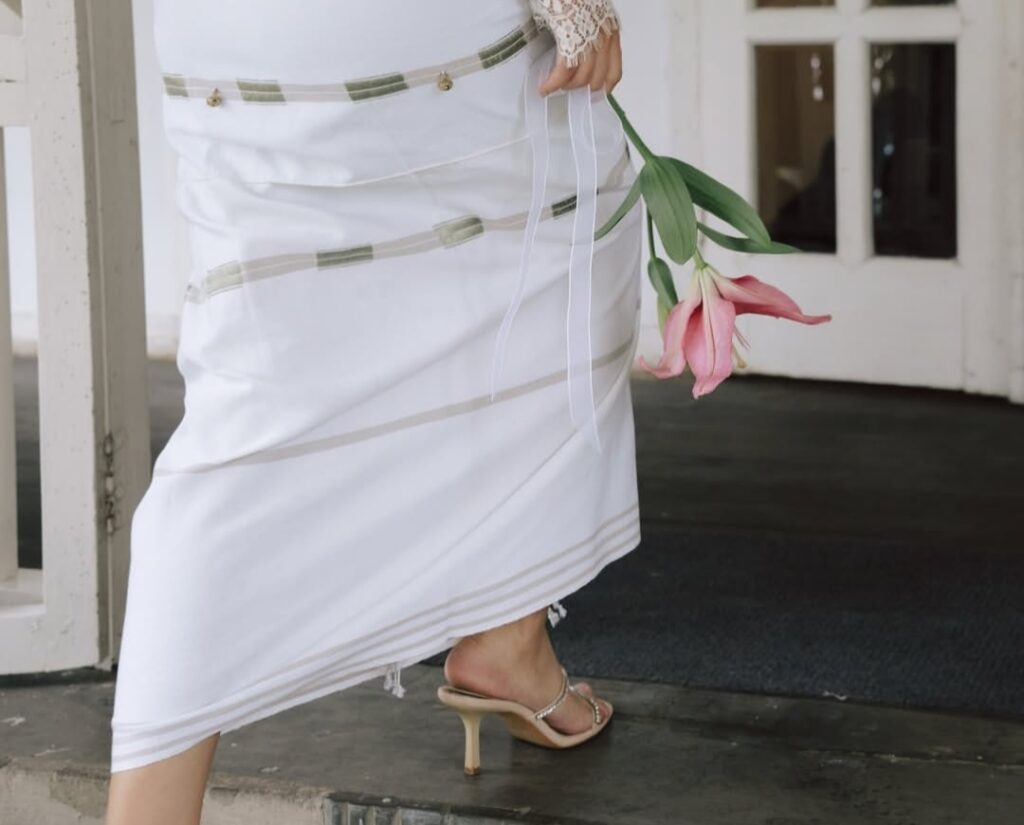
Each Naga mekhala is a map of belonging that carries the vocabulary of its people. Woven on the traditional loin loom, its motifs, precise, geometric, and deeply symbolic, trace a lineage that is both personal and tribal.
For Nagaland, the loom has long been a woman’s terrain. Culture, here, is not only preserved. But, it’s built thread by thread by generations of Naga women who wove for ceremony, for survival, for identity. Their artistry has long been the backbone of the region’s visual history, even if their names were rarely credited. It’s this link between gender, heritage, and creation that gives the mekhala its rare emotional charge. Something that isn’t just nostalgia but lived identity.
Today, that same threaded artistry is finding a new home under a very different spectrum of spotlight. In Dimapur, a young label named Kintem has become the epicentre of the mekhala renaissance. Founded by designer Moala Longchar, the brand has carved out its niche by turning the traditional mekhala into a bona fide bridal fashion moment for women who longed for something that felt intimate, modern and unmistakably iconoclastic. Think cultural heritage, contemporary polish and a distinctive editorial point of view, all speaking the same language of style.
With a mission to create “indigenously modern” silhouettes, Kintem is rooted in community, craft and cultural intelligence. Even the name, meaning “communities” in Ao-Naga, signals collaboration as a design principle. Longchar captures it succinctly:
“A few years ago, the mekhala market was so disorganised. Now there’s this new energy — and it’s finally coming from the Northeast. We’ve worn so much from the West; it’s time to embrace what we have.”
The Design Philosophy
Kintem’s crisp objective is two-fold, to honour traditional Naga weaving practices: loin-loom hand weaving, hand-stitching, natural dyeing. And, to reinterpret them into bridal couture with precision, narrative depth and contemporary elegance.
The brand’s debut collection, Inti, quietly expanded the mekhala’s language beyond occasion wear. But the real shift came with rising bridal commissions in 2024, prompting the label to formalise its vision through Bonded.
A New Bridal Edit
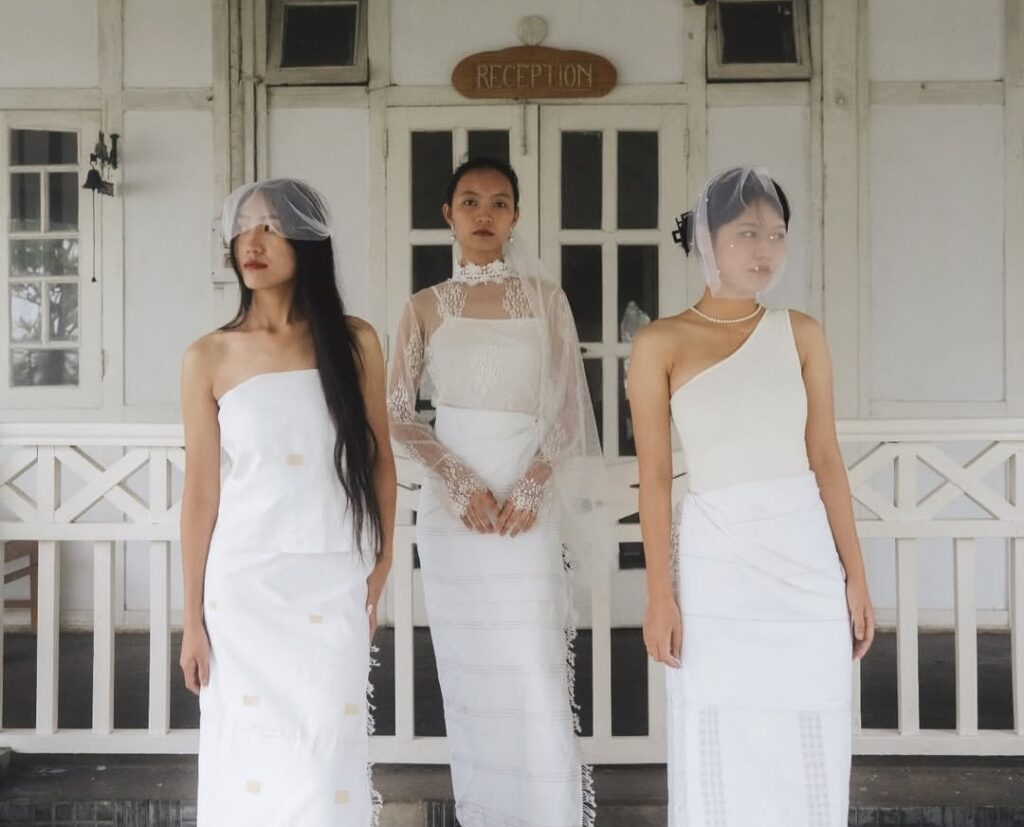
Bonded stands as a complete bridal portfolio: bride, bridesmaid and guest-wear mekhalas crafted for the wedding moment and, well, beyond it. The collection retains the DNA of Naga motifs: bands, boxes and the classic ‘Züngijang’ (cucumber-seed) pattern remain intact, while metallic weft yarns, soft shimmer and refined detailing, simultaneously, introduce a couture-level finish. This progression from Inti to Bonded is clear from cultural revival to cultural authorisation of the modern bride.
The pricing strategy is also significant. By starting around ₹8,000–12,000 (versus the much higher investment cost of imported white gowns in the region), Kintem positions the mekhala as accessible couture for young brides rather than artisan vanity piece, while still preserving craftsmanship of the highest order.
Bonded doesn’t stop at the bride. The bridesmaids collection, all soft pinks and distinctive tribal patterns, is proof that Kintem knows how to build a visual story. Each look stands alone but comes together in perfect harmony, creating a bridal party that feels curated, feminine and effortlessly chic.
Culture, Styled Anew
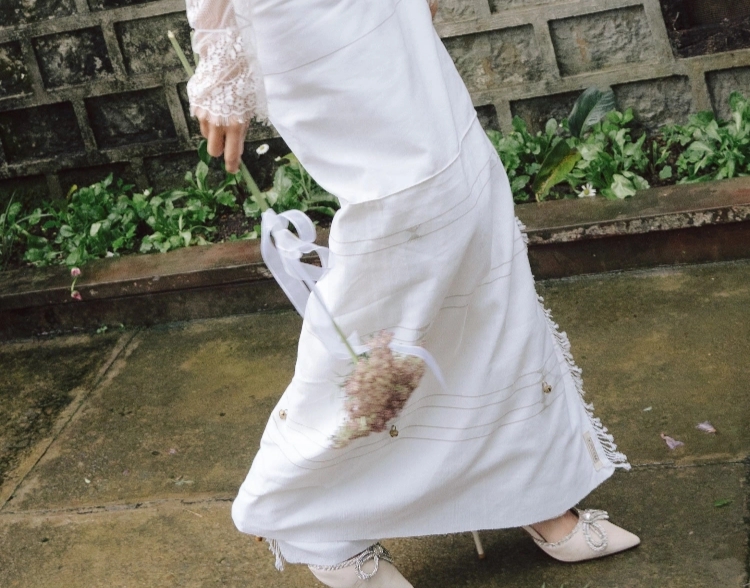
The centrepiece, of course, is the Lumi bridal mekhala. A vision in white Eri silk, Lumi comes alive with hand-sewn brass bells that adds sensory richness to each movement with the bride. This serves as an elegant nod to heirloom garments once known as takatsür süpeti. It’s heritage distilled into high-fashion — an aesthetic Kintem has come to own.
And the versatility? Undeniable. Brides now re-style their mekhalas with structured tops, sharp blouses or jackets long after the wedding. Kintem has always encouraged this by positioning the mekhala not as ceremonial relic but a long-term wardrobe investment.
Meanwhile, the campaign visuals double down on this narrative: a bride framed by her trousseau, her Kotsü or Aket baskets, once used to carry dowry essentials, are now restyled as modern cultural artefacts. The imagery is everywhere. Scroll through Instagram and you’ll spot Bonded brides wrapped in Eri silk against moody hillsides, pine forests and soft afternoon clouds. The styling is crisp, the storytelling effortless. It tells us that, heritage and high fashion aren’t in competition. They’re co-stars. The mekhala moves seamlessly with swift ease across timelines and aesthetics, reminding everyone that cultural couture can be as current, as striking and as quietly powerful as anything on the global runway.
The Economy of Meaning
As demand for handwoven bridal mekhalas rises, so does the need for responsibility. The global obsession with “ethical fashion” often romanticizes the handmade without acknowledging the human cost. However, The Naga revival offers a blueprint for balance.
What truly sets Kintem apart is its clarity of intention. The brand puts craft ethics at the centre. They credit their weavers, safeguard their motifs, and guide clients, especially those outside the community, to honour the garment’s cultural form rather than diluting it. Co-operatives and small ateliers are bridging the gap between couture and community, proving that slow fashion can be both ethical and exquisite. It’s fashion with responsibility, and it shows.
Heritage as Haute Couture

The mekhala’s rise to the bridal spotlight is more than just a trend. It’s a fashion power shift. What we’re seeing today on modern Naga brides isn’t nostalgia styled as couture, it’s heritage entering high fashion with confidence. The mekhala delivers exactly what the industry is craving right now: history with backbone, craftsmanship with credibility and a kind of intimate elegance no mass-produced gown can replicate.
When a bride drapes herself in a handwoven mekhala, she isn’t dressing for the day. She’s choosing identity, honouring lineage. Her cloth tells a story that began long before her and will outlive every seasonal silhouette. And that emotional clarity is precisely what makes this revival impossible to ignore. Author and bride Avinuo Kire articulates it best in The Nod Mag:
“I am a Naga, and whenever there is a special occasion, I almost always turn to the mekhala. It’s not just beautiful and feminine, it represents my culture and identity.”
With global runways clamouring for “the next real thing,” the indigenous loom has quietly re-emerged as the industries most awaited answer. And perhaps, this is the quiet revolution the fashion world didn’t see coming: a handwoven fabric from the hills of Nagaland redefining what it means to be bridal, to be beautiful, to be timeless. The mekhala doesn’t need spectacle. Neither does it demands theatrics. It simply steps forward with intention, and the fashion world follows.
For the next wave of fashion’s most important conversations, keep reading The World Times.