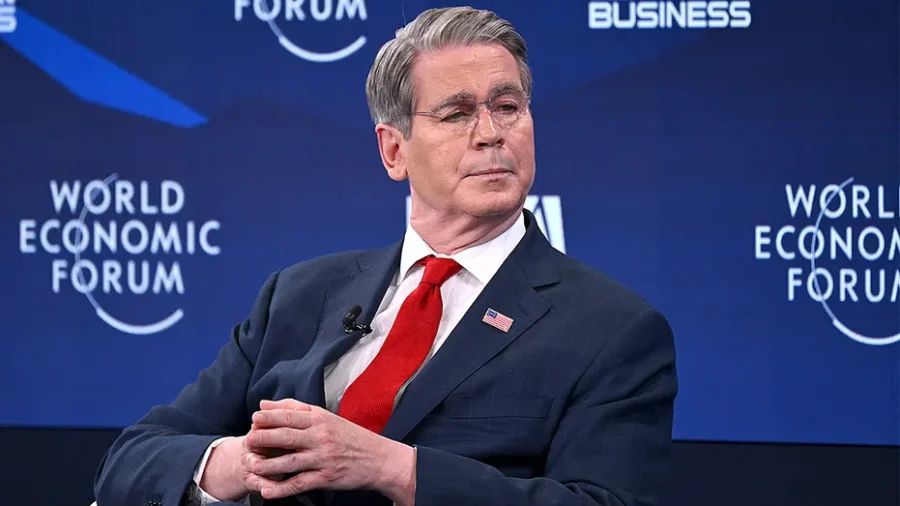
The US criticizes Europe over the recent free trade agreement between India and the European Union (India-EU Trade Deal). The US argues that the deal prioritizes economic interests over geopolitical concerns linked to the Russia-Ukraine war. The criticism was made by Scott Bessent, a senior economic official in the Donald Trump administration, during interviews, including one with CNBC.
What Is the India-EU Trade Deal?

India and the European Union have finalized an India-EU Trade Deal, a major Free Trade Agreement (FTA), after nearly 20 years of negotiations. The agreement aims to reduce or eliminate tariffs on around 96.6% of trade by value between the two sides.
According to the European Commission, the deal could double EU exports to India by 2032 and save European companies nearly €4 billion each year in duties. The agreement includes goods and services such as automobiles, machinery, food, pharmaceuticals, and medical products. However, the deal still needs formal approval from EU member states, the European Parliament, and India before it can take effect.
Europe views the agreement as a way to diversify trade partnerships amid rising tensions with China, the US, and Russia, and to reduce dependence on any single market.
Why does the US criticize Europe?
Scott Bessent said the US was “very disappointed” with Europe’s decision to move forward with the deal. He argued that the EU had placed trade interests above its public support for Ukraine, which continues to face a war with Russia.
He stated that while European leaders often speak about standing with Ukraine, they have chosen to deepen trade ties with India without aligning with US-led sanctions and tariff pressure.
The Russian Oil Issue
A major point of US criticism relates to energy trade. India has been purchasing sanctioned Russian oil, refining it domestically, and exporting refined products such as petrol and diesel to Europe. Bessent claimed that by buying these products, Europe is indirectly financing Russia’s war efforts, calling it “funding the war against themselves.”
The US had imposed high tariffs, ranging from 25% to 50%, on certain Indian imports. Such measures have been taken due to India’s continued energy trade with Russia. Europe, however, did not follow the same tariff strategy, partly because it was focused on finalizing its trade deal with India.
Bigger Geopolitical Context
The disagreement highlights broader tensions among Western allies:
- Trade vs Geopolitics: The US wants close cooperation on sanctions related to the Russia-Ukraine war. Europe, on the other hand, is focusing on economic diversification.
- Energy Strategy Differences: The US has taken a tougher approach to Russian energy exports, whereas Europe has adopted a more flexible stance.
- Global Trade Realignment: India is broadening its trade relationships beyond just one market. The EU is looking for alternatives to China for manufacturing and supply chains.
US Admits India Will Benefit the Most
Despite the criticism, the US has recognized that India stands to gain a lot from the agreement. A senior trade official, Jamieson Greer, said that India would likely have a “heyday” because of the large market access it has secured.
Why India Has an Advantage
Experts point to several reasons why India may benefit more than the EU:
- India exports labour-intensive manufactured goods and services, which respond quickly to tariff reductions.
- Indian producers have a cost advantage that allows for faster export growth.
- EU exports mainly consist of capital-intensive and high-value goods. These goods face regulatory and pricing challenges in the Indian market.
Expected Economic Impact
India currently exports about USD 75 to 80 billion worth of goods to the EU each year. This accounts for India’s second-largest export destination after the US. Economists believe that cutting tariffs could increase Indian exports by 5 to 8%. This could give an initial boost of USD 3 to 5 billion once the FTA is in place. Indian leaders have stated that the agreement supports the goals of Atmanirbhar Bharat. It will further benefit young people, job opportunities, and sectors like textiles and leather.