As conflicts and crises intensify across the world, the UAE has surged to the world’s third-largest humanitarian donor in 2025, reaffirming its growing global footprint with over $1.46 billion in aid reaching crisis zones worldwide.
Soaring to the Top: UAE ’s Global Aid Climb
The United Arab Emirates has earned international acclaim for its extensive humanitarian initiatives, standing as the world’s third-largest donor in 2025. Fresh data from the UN’s tracking system underscores the country’s dedication to delivering swift and impactful aid to communities affected by crises across the globe. The UN’s Financial Tracking Service reports that the UAE provided $1.46 billion in humanitarian aid during the year.
The UAE’s humanitarian assistance represents 7.2 per cent of the UN‑tracked global funding, which totaled $20.28 billion. This substantial contribution highlights the nation’s commitment to both immediate crisis response and long‑term recovery, spanning sectors such as health, education, energy, and infrastructure.
Officials emphasize that the UAE’s humanitarian approach is rooted in neutrality and inclusivity. Assistance is extended without discrimination of nationality, ethnicity or religion. Its policy combines rapid crisis response with long-term development projects to strengthen resilience in vulnerable regions.
A Values-Driven Mission: Solidarity, Cooperation, Sustainability
Sheikh Theyab bin Mohamed affirmed the UAE’s commitment to swift, effective responses to global crises and humanitarian emergencies, reflecting the legacy of the late Sheikh Zayed bin Sultan Al Nahyan and the vision and guidance of His Highness Sheikh Mohamed bin Zayed Al Nahyan.
He noted that the UAE’s aid embodies the nation’s ethos—shared by its leadership, government, and people—by supporting vulnerable communities with food, medicine, shelter, and clothing, while also advancing long‑term projects in healthcare, education, energy, and infrastructure. These efforts align with the ninth of the “50 Principles,” underscoring humanitarian assistance as a core national value and moral duty.
Beyond Emergencies: Long-Term Development Aid
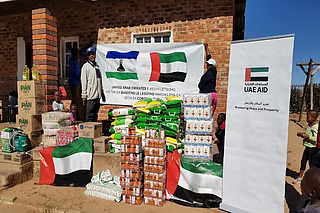
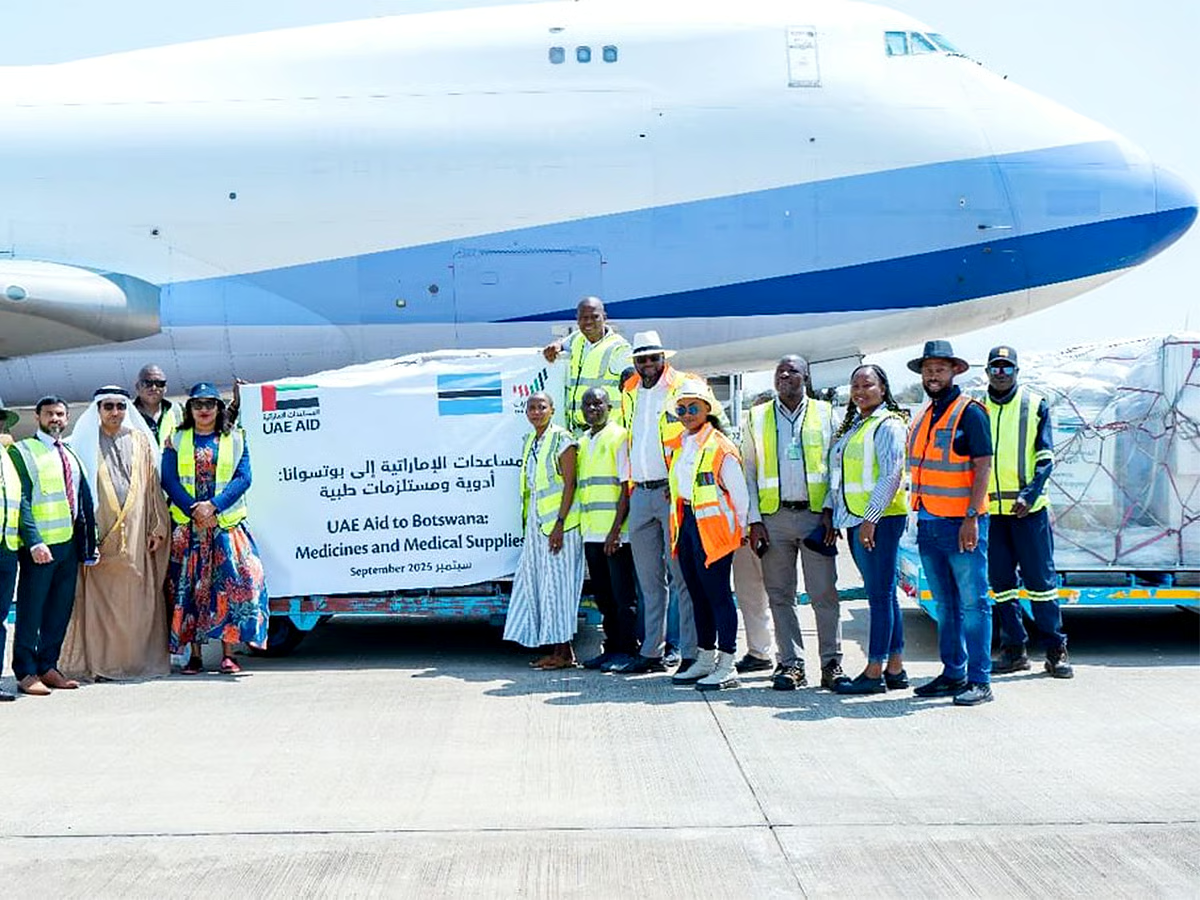
In addition to emergency relief—including food, medicine, shelter, and clothing—the UAE contributes to long-term recovery efforts. Its programs span vital sectors such as healthcare, education, energy, and infrastructure, helping nations rebuild and progress toward sustainable development.
This comprehensive approach reflects the ninth of the UAE’s ‘50 Principles,’ which defines humanitarian aid as a core element of the nation’s identity and a moral duty to support vulnerable communities.
Spotlight on Conflict Zones: Gaza, Sudan & Beyond
The UAE was the largest humanitarian contributor to operations in Gaza during 2025. According to UN reports, Emirati aid comprised 44% of all international humanitarian assistance delivered to Gaza. Through its ongoing “Operation Chivalrous Knight 3,” the UAE delivered thousands of tons of aid via land, sea, and air routes. Its total aid to Gaza over a two-year period amounted to over $2.57 billion. A key aspect of the UAE’s assistance has been providing free, high-quality medical treatment to hundreds of wounded and sick Palestinian civilians in hospitals. The UAE has leveraged its diplomatic relationships, including with Israel, to facilitate access for its aid deliveries.
The UAE’s involvement in Sudan includes diplomatic engagement and significant humanitarian aid. In September 2025, the country participated in consultations on the Sudan conflict alongside the United States, Egypt, and Saudi Arabia. An Emirati official also represented the country at an EU-led humanitarian meeting in Brussels in March 2025, reaffirming the UAE’s commitment to diplomacy and aid.
The UAE has been the second-largest contributor to Sudan’s humanitarian efforts, providing over $784 million in aid since the conflict began. The country channels a significant portion of its aid through UN agencies to address food security, health, and water shortages for millions of people.
By securing its place as the world’s third-largest humanitarian donor, this has shown that global leadership is measured not only by influence—but by generosity that saves lives. As crises grow more complex, the rise in global aid rankings signals a future where compassion, responsibility, and strategic support remain central to international cooperation.
For more such informative articles stay tuned at The World Times.