A Tokyo court has ruled that Japan’s current ban on same-sex marriage is constitutional, marking another significant moment in the country’s ongoing debate over marriage equality.
Tokyo High Court Says Ban Is Constitutional
A Japanese court ruled on Friday that the country’s ban on same-sex marriage is constitutional. It is the only high court so far to support the government’s stance among six similar cases filed across Japan.
The Tokyo High Court determined that the existing civil laws, which do not permit same-sex marriage, remain justifiable under current conditions. This contrasts with earlier decisions from high courts in Sapporo, Tokyo, Nagoya, Osaka, and Fukuoka. All of these found the lack of legal recognition for same-sex marriage unconstitutional, though none awarded compensation to plaintiffs.
Delivering the final ruling among the six lawsuits, presiding Judge Ayumi Higashi stated that any changes regarding same-sex marriage should be “thoroughly debated in parliament” first.
A unified judgment from the Supreme Court is anticipated as early as next year, according to The Mainichi.
A Blow to Equality Advocates
A Japanese court has upheld the constitutionality of the country’s ban on same-sex marriage, breaking from several recent rulings nationwide that had raised hopes for progress toward marriage equality.
The decision left the plaintiffs and their legal team disappointed as they gathered outside the Tokyo courthouse. Outside the Tokyo courthouse on Friday, the plaintiffs of the lawsuit and their legal team held up signs that read “unjust verdict”, local media reported.
Legal Division — Courts Split Before
The Tokyo High Court issued a verdict on November 28, 2025. The verdict declares Japan’s ban on same-sex marriage constitutional, breaking from other Japanese high court rulings. This ruling was the only one among six high court judgments nationwide to uphold the government’s position.
Tokyo High Court Ruling (Nov 2025): The Tokyo High Court became the last of six to rule on same-sex marriage lawsuits—and the only one to uphold the current ban. The judge ruled that the restrictions remain reasonable under current conditions and said parliament should resolve the issue. He also overturned the 2022 district court decision that had deemed the situation “unconstitutional in effect.”
Other High Courts: In contrast, five high courts—Sapporo, Tokyo (first case), Nagoya, Osaka, and Fukuoka—previously found the lack of marriage rights for same-sex couples unconstitutional on the grounds of equality and personal freedom.
Next Steps: The Supreme Court will now review all six cases and is expected to issue a unified ruling next year. None of the courts granted the plaintiffs financial compensation.
The split rulings reveal significant legal disagreement and reflect Japan’s ongoing debate as the only G7 nation without legal recognition for same-sex unions.
Japan Remains an Outlier Among G7 Nations
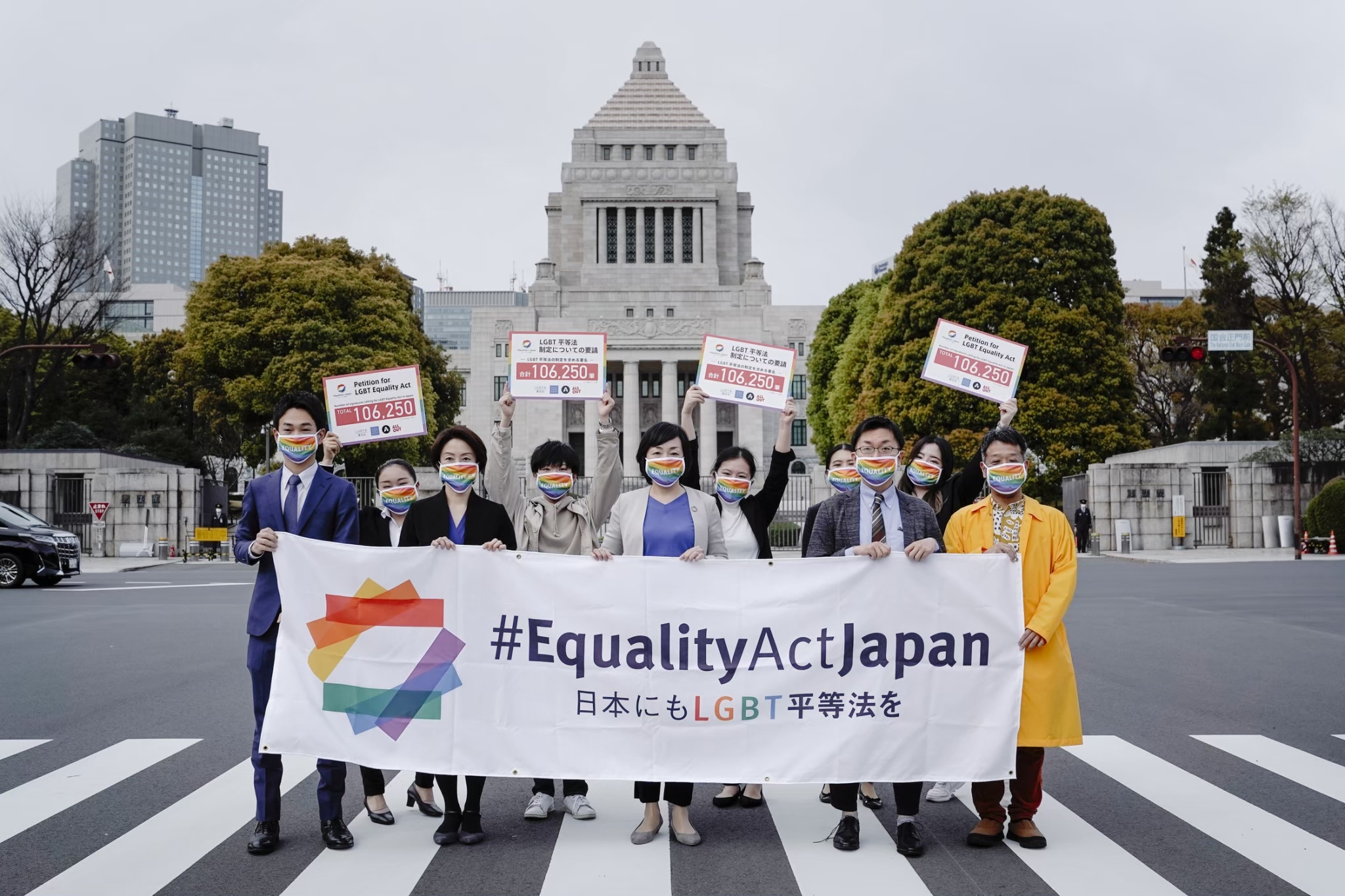
Japan remains the only G7 country without legal recognition for same-sex couples. All other G7 nations have national laws permitting same-sex marriage or a form of legal civil union. This judgment makes Japan a significant outlier among the world’s leading industrialized democracies.
Japan still lacks a national law granting same-sex couples the legal rights of marriage, including inheritance, tax benefits, and parental recognition.
Many municipalities and prefectures offer partnership certificates. It provides limited rights, such as hospital visitation, but these do not carry the full legal weight of marriage. Activists have turned to the courts, and several high courts have ruled the marriage ban unconstitutional. However, the Tokyo High Court’s November 2025 ruling upheld the ban, breaking from that trend.
All cases are expected to advance to the Supreme Court for a final ruling. While public support for marriage equality remains high (around 68–70%), the ruling LDP has been reluctant to legislate due to resistance from conservative factions.
The ruling may not change the law today, but it underscores a wider debate that continues to shape Japan’s social and legal landscape.
With public opinion shifting and legal challenges ongoing, the court’s verdict marks another chapter. However, it’s not the final word in Japan’s journey toward defining marriage in modern society.
For more such informative articles, stay tuned to The World Times.