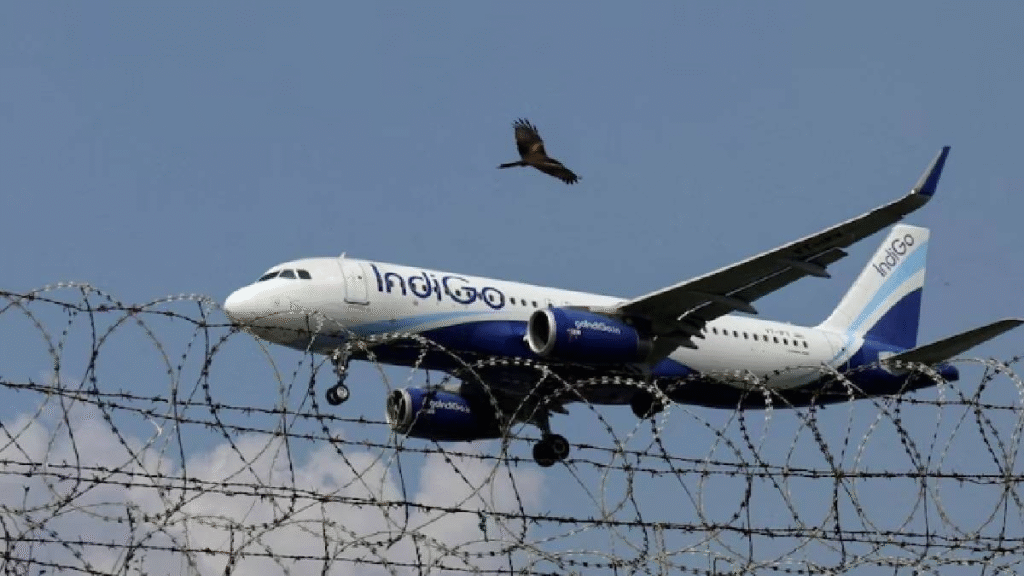
IndiGo Airlines has become an undisputed leader in India’s aviation industry. What makes it remarkable is not that it simply carries the highest number of passengers every month, but that it has built a system that combines affordability, punctuality, and efficiency. In a country where airfare remained out of reach for a large part of the population, IndiGo transformed flying into a mainstream experience. Its business model is shaped by long-term thinking, operational discipline, and some below-the-belt tactics.
A Focused Low-Cost Approach
IndiGo entered the aviation space with a clear belief that India is a price-sensitive market. Instead of competing on luxury services, it positioned itself as an airline that would keep fares low without diluting reliability. The low-cost framework was not implemented as a cost-cutting experiment but as a strategy governing how every department would operate.
IndiGo deliberately avoided offering additional free services such as complimentary meals, in-flight entertainment, or multiple cabin segments. Everything beyond the basic flying experience is paid for separately, allowing passengers to customise their spending. What emerged was not merely a budget airline, but a system where costs remain low and transparent. Passengers gradually found value in a model that offered punctuality and clean, well-maintained aircraft rather than unnecessary frills.
The Power of a Standardised Fleet
Perhaps the most defining feature of IndiGo’s business structure is its decision to operate a uniform fleet dominated by Airbus A320 and A321 aircraft. With every aircraft being similar in layout, configuration, and technical requirements, training becomes easier, maintenance becomes faster, and procurement becomes economical. This reduces unexpected costs and prevents operational complexities.
Even from a financial perspective, IndiGo placed large consolidated orders with manufacturers, which allowed it to negotiate favourable acquisition and leasing terms. The uniformity of aircraft also helped in swift transitions when new aircraft were introduced and older ones phased out. This standardisation made IndiGo remarkably scalable and helped control cost fluctuations when fuel prices or external market conditions changed.
Turnaround Efficiency as a Competitive Advantage
IndiGo mastered efficient operations, ensuring that aircraft land, unload, refuel, re-board, and depart rapidly. Over time, this reduced idle time, increased daily flying hours per aircraft, and enabled greater revenue generation without the need to increase fleet size.
What appears as quick boarding or baggage clearance is the product of deeply choreographed processes. From pre-assigned roles for ground staff to strategic scheduling of flights during peak demand periods, IndiGo built precision into its timing. The outcome of this discipline has become part of its identity: passengers now associate IndiGo with punctuality more than with any other trait.
A Customer Experience Rooted in Simplicity
IndiGo does not claim to be a luxury airline; instead, it promises a predictable, clean, and hassle-free journey. Aircraft interiors are minimal yet meticulously maintained. Staff interactions place courtesy over theatrics. Processes such as online check-in, mobile boarding passes, and automated luggage systems further reduce congestion at airports.
What IndiGo essentially provides is convenience without complexity. Passengers board knowing that they will arrive on time, experience minimal confusion during travel, and face no unwanted charges beyond what they choose to opt for. This consistency has cultivated strong trust, especially among frequent travellers such as students, corporate employees, and regional passengers.
Strategic Expansion and Market Leadership
Unlike airlines that rush into high-risk international routes, IndiGo adopted an expansion strategy anchored in stability. It gradually built strong connections with neighbouring markets such as Dubai, Singapore, Bangkok, Kathmandu, and Doha. Codeshare partnerships strengthened accessibility without forcing heavy fleet investment in long-haul aircraft.
Domestically, IndiGo seized early opportunities in emerging Tier-2 and Tier-3 cities, building strong dependence among travellers who previously lacked frequent flight options. This network strength contributed immensely to its leadership.
A Business Model Built on Clarity
IndiGo’s success is not based on extravagant innovation; rather, it comes from the steadiness of simple ideas implemented with precision. By keeping its fleet uniform, operations disciplined, expenditure controlled, and experience predictable, the airline has turned affordability into a high-quality proposition.
In many ways, IndiGo represents a modern lesson in corporate strategy: consistency compounds into competitive superiority. Its rise demonstrates that when cost efficiency meets reliability, value becomes obvious—not just to customers, but also to an entire industry.
Stay tuned for more business insights with The World Times.