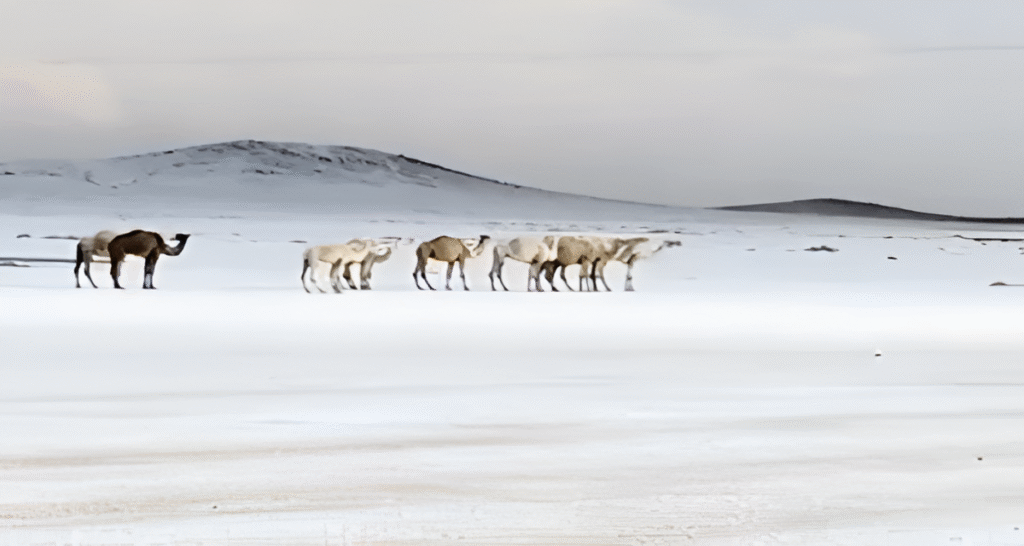
Snowfalls were felt in the Kingdom of Saudi Arabia from December 17 to December 18, which caught residents off guard as temperatures plunged to sub-zero levels in high-altitude regions, turning vast dunes into a temporary snowy expanse. Heavy snowfall blanketed parts of Saudi Arabia over the weekend, marking the kingdom’s most significant winter precipitation in over three decades.

The Saudi Meteorological Authority confirmed that a cold front originating from the Mediterranean Sea collided with the moisture-laden clouds, which triggered the freezing of the desert region. Elevations above 2600 meters in Tabuk Province saw an accumulation of snow up to 5 centimetres, while lighter flurries dusted areas in Al Jouf, Arar, and Al-Ghat. These were accompanied by rains that soaked all over the central provinces, which included Riyadh and Qassim, with some spots recording over 50 millimetres of precipitation. No major disturbances were reported, though authorities issued advisories for slippery roads and potential flash flooding in wadis.
Eyewitness react
Accounts from the eyewitnesses flooded social media, with videos capturing camels plodding through snow-capped dunes and families building snowmen under grey skies. “It’s like a dream; I’ve lived here 40 years and never have seen this,” said Ahmed Al Mansour, a Tabuk resident, in a widely shared clip on X. Traces of this phenomenon were also seen in Qatar and UAE border regions, where hail mixed with the flakes, amplifying the regional surprise
Climate implications
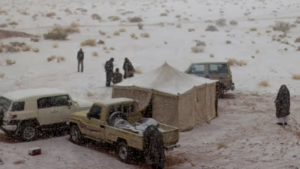
According to the experts, they attribute this rare snowfall to shifting climate patterns potentially exacerbated by global warming. These cold snaps are becoming more erratic in subtropical deserts, noted Dr Fatima Al-Rashid, a climatologist at King Saud University. While Saudi Arabia’s northern highland occasionally experiences frost, the scale of this event, this is the first major snowfall since 1992, underscores vulnerabilities in water-scarce ecosystems. Hydrologists predict the melt could replenish underground aquifers, which offers a silver lining amid the novelty.
Tourism Boost
The timing aligns with Saudi Arabia’s Vision 2030 push for winter tourism. The upcoming Trojena ski resort in NEOM, which is set to host events for the 2034 Winter Olympics, saw its prototype, whose slopes were naturally enhanced by the snow, drawing enthusiastic posts from project officials. Nature’s preview of what to come, tweeted a NEOM official account, garnering over 100,000 likes.
Future outlook
As the rebound in the temperature is visible, with forecasts predicting a return to 20°C by Christmas, Saudis are left with cherished memories and a reminder of the desert’s hidden volatility. Civil defence teams continue monitoring for aftereffects, but the event has largely been celebrated as a unifying spectacle in a nation more accustomed to relentless sun.
For more such news updates, follow The World Times.