Death Penalty for Bangladesh’s Ousted Leader: International Tribunal Convicts Sheikh Hasina of Crimes Against Humanity
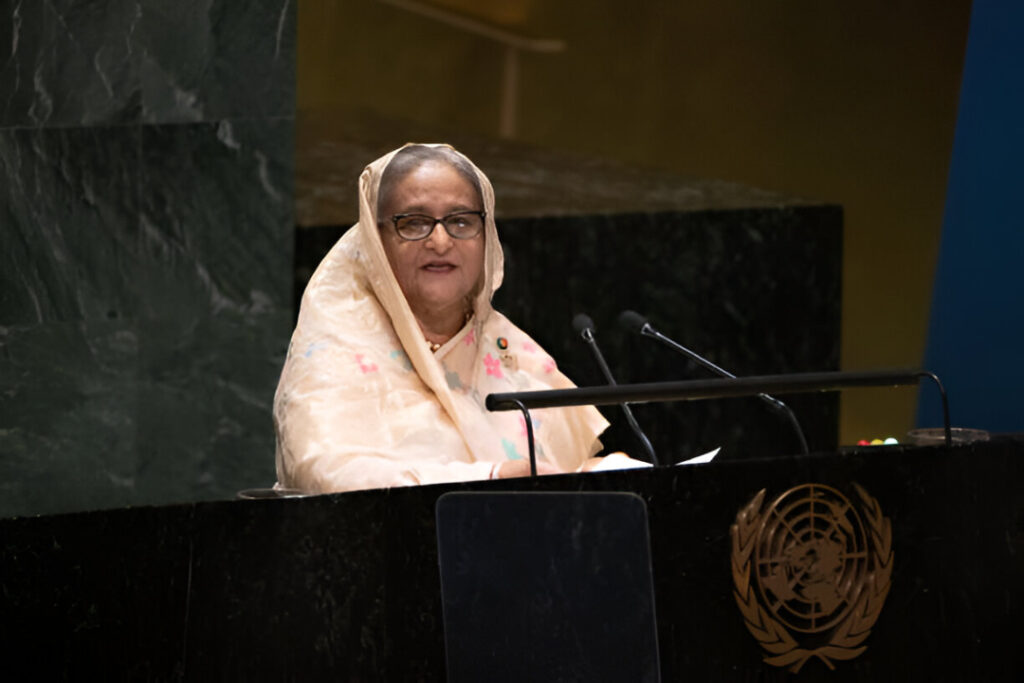
Bangladesh’s International Crimes Tribunal delivered a historic verdict on Monday. Former Prime Minister Sheikh Hasina received the death sentence for crimes against humanity. The tribunal found her guilty of orchestrating a brutal crackdown on last year’s student uprising that killed up to 1,400 people.
The 78-year-old fugitive leader now sits in exile in New Delhi. The Dhaka court tried her in absentia and she refused to appear before the Dhaka court. The three-judge panel declared Hasina guilty on three of five charges. She faced accusations of incitement, ordering killings, and failing to stop atrocities.
Audio Evidence and Witness Testimony Sealed Hasina’s Fate
The prosecution presented damning audio recordings during the trial. In these recordings, Hasina allegedly ordered the use of lethal weapons against unarmed protesters. Prosecutors produced 54 witnesses. About half provided expert testimony. The rest were victims or their family members.
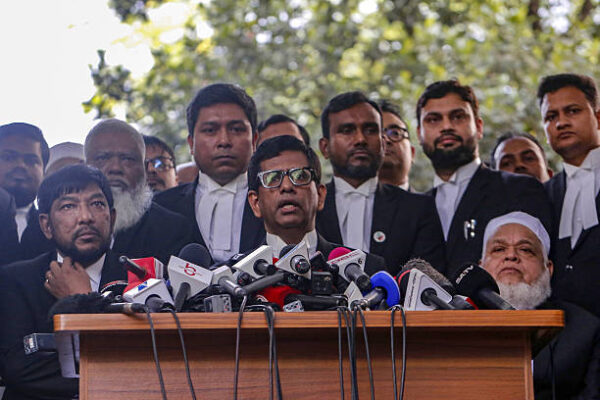
Chief Prosecutor Mohammad Tajul Islam made a shocking statement in court. He said if each of the 1,400 murders were tried separately, Hasina should face 1,400 death sentences. The tribunal concluded that Hasina was “the mastermind, the planner, order-giver, and highest order-giver” of all crimes.
Witness Abdullah Al Imran testified that he heard Hasina ordering hospital staff directly. Her command was stark: “no release, no treatment” for injured protesters. Another survivor, Khokon Chandra Barmon, took the stand after being shot in the face. He identified senior officials responsible and demanded maximum punishment.
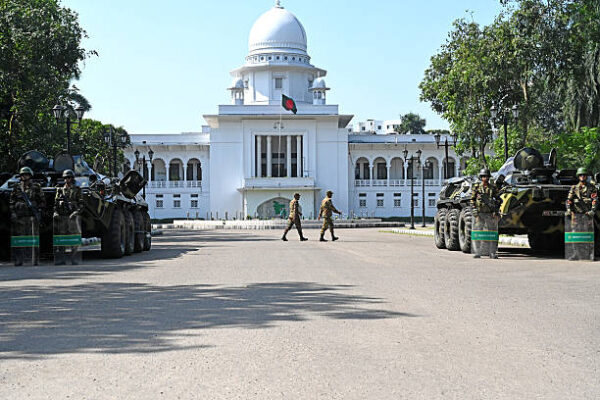
The judges delivered their 453-page verdict in a packed courtroom. Victims’ families burst into applause as the sentence was read. Judge Golam Mortuza Mozumder stated: “Sheikh Hasina committed crimes against humanity by her incitement, order and failure to take punitive measures”.
The July Massacre That Ended Her 15-Year Rule
The violence began in July 2024 over government job quotas. What started as peaceful student protests transformed into chaos. Hasina’s government deployed drones, helicopters, and lethal weapons against demonstrators.
By early August, hospitals were overwhelmed with casualties. The Dhaka Medical College Hospital alone received 27 bodies in one day. Official reports initially claimed 215 deaths. But a United Nations investigation later confirmed at least 650 people were killed.
Current estimates are far higher. The Interim Government’s Health Minister reported over 1,000 deaths. More than 400 students lost eyesight in the crackdown. Among the dead were at least 32 children according to UNICEF. The exact toll remains unclear. Hospitals faced restrictions on sharing data. CCTV footage was confiscated.
This uprising ended Hasina’s 15-year grip on power. Her rule had been marked by extrajudicial killings, arbitrary arrests, and suppression of dissent. Student leaders demanded accountability before any dialogue with officials.
India’s Silence on the Extradition Request of Hasina
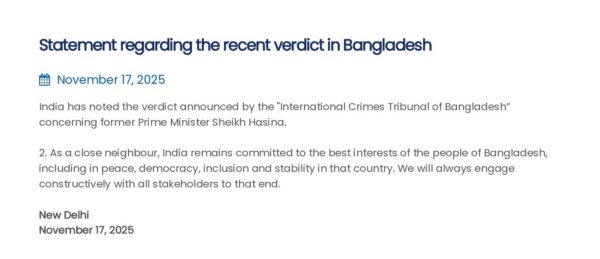
Bangladesh’s interim government formally demanded Hasina’s extradition. The country invoked the 2013 bilateral treaty between the nations. India has remained silent on the request so far.
New Delhi only issued a cautious statement. It said it would “engage constructively with all stakeholders”. Legal experts say India can refuse extradition if charges appear political.
The treaty allows both nations discretion in such matters. Bangladesh lacks leverage to compel India’s hand. Hasina’s son rejected the verdict outright. He called it “a joke” and said they would not appeal unless a democratically elected government took office.
Interim Leader Hails Historic Judgment
Interim Chief Muhammad Yunus praised the tribunal’s decision. He declared: “No one, regardless of power, is above the law”. Yunus took control after Hasina fled in August 2024.
The International Court’s landmark ruling offers hope to victims. It validates their uprising and suffering. The verdict marks the first time a former Bangladeshi prime minister faced such charges. However, international bodies expressed concerns. The United Nations said it “regrets the imposition of the death penalty”. Amnesty International condemned death sentences issued by the tribunal.
Former Home Minister Asaduzzaman Khan Kamal also received death. Ex-police chief Chowdhury Abdullah Al-Mamun secured five years after becoming a state witness. Bangladesh’s journey toward justice remains incomplete. Hasina remains beyond reach in India. Yet the verdict sends a powerful message. Leaders cannot hide behind power or borders forever.
Get latest international stories at The World Times.