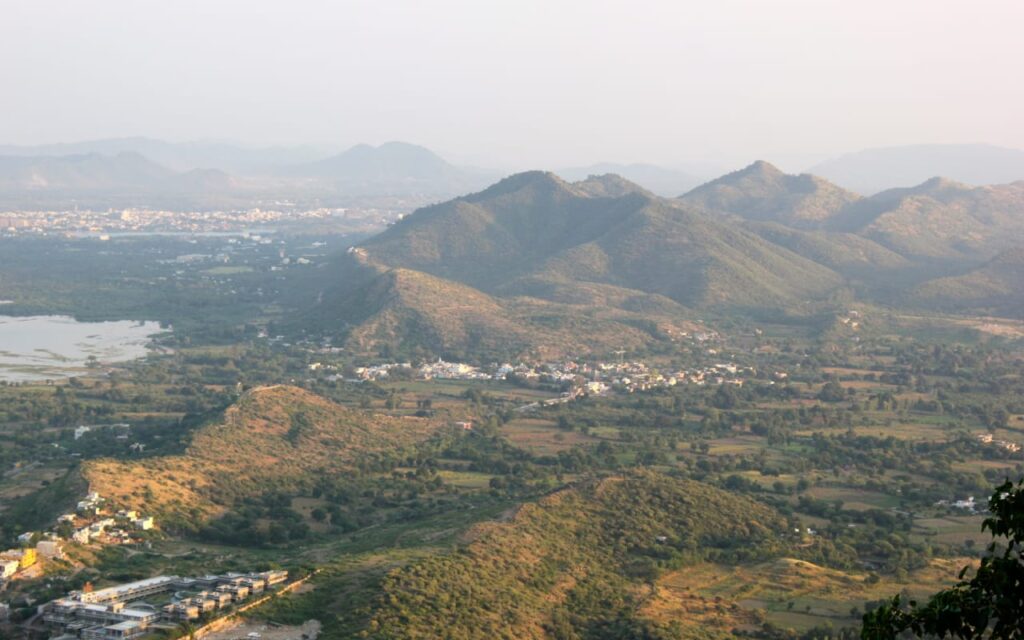
Already struggling with toxic pollutants, hazardous air, and severe PM 2.5 levels, India’s capital, New Delhi, and other north Indian regions’ air could get worse. The new definition of the Aravalli Hills, as accepted by the Honourable Supreme Court, has sparked environmental concerns.
The judgment came from a three-judge panel, comprising the Chief Justice B.R. Gavai, Justice K. Vinod Chandran, and Justice N.V. Anjaria. The panel delivered a 29-page judgment in the suo motu matter of a long-running environmental litigation in the TN Godavarman Thriumulpad case.
On 20th November, the Supreme Court accepted the new definition of the Aravalli Range based on elevation proposed by the Union Ministry. The court also directed the centre to conduct scientific mapping and prepare a “sustainable plan” to resume mining in the range. Moreover, the court ordered that no fresh mining leases will be granted until the scientific mapping is completed.
What are the Aravalli Hills, and their significance?
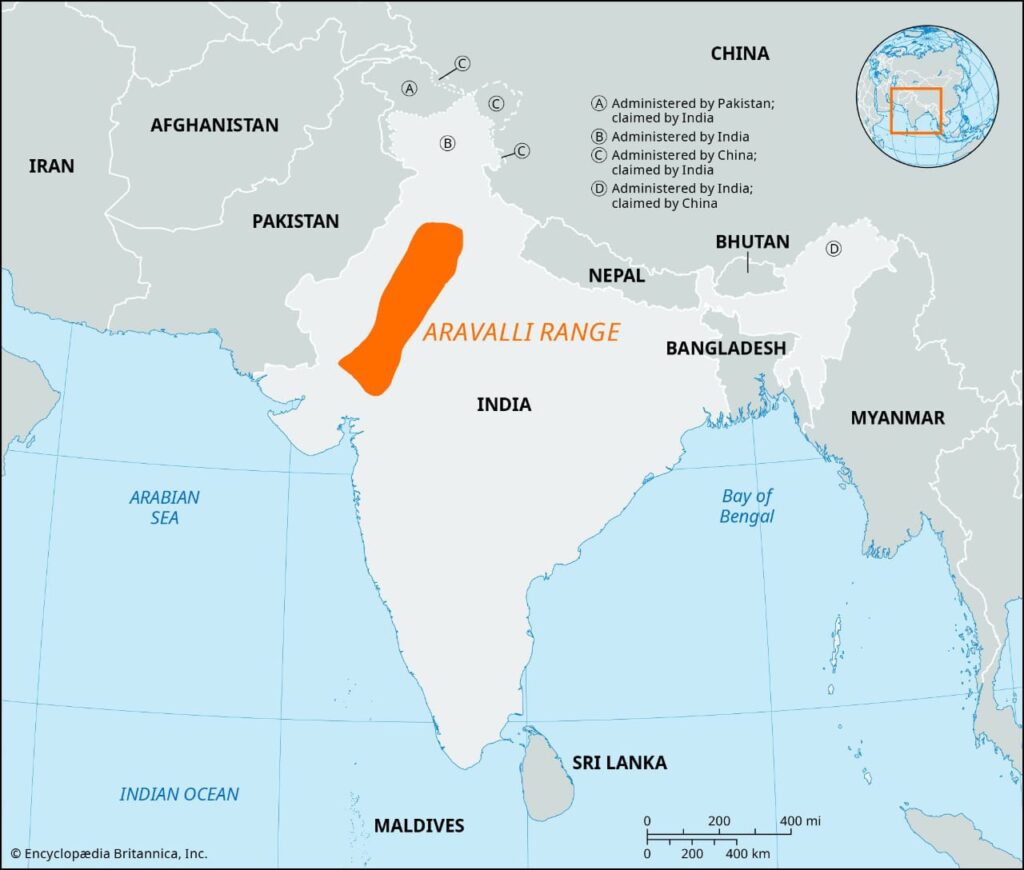
The Aravalli Range is a venerable hill system of northern India, stretching roughly 560 km across Rajasthan. It has isolated rocky extensions reaching south of Delhi. Its landscape is a complex mosaic of peaks and ridges. With varying breadth from about 10 to 100 km and rising typically between 300 and 900 meters. Some peaks soar even higher; the Guru Peak on Mount Abu is the highest point in the Aravallis. Geologically, much of the terrain is made up of ancient quartzite and other hard rocks, giving the hills a distinctive rose-colored, rugged appearance.
The Aravallis are divided into two main sections. The southern “Sambhar–Sirohi” segment is the taller and more rugged, including Mount Abu. While the “Sambhar–Khetri” section, farther north, consists of three discontinuous ridges.
Beyond their dramatic terrain, the Aravallis hold deep environmental and economic importance. They form a natural bulwark that helps check the encroachment of the western desert (the Thar). Thereby protecting the more fertile, settled lands to the east. The hills are rich in mineral wealth and other natural resources, and have served for centuries as sources for mining and quarrying. The range gives rise to several rivers, among them the Banas, Luni, Sakhi, and Sabarmati. These rivers irrigate and sustain communities and agriculture in the region. Ecologically, while the southern portion remains forested, much of the range is characterized by thin soil, rocky slopes, and scattered vegetation.
What does the judgment say?
Chief Justice BR Gavai, on Thursday, 20th November, in his judgement, gave a new definition to the Aravali Hills to curb illegal mining and boost conservation. The Ministry of Environment, Forest, and Climate Change (MoEF&CC) recommended the new uniform definition of the Aravali Hills and Ranges to protect them. On 12th November, the top court reserved its verdict on defining the Aravali Ranges.
The definition stated that the Aravalli Hills will be defined as any landform in the designated Aravali districts with an elevation of 100 metres or above its local relief. It means that the Aravali districts must have an elevation of at least 100 metres above the local relief. It includes its slopes and adjoining areas, in order to be treated as part of the Aravalli Hills. Several experts warn that this could endanger the entire ecologically significant Aravali region to illegal mining and other construction. The species residing in these ranges are also exposed to an increased threat from illegal mining and human interference.
The panel also said in its judgment, while defining ranges, that the area between the two Aravalli hills is determined by creating buffers. The buffers will be made with a width of minimum distance between the lowest contour lines of the two hills. The entire area lying between the lowest contour lines of these hills shall also be included as part of the Aravali Hills.
The court’s restrictions on mining practices
The court further reflected on the recommendations to prohibit mining in core areas, with exceptions made in the committee’s report. It directed the authorities to identify ecologically and mining sensitive, conservation-critical areas within the Aravalli landscape. In these identified areas, mining will be strictly prohibited. However, in exceptional and scientifically justified circumstances, it may be permitted.
Additionally, the court directed that till the Management Plan for Sustainable Mining (MPSM) is approved by the MoEF&CC in consultation with the Indian Council of Forestry Research and Education, no new mining leases will be granted.
Meanwhile, the ongoing mining activities in the Aravali range will continue only under strict compliance with the recommendations made by the Committee, said the court.
The Ecologists and Scientists stance
Several environmentalists express their concern with the ruling as it may exclude large stretches of low-lying ridges. These low-lying ridges have a prominent ecological relevance that was previously a part of legal protection.
As cited by the Indian Express, the Forest Survey of India found in an internal assessment that only 1,048 out of 12,081 mapped hills are meeting the 100-metre criteria. This could mean more than 90% of the ranges that were commonly termed under the ‘Aravalli Hills’ may now lose their protective shield.
Moreover, environmental conservationists also warn that the possible opening of the hills to mining or development could pose threats. These include habitat loss, fragmented wildlife corridors, damaged groundwater recharge zones, and wildlife species in a vulnerable state. One of the serious concerns is the increased desertification risks, with dust and heat worsening the air quality of Northern India.
What is the Centre’s stand?
While the Union Ministry argues that a clear, scientific, and uniform definition of the Aravallis would help in ensuring environmental conservation, regulating land use, and prohibiting mining activities in key-sensitive areas. Besides, the 100-metre elevation rule also provides a common and uniform benchmark to all the states surrounding these ranges. This would help to eliminate ambiguity around what constitutes the Aravalli hills.
For such environment-related news, stay tuned to The World Times.