
Air pollution in India poses a far more serious economic risk than global trade tariffs, warned economist Gita Gopinath at the World Economic Forum (WEF) 2026 held in Davos earlier this month. In a frank assessment before global policymakers, business leaders, and the media, she underscored that environmental degradation is silently eroding India’s growth potential and must be treated as a national priority
Speaking at a panel discussion on India’s economic future, Gopinath, an eminent economist and Harvard University professor, said that the cumulative costs of pollution extend far beyond seasonal smog or isolated health concerns. Instead, they translate into measurable losses in productivity, labour participation, healthcare expenditure, and investor confidence. These impacts, she noted, outweigh the current effects of tariffs imposed on Indian goods in foreign markets.
At the heart of her remarks was a stark statistic drawn from a 2022 World Bank study. It revealed that approximately 1.7 million lives are lost annually in India due to pollution. In total, the number represents around 18% of all deaths in the country. Many of these deaths are linked to respiratory and cardiovascular diseases caused or accelerated by poor air quality.
Beyond human tragedy, the economic toll is substantial. Lost workforce hours and rising clinical costs reduce output and slow growth. In quantitative terms, numerous research efforts, including reports by the Lancet Countdown and the State of Global Air study, have sought to capture the macroeconomic impact of air pollution on India’s GDP, with estimates running into the tens of billions of dollars annually.
Gopinath on GDP
Gopinath’s warning comes as India targets to become the world’s third-largest economy by around 2028. Yet she stressed that headline GDP growth is only one dimension of success. Raising per-capita incomes, improving quality of life, and ensuring sustainable development are equally critical for the country’s long-term resilience.
From an investment perspective, environmental quality matters as much as market fundamentals. Gopinath pointed out that global investors increasingly factor in livability and public health when choosing destinations for long-term capital commitments. Persistently poor air quality, she said, could deter foreign direct investment — particularly in high-value, skill-intensive sectors.
Her remarks also highlighted the limitations of trade-related challenges such as tariffs. Tariffs, which are taxes imposed on imports by foreign governments, can be negotiated, reversed, or offset through trade agreements and policy adjustments. Pollution, by contrast, embeds itself in the socioeconomic fabric and imposes persistent costs unless addressed decisively.
Gopinath called for a “mission-mode” response to pollution, urging policymakers to elevate environmental management alongside other structural reforms. This includes stricter enforcement of air-quality standards, expansion of clean-energy infrastructure, better urban planning, and technological monitoring. All of these can enhance economic efficiency and public health simultaneously.
Who Is Gita Gopinath?
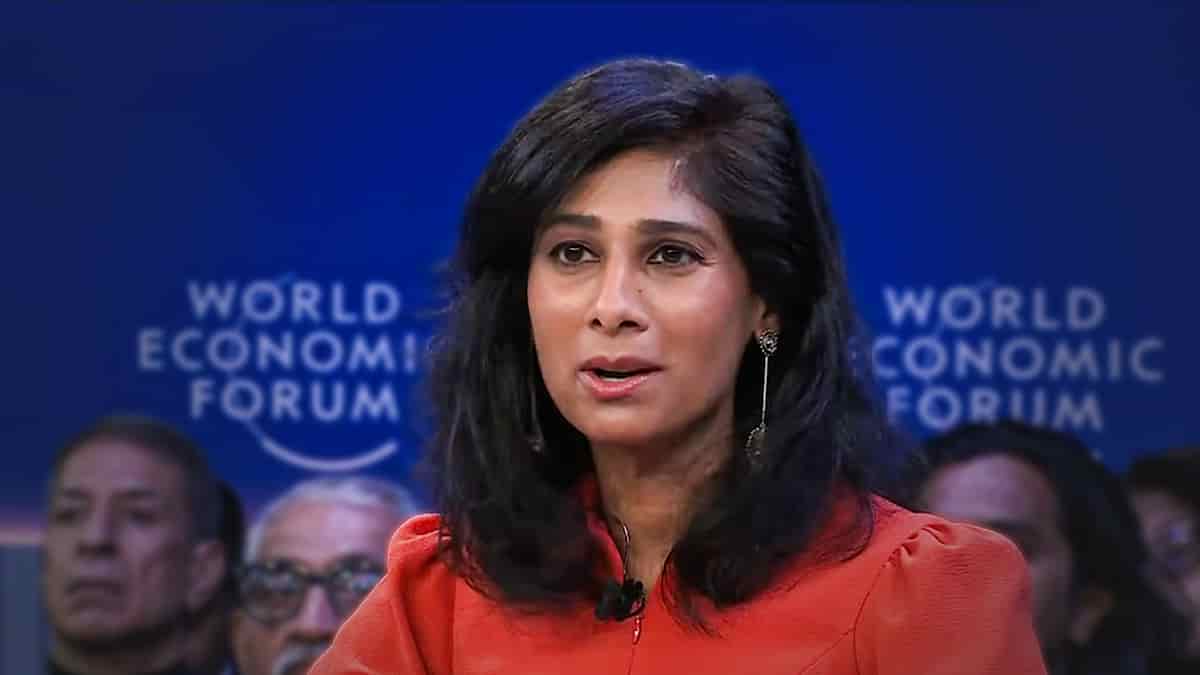
Gita Gopinath is an Indian-American economist and one of the world’s most influential macroeconomic voices today. She currently serves as the Gregory and Ania Coffey Professor of Economics at Harvard University and previously held the position of First Deputy Managing Director of the International Monetary Fund (IMF) from 2022 to 2025. Her academic work spans international finance, global trade, and macroeconomic policy.
About the World Economic Forum
The World Economic Forum is an international institution for public-private cooperation. Since 1971, it has brought together political, business, academic, and civil society leaders to address global challenges. Its annual meeting in Davos serves as a key platform for high-level dialogue on global governance, economic priorities, and sustainable development.
In flagging pollution as a systemic risk to India’s growth, Gopinath has elevated a long-standing domestic concern to the forefront of global economic discourse. Her message is clear: sustainable, inclusive growth in India demands clean air as much as fiscal reform.
For more related articles, keep following The World Times.