The fragility of belonging: Dipu’s name must not fade.
Image Source: India TV News
In Bhaluka, Mymensingh, the nights are filled with the hum of garment factories. The air smells faintly of machine oil and sweat, and workers spill out at dawn with tired eyes, their hands calloused from stitching clothes destined for distant markets. Among them was Dipu Chandra Das, a 27‑year‑old Hindu youth who lived in a rented room, ate simple meals, and carried the quiet resilience of someone who belonged to a minority community that often survives by blending in.
For his family, Dipu was not a headline. He was a son who sent money home, a worker who dreamed of stability, a man who laughed with neighbors over tea. That ordinariness was shattered on December 19. Rumors spread that Dipu had spoken words deemed blasphemous. Within hours, members of a mob dragged him into the open, beat him, tied him to a tree, set him ablaze, and recorded the attack on an Instagram reel. His father’s account, finding his son’s burnt torso and head tied together, is not just a detail. It is a desecration, a stripping away of humanity that leaves behind silence too heavy to bear.
The Spark of Blasphemy, the Storm of Protest for Dipu
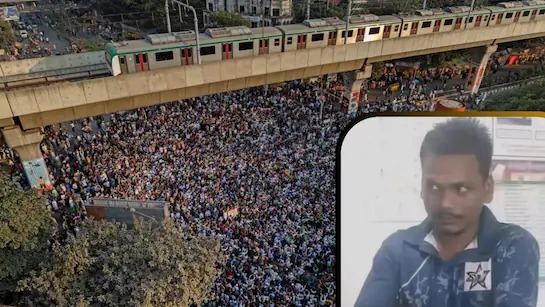
Massive crowds gather beneath an elevated metro line amid the ongoing Deepu Chandra case, reflecting rising public unrest in Bangladesh. (Image Source: NDTV)
The accusation of blasphemy is the spark, but gathering has already expected to cause an unprecedented storm. Bangladesh was convulsing with anger after the killing of Sharif Osman Hadi, a student leader whose death had ignited nationwide protests. Streets, filled with chants, clashes, and a sense of lawlessness. In that volatile atmosphere, Dipu’s murder became both a communal flashpoint and a grim reminder of how unrest often leaves minorities exposed.
Blasphemy charges in South Asia rarely require evidence. They are whispers that become weapons, often aimed at those already vulnerable. In Dipu’s case, the accusation was enough to unleash fury. Police have since arrested ten suspects, and the interim government condemned the act, insisting that there is ‘no place for violence.’ Yet such condemnation feels hollow when authorities allow mobs to kill people before they offer protection.
Beyond Outrage: The Demand for Accountability
The arrests may offer a semblance of justice, but they do not answer the deeper questions. Why does mob culture persist with such ferocity, turning neighbors into executioners overnight? And why does the state’s condemnation, spoken in official tones. Which rarely translates into the kind of systemic change that could prevent another tragedy?
Dipu’s death is not just a headline; it is a rupture. It is the sound of a community realizing, once again, that belonging can be stripped away in a single night. His killing demands more than outrage; it demands accountability. It demands stronger protections for minorities, swift and uncompromising legal action against perpetrators. The dismantling of the structures that allow mob violence to flourish unchecked. Without these, Dipu’s story risks becoming another entry in a long list of forgotten names, another body consumed by fire and silence.
Dipu, a worker whose hands stitched clothes for strangers he would never meet. A son who carried his family’s hopes in the wages he earned. He was a man who laughed with neighbors, who lived in the rhythm of ordinary days. To humanize his story is to resist erasure and to insist that his name, his labor, and his dignity remain part of Bangladesh’s narrative.