As the conflict continues, Israel has extended emergency regulations that enable officials to suspend or shut down foreign broadcasters.
Powers to Suspend Foreign Media Operations
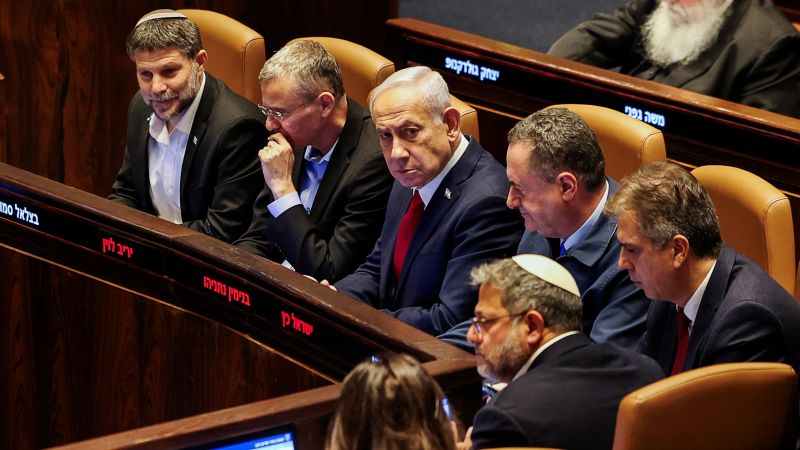
Israel’s parliament has approved an extension of powers allowing the government to shut down foreign broadcasters operating in the country. The legislation was passed by a vote of 22 to 10. It broadens temporary measures first introduced during the Gaza war to restrict outlets deemed a threat to national security.
Under the new provisions, the government can suspend the operations of foreign media organizations for the next two years. This applies even during peacetime and without requiring prior court approval.
The bill, introduced by Likud lawmaker Ariel Kallner, cleared its second and third readings in the Knesset. It replaces and expands the wartime emergency measure known as the “Al Jazeera Law.”
Under the extended order, the communications minister, with the prime minister’s approval and ratification by the security cabinet or the government, can impose restrictions on foreign broadcasters deemed to cause “real harm to national security.” This applies even outside a state of emergency. The measures include suspending transmissions, closing offices, seizing equipment, and blocking websites. They also allow the defense minister to block satellite signals, including in the West Bank, without affecting other channels.
Each administrative order would remain in force for 90 days, with the option of renewal.
Security Concerns Cited
Israel’s government has defended its decision to extend restrictions on foreign broadcasters. It argues that the measures are necessary to safeguard national security during an ongoing conflict. Officials have accused outlets such as Al Jazeera of spreading misinformation and inciting terrorism. They say temporary shutdowns under the so-called “Al Jazeera Law” are needed to prevent content that could aid hostile groups.
The government has framed the move as part of a broader effort. It aims to counter what it describes as biased reporting and false narratives that undermine national morale. Critics, however, argue that the policy suppresses critical coverage and seeks to control the narrative of the war. They warn that it poses a serious threat to press freedom.
Balancing Security and Press Freedom
Journalists’ groups have strongly criticized the move and said they plan to challenge it in court. The Union of Journalists and Journalists’ Organizations announced it would petition the High Court of Justice, describing the decision as a “severe and unlawful infringement on freedom of expression and freedom of the press.”
The Israel Democracy Institute (IDI) also raised alarm, saying that shutting down Army Radio would amount to a serious violation of free expression and effectively eliminate half of Israel’s independent public radio news output. Warning of broader implications, the think tank said the move was not an isolated action but part of a troubling pattern that threatens the health of Israeli democracy.
Past Media Restrictions in Times of Crisis
Israel tightened media restrictions sharply in 2024, introducing measures that critics say marked an unprecedented expansion of censorship. Authorities passed a temporary law enabling the government to shut down foreign media outlets such as Al Jazeera, while military censors fully blocked 1,635 articles and partially redacted more than 6,000 others, representing a steep rise compared with previous conflicts. Observers note that the scale of the restrictions goes beyond Israel’s long-standing censorship framework and has few parallels in most Western democracies.
Among the key steps was the adoption of the Foreign Media Law in April 2024, which allows the government to ban foreign outlets and seize equipment on national security grounds without prior judicial review. The law was first applied in May, when Israel closed Al Jazeera’s operations and briefly confiscated equipment from the Associated Press over a live feed shared with the Qatari broadcaster. New military censorship guidelines also barred journalists from filming strike sites, particularly near military facilities, using drones, or publishing precise location details, while restricting the sharing of uncensored social media footage.
Access for international journalists remained tightly controlled, with independent entry into Gaza and much of the West Bank largely barred and limited to military-escorted visits approved on a case-by-case basis, a policy upheld by the Supreme Court.
Press Freedom Under Pressure
The extension of the order underscores Israel’s heightened focus on information control during a period of conflict. While authorities argue the move is necessary for security, critics warn it risks narrowing the space for independent reporting. The decision is likely to remain under close domestic and international scrutiny.
For more such informative articles stay tuned to The World Times.