Swiggy’s E-Commerce arm, Instamart, has come up with a revelation, taking customer experience to a whole another level. A pilot physical store is opened at M3M 65th Avenue, spanning approximately 400 square feet.
The Idea Behind an Offline Store
Unlike the E-Commerce dark stores, that have a wide range of assortment, this experiential store is fundamentally different. Here, the emphasis is on product categories where physical inspection is crucial, such as fresh fruits and vegetables, bakery items, and specialty goods. Customers benefit from the ability to personally examine, touch, and even smell the produce, ensuring they are satisfied with the quality before making a purchase.
In this setting, the store is not just a place to pick up items; it becomes a brand interface, creating a tangible connection between the brand and its customers. This experience gives customers to experience the products firsthand. This approach not only helps elevate shopping journey, but also strengthens brand loyalty and understand consumer behaviour.
How does this Store Operate?
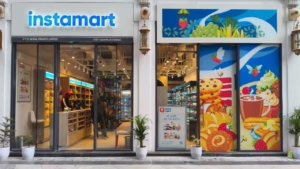
Although the product selection is intentionally limited, it features a diverse range of Instamart’s private label goods as well as a carefully chosen assortment of items from prominent (D2C) brands available on the Instamart platform.
Upon entering, the customers are welcomed to a full fledged shopping experience, with clear signage and helpful staff available to answer questions or provide recommendations. Shoppers can take their time examining items, sampling select products where possible, and comparing different options. Purchases are to be completed offline within the retail store, standing in contrast with the online payment on the Swiggy app.
Could this be Instamart’s early step into offline retail? There’s no such confirmation from Swiggy. Although the experiment is intentionally curated and limited to a single offline retail store, it serves as a strategic pilot to evaluate Swiggy’s potential shift toward a hybrid model that blends quick commerce with a physical retail experience. By operating at a controlled scale, Swiggy can closely observe consumer behaviour, operational efficiencies, and brand perception in an offline environment without committing significant resources towards this venture.
Moreover, by narrowing the range of brand options available to consumers, the model could encourage more deliberate and rational purchasing decisions—standing in contrast to the often overwhelming abundance of choices presented on online platforms.
Follow The World Times for more such Business insights.