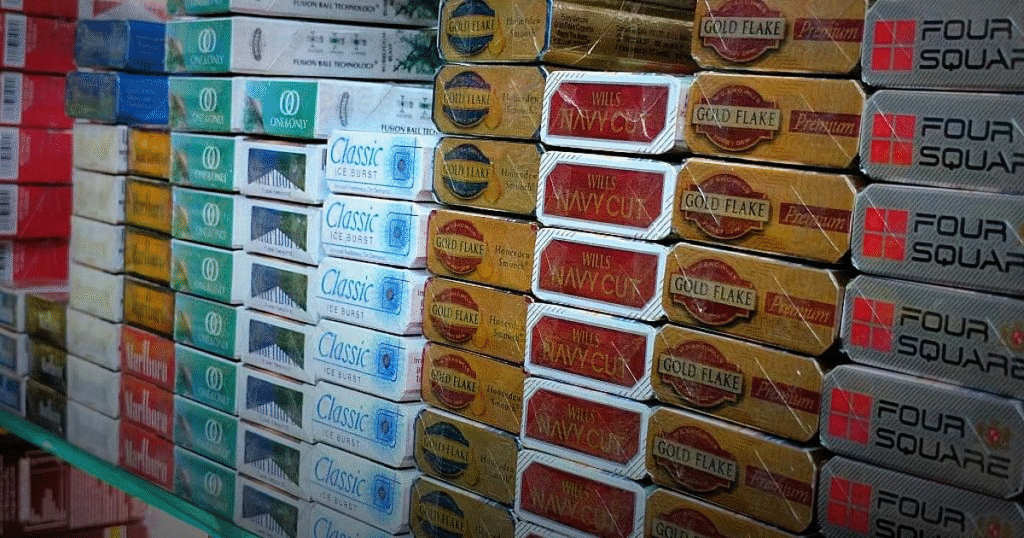
Stroll down any road in India you’ll spot identical sights: chai vendors firing up stoves, laborers puffing quick smokes, while tiny stores neatly stack cartons of cigarette. Though cigs seem common, the business running them isn’t typical at all, it’s closely watched, brings in big cash, and plays a bigger role in the country’s money flow.
A Market Dominated by a Few
India’s got tons of people, but just around 4% of grown-ups puff on store-bought cigs according to the Global Adult Tobacco Survey. A lot more go for bidis or chew their tobacco rather than light up regular ones. Yet the tiny number of people buying cigarettes doesn’t suggest a shaky market. Instead, just a few big players run things. Data from The Economic Times reveals ITC, Godfrey Phillips India, VST Industries, and Philip Morris make up nearly all cigarette sales. On its own, ITC grabs about 75%, showing clout almost unmatched in India’s everyday product scene. Folks care more about health now, so these brands moved to high-end options — such as thinner designs, new tastes, or milder mixes — aimed at city shoppers ready to spend extra.
Where the Money Flows: Farms, Jobs, and Exports

Each cigarette comes from many hands: farmers, laborers, others. India grows more tobacco than any other country; that’s what APEDA says. Nearly half a million hectares are planted with this crop instead. Tobacco growing remains a key livelihood in places such as Andhra Pradesh, Karnataka, Gujarat, or Uttar Pradesh.
According to figures from IBEF, roughly 45.7 million folks in India rely on tobacco jobs to get by. That covers growers, field hands, those who roll bidis, truck drivers, packing staff, and factory employees. Although raw tobacco takes up the biggest chunk of India’s tobacco exports, processed cigarettes still sell overseas.
According to UN data, India shipped about $100 million in ready-made cigarettes during 2022 way above what it brought in. Since other nations faced supply gaps, Indian tobacco got a sales bump. That helped drive higher interest in its leaves.
Cigarettes face some of the highest taxes in India. At 40% GST, they’re hit with extra fees like a compensation cess that push total costs way up. These charges cover over half the retail price you see at checkout. Even so, after heavy taxes, cigarettes still earn big cash for the government. According to the Finance Ministry, tobacco tax revenue reached ₹72,788 crore during 2022–23.
Who Really Smokes in India?
Indian folks chew or roll their tobacco quite unlike the West. Yet some go for bidis instead of regular smokes. Chewing stuff beats legal cigs by far there. Just about one in ten adults uses factory-made ones. This is one reason cigarette prices stay sky-high governments rake in way more tax cash compared to bidis or chew. Yet those steep costs have fueled a rise in bootleg smokes, skipping both taxes and India’s warning labels. Not huge yet, but customs teams and market watchers say it’s creeping up bit by bit.
The Road Ahead
The cigarette business in India is kind of odd. Not many folks light up these days rules are tightening every year. Still, it holds up tons of jobs, pours cash into government pockets through taxes, while just a handful of big players run the show. Its future won’t hinge so much on what shoppers want but rather on how leaders choose to act. Expect steeper levies, clearer health alerts, and stricter rules sticking around. Meanwhile, firms will bet on high-end labels while testing sales abroad just to keep moving forward. Right now, cigarettes still play a big behind-the-scenes role in India’s money system – not flashy, yet strong; debated often, tightly regulated, yet always present.
Stay tuned for more business insights with The World Times.